
A writer and anthropologist searches for wild foods―and reveals what we lose in a world where wildness itself is misunderstood, commodified, and hotly pursued.
FEASTING WILD:
In Search of the Last Untamed Food
by GinaRae LaCerva
Greystone Books, May 2020
Anthropologist and geographer GinaRae LaCerva’s fascination with hunting and gathering quickly exploded into a personal obsession that sent her on a quest to taste the wild foods we still eat and the ones we have forgotten: from wild boar in Borneo, to a lobster bake on an island in Maine, to gathering herbs near Kierkegaard’s grave in Copenhagen. She didn’t expect to find something much more profound—an untamable love affair and the elusive pleasure of simple sustenance. Along the way, she illuminates that the history of food is also the history of environmental conservation, examines the rapid transformation of wild food from nutritional necessity to luxury good, explores how this shift reflects our attempts to tame and commodify “natures” of all kinds, and ultimately finds that her own sense of adventure is just as unruly as the natural places she explores.
This impeccably researched narrative history uncovers something essential about what it means to love the planet in the age of extinction. Equal parts environmental history and adventure narrative, FEASTING WILD weaves together extensive field research and personal narrative to interrogate our concept of nature, investigate how our insatiable appetites have contributed to the current landscape of environmental crisis, and question what we might do about it now.
GinaRae LaCerva is a geographer, environmental anthropologist, and award-winning writer who has traveled extensively to research a variety of environmental and food-related topics. A National Science Foundation Graduate Fellow, La Cerva holds a Master of Environmental Science from Yale University’s School of Forestry and Environmental Studies and a Master of Philosophy from the University of Cambridge. Originally from New Mexico, she lives in New York.
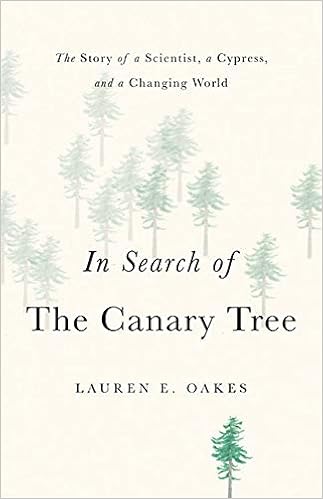 Where mountains meet ocean in Alaska’s Alexander Archipelago, white skeletons of dead yellow cedar trees stand in stark contrast to the verdant landscape of old-growth forests. Researchers spent nearly three decades deciphering the cause of the majestic species’ mysterious death: the culprit, they discovered, was neither pathogen nor pest, but instead climate change. In the wake of this discovery, Lauren Oakes, a young scientist, wondered if what the people in this region were experiencing—whatever ways they were finding to cope with their rapidly changing environment and the loss of this sacred tree—might be a scrying glass into the future.
 There are amazing things going on under water: at night the sea mysteriously sparkles, the tiniest of organisms (plankton) have the greatest power, and the fish are by no means taciturn but instead communicate loudly with one another. Marine biologist Frauke Bagusche has some fascinating tales to tell – stories of the smallest and the largest living creatures in the world. She explains where the smell comes from that tickles our nostrils while we are walking along the beach; what causes the sparkle we see in the water at night; and why the sea steers not only our emotions but also our destiny and that of the entire planet. Her account, in which she explores her own intimate relationship with the sea, is based both on the results of the latest scientific research and her personal experience. Because no matter where we are, we are bound to the blue miracle with every breath we take.