
A wide-ranging collection, including two novellas and ten stories exploring complex identities, from the acclaimed author of Corregidora, The Healing, and Palmares.
BUTTER:
Novellas, Stories, and Fragments
by Gayl Jones
Beacon Press, April 2023
 Gayl Jones, who was first edited by Toni Morrison, has been described as one of the great literary writers of the 20th century and was recently a finalist for the Pulitzer Prize in fiction. This new collection of short fiction is only the second in her rich career and one that displays her strengths in the genre in many facets. Opening with two novella-length works, “Butter” and “Sophia,” this collection features Jones’s legendary talents in a range of settings and styles, from the hyperrealist to the mystical, in intricate multipart stories, in more traditional forms, and even in short fragments.
Her narrators are women and men, Black, Brown, Indigenous; her settings are historical and contemporary, in South America, Mexico, and the US; her themes center on complex identities, unorthodox longings and aspirations. She writes about spies, photographers, playground designers, cartoonists, and baristas; about workers and revolutionaries, about environmentalism, feminism, poetry, film, and love, but above all about our multicultural, multiethnic, and multiracial society.
Gayl Jones was born in Kentucky in 1949. She attended Connecticut College and Brown University, and has taught at Wellesley College and the University of Michigan. Her landmark books include Corregidora, Eva’s Man, The Healing (a National Book Award finalist and New York Times Notable Book of the Year), Palmares (a finalist for the Pulitzer Prize in fiction), and most recently, The Birdcatcher (National Book Award finalist).
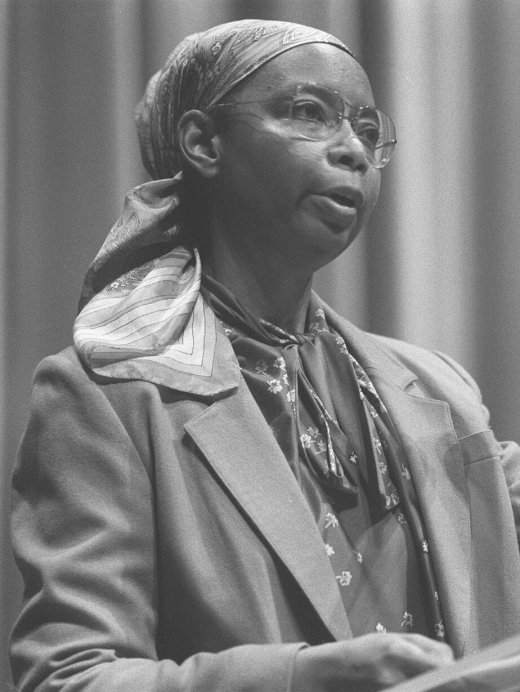
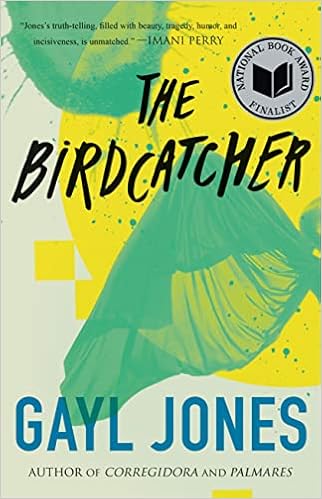 Gayl Jones, the novelist Toni Morrison discovered decades ago and Tayari Jones recently called her favorite writer, has been described as one of the great literary writers of the 20th century. Now, for the first time in over 20 years, Jones is publishing again. In the wake of her long-awaited fifth novel,
  Black army veteran named Buddy Ray Guy is a classic seeker: looking for religion, looking for meaning, looking for love. He moves around the south, having several women across different states. He recalls his love affairs in post-war France, both in the provinces and in Paris, as he embodies the fate of Black soldiers who return, not in glory, but into their Jim Crow communities.