
A hidden set of rules governs who owns what—explaining everything from whether you can recline your airplane seat to why HBO lets you borrow a password illegally—and in this lively and entertaining guide, two acclaimed law professors reveal how things become « mine. »
MINE!
How the Hidden Rules of Ownership Control Our Lives
by Michael Heller & James Salzman
Doubleday, March 2021
(chez Levine, Greenberg, Rostan – voir catalogue)
 « Mine » is one of the first words babies learn. By the time we grow up, the idea of ownership seems natural, whether buying a cup of coffee or a house. But who controls the space behind your airplane seat: you reclining or the squished laptop user behind? Why is plagiarism wrong, but it’s okay to knock-off a recipe or a dress design? And after a snowstorm, why does a chair in the street hold your parking space in Chicago, but in New York you lose the space and the chair? MINE! explains these puzzles and many more. Surprisingly, there are just six simple stories that everyone uses to claim everything. Owners choose the story that steers us to do what they want. But we can always pick a different story. This is true not just for airplane seats, but also for battles over digital privacy, climate change, and wealth inequality. As Michael Heller and James Salzman show—in the spirited style of Freakonomics, Nudge, and Predictably Irrational—ownership is always up for grabs. With stories that are eye-opening, mind-bending, and sometimes infuriating, MINE! reveals the rules of ownership that secretly control our lives.
Michael Heller and James Salzman are among the world’s leading authorities on ownership. Michael Heller is the Lawrence A. Wien Professor of Real Estate Law at Columbia Law School. He is the author of The Gridlock Economy: How Too Much Ownership Wrecks Markets, Stops Innovation, and Costs Lives. James Salzman is the Donald Bren Distinguished Professor of Environmental Law, with joint appointments at the UCLA School of Law and the UCSB Bren School of the Environment. He is the author of Drinking Water: A History.
 THE RED ARROW follows an unnamed narrator, a failed novelist deeply in debt to his publisher, on a high-speed train from Rome to Modena, where he is desperate to find the famous Italian physicist whose memoir he’s been ghostwriting, and an whose disappearance in the middle of the project has threatened the narrator and his newly formed family with financial ruin. Moving swiftly and seamlessly through his past—including a chemical spill in West Virginia, a failed New York art career, psychedelic therapy in California, and a luxury beach resort in Sicily—THE RED ARROW contains multitudes: it is at once one of the most authentic descriptions of the experience of depression I’ve ever read, and a joyously earnest celebration of freedom from the toxic power of the ego; a spiraling meditation on time, memory, and the nature of the self; and a novel with the ineffable mystery of a poem, one whose originality lies in admitting that it’s not original at all. For we are each just a cloud of quotations with no fixed center—or, as the Physicist might put it, we are nothing more than interactions, like subatomic particles—and when we’re finally able to let go of the fiction of our discrete selves, all that is left is love.
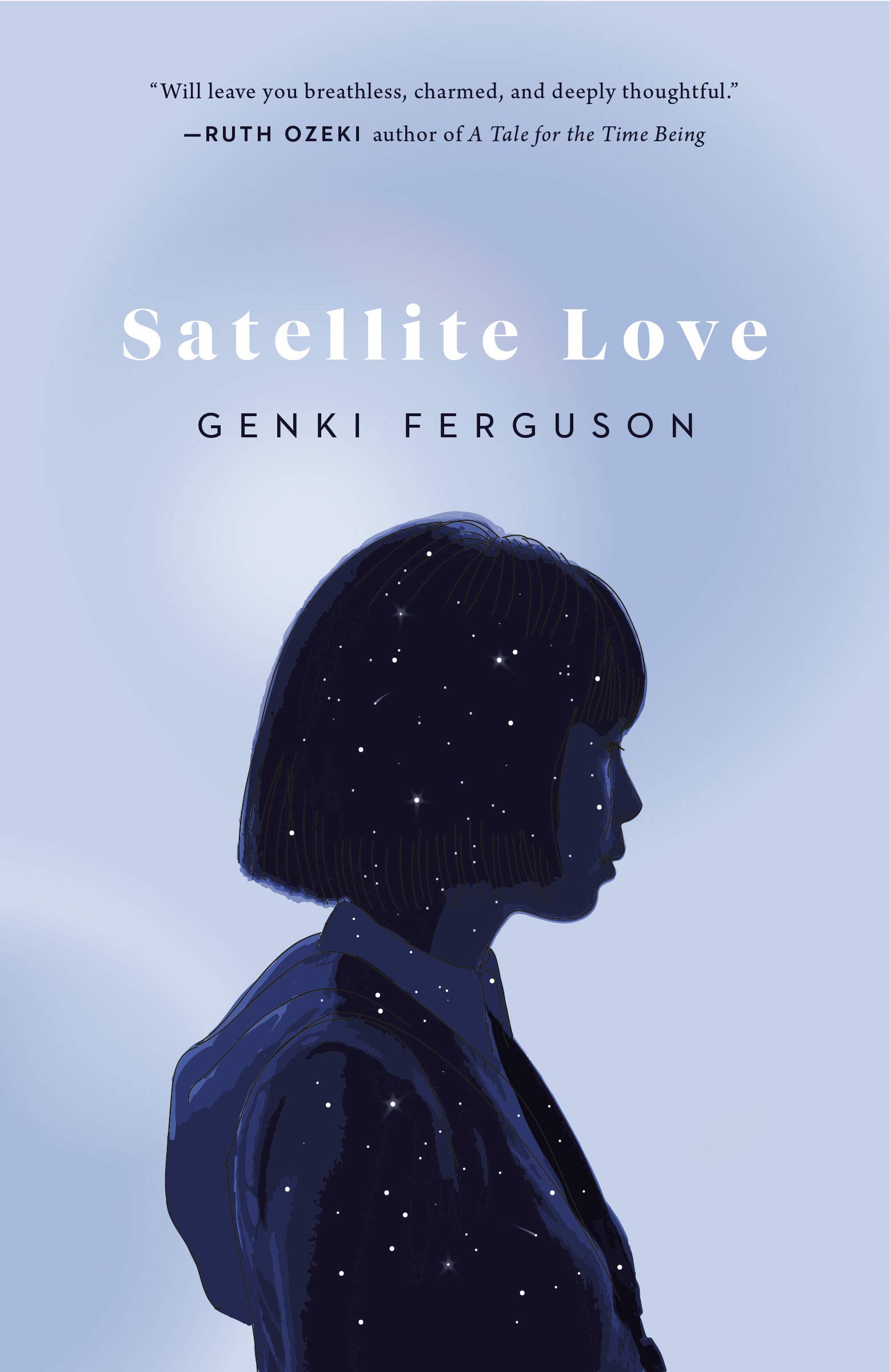 Anna Obata is a biracial teenager living in economically depressed Southern Japan just before the millennium. Left to fend for herself (and to look after her increasingly senile Grandfather) Anna copes with her devastating loneliness by calling upon her strongest inner resource: imagination. This is the story of girl who falls in love with a satellite, yes—but it is also the story of how the human mind attempts to repair itself, no matter the cost, no matter the odds. Told in alternating perspectives by Anna, the satellite, and several others, SATELLITE LOVE is exquisitely strange and refreshingly unconventional.
 Eury comes to the Bronx as a girl haunted. Haunted by losing everything in Hurricane Maria–and by an evil spirit, Ato. She fully expects the tragedy that befell her and her family in Puerto Rico to catch up with her in New York. Yet, for a time, she can almost set this fear aside, because there’s this boy . . . Pheus is a golden-voiced, bachata-singing charmer, ready to spend the summer on the beach with his friends, serenading his on-again, off-again flame. That changes when he meets Eury. All he wants is to put a smile on her face and fight off her demons. But some dangers are too powerful for even the strongest love, and as the world threatens to tear them apart, Eury and Pheus must fight for each other and their lives. Featuring contemporary Afro-Latinx characters, this retelling of the Greek myth Orpheus and Eurydice is perfect for fans of Ibi Zoboi’s Pride and Daniel José Older’s Shadowshaper.
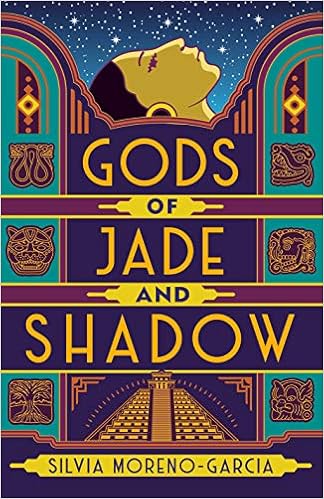 The Jazz Age is in full swing, but Casiopea Tun is too busy cleaning the floors of her wealthy grandfather’s house to listen to any fast tunes. Nevertheless, she dreams of a life far from her dusty small town in southern Mexico. A life she can call her own. Yet this new life seems as distant as the stars, until the day she finds a curious wooden box in her grandfather’s room. She opens it—and accidentally frees the spirit of the Mayan god of death, who requests her help in recovering his throne from his treacherous brother. Failure will mean Casiopea’s demise, but success could make her dreams come true. In the company of the strangely alluring god and armed with her wits, Casiopea begins an adventure that will take her on a cross-country odyssey from the jungles of Yucatán to the bright lights of Mexico City—and deep into the darkness of the Mayan underworld.