
Bestselling author Julissa Arce brings readers a powerful polemic against the myth that assimilation leads to happiness and belonging for immigrants in America. Instead, she calls for a celebration of our uniqueness, our origins, our heritage, and the beauty of the differences that make us Americans.
YOU SOUND LIKE A WHITE GIRL:
The Case for Rejecting Assimilation
by Julissa Arce
Flatiron Books/St. Martin’s Press, March 2022
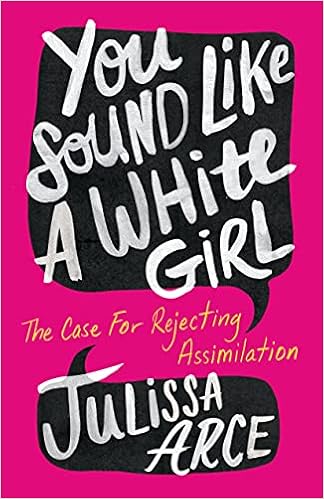 “You sound like a white girl.” These were the words spoken to Julissa by a high school crush as she struggled to find her place in America. As a brown immigrant from Mexico, assimilation had been demanded of her since the moment she set foot in San Antonio, Texas, in 1994. She’d spent so much time getting rid of her accent so no one could tell English was her second language that in that moment she felt those words―you sound like a white girl?―were a compliment. As a child, she didn’t yet understand that assimilating to “American” culture really meant imitating “white” America―that sounding like a white girl was a racist idea meant to tame her, change her, and make her small. She ran the race, completing each stage, but never quite fit in, until she stopped running altogether.
In this dual polemic and manifesto, Julissa dives into and tears apart the lie that assimilation leads to belonging. She combs through history and her own story to break down this myth, arguing that assimilation is a moving finish line designed to keep Black and brown Americans and immigrants chasing racist American ideals. She talks about the Lie of Success, the Lie of Legality, the Lie of Whiteness, and the Lie of English―each promising that if you obtain these things, you will reach acceptance and won’t be an outsider anymore. Julissa deftly argues that these demands leave her and those like her in a purgatory―neither able to secure the power and belonging within whiteness nor find it in the community and cultures whiteness demands immigrants and people of color leave behind.
In YOU SOUND LIKE A WHITE GIRL, Julissa offers a bold new promise: Belonging only comes through celebrating yourself, your history, your culture, and everything that makes you uniquely you. Only in turning away from the white gaze can we truly make America beautiful. An America where difference is celebrated, heritage is shared and embraced, and belonging is for everyone. Through unearthing veiled history and reclaiming her own identity, Julissa shows us how to do this.
Julissa Arce is a nationally recognized author, sought-after speaker, producer, and social changemaker. She is the best-selling author of My (Underground) American Dream and Someone Like Me. Arce is a Crooked media contributor and a frequent writer for TIME Magazine, and has provided political commentary across numerous TV networks including NBC News, Bloomberg TV, CNN, and MSNBC. She is the cofounder of the Ascend Educational Fund, a college scholarship and mentorship program for immigrant students regardless of their immigration status. She lives in Los Angeles with her family.
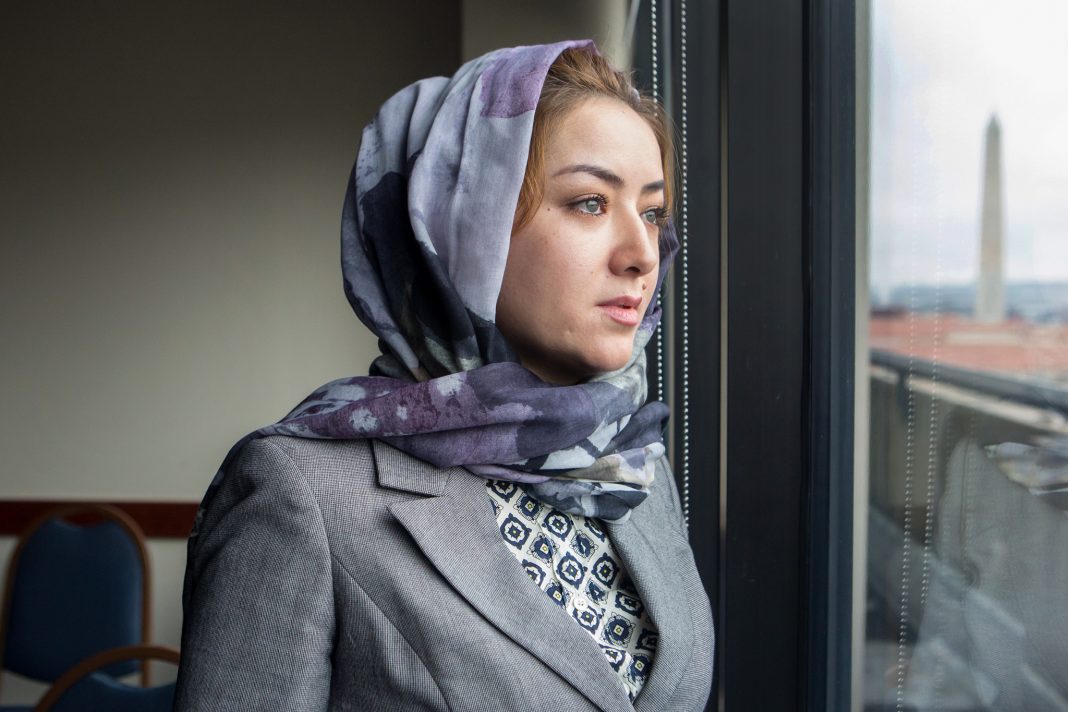 Human rights organisations and governments speak of a crime against humanity, a « cultural genocide ». Mihrigul Tursun has repeatedly been a victim of Chinese efforts to totally assimilate the Uyghur minority. She experienced the so-called « re-education camps » in their indescribable cruelty, the physical and psychological violence, first hand. In a way that remains unexplained to this day, her young son died while she was imprisoned. Today, despite the threat that has not disappeared even in exile, she has the courage to speak openly about what she experienced and to describe from her own experience what the Uyghur minority in China has to endure. A significant eyewitness account that brings the reader closer to the people behind the news from China.
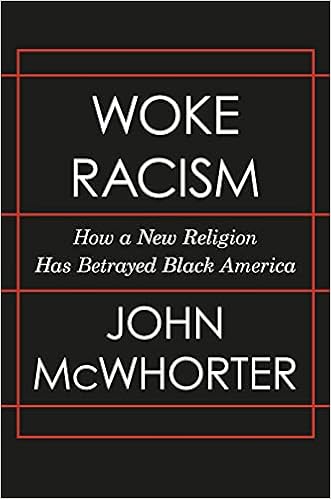 Americans of good will on both the left and the right are secretly asking themselves the same question: how has the conversation on race in America gone so crazy? We’re told to read books and listen to music by people of color but that wearing certain clothes is “appropriation.” We hear that being white automatically gives you privilege and that being Black makes you a victim. We want to speak up but fear we’ll be seen as unwoke, or worse, labeled a racist. According to John McWhorter, the problem is that a well-meaning but pernicious form of antiracism has become, not a progressive ideology, but a religion—and one that’s illogical, unreachable, and unintentionally neoracist.
 Throughout history, new technologies have disrupted our capacity to make sense of the world, from the printing press to the telegraph, from radio to television. OUTRAGE MACHINE explores the serious recent disruption caused by social media, and how it has triggered an urgent society-wide crisis of trust. Drawing from deep historical context, as well as cutting-edge research, author, designer, and media researcher Tobias Rose-Stockwell shows how social media has bound us to an unprecedented outrage machine, training us to react rather than reflect, and attack rather than debate.
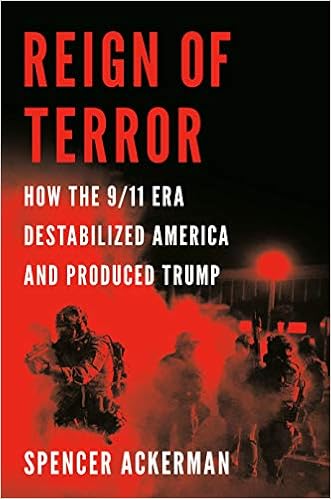 For an entire generation, at home and abroad, the United States has waged an endless conflict known as the War on Terror. In addition to multiple ground wars, it has pioneered drone strikes and industrial-scale digital surveillance, as well as detaining people indefinitely and torturing them. These conflicts have yielded neither peace nor victory, but they have transformed America. What began as the persecution of Muslims and immigrants has become a normalized, paranoid feature of American politics and security, expanding the possibilities for applying similar or worse measures against other targets at home. A politically divided country turned the War on Terror into a cultural and then tribal struggle, first on the ideological fringes and ultimately expanding to conquer the Republican Party, often with the timid acquiescence of the Democratic Party. Today’s nativist resurgence walked through a door opened by the 9/11 era.