
The true story of the extraordinary life and brutal death of Mildred Harnack, the American leader of the largest underground resistance group in Berlin who was executed on Hitler’s direct orders-uncovered by her great-great-niece in this riveting, deeply researched account.
ALL THE FREQUENT TROUBLES OF OUR DAYS:
The True Story of the American Woman at the Heart of the German Resistance to Hitler
by Rebecca Donner
Little, Brown, May 2021
(chez Sterling Lord Literistic)
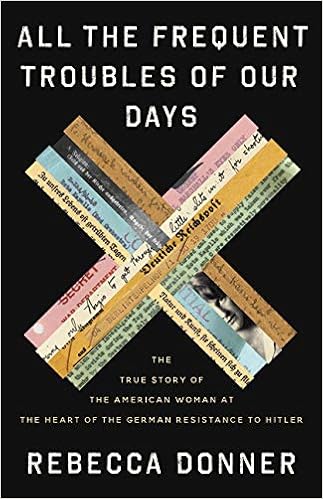 What do you do when you suddenly find yourself confronted with a mortal threat to your society’s fundamental, stabilizing principles? Mildred Harnack chose to stand. Milwaukee-born, she was the leader of the largest anti-Nazi resistance group in Germany, and the only American woman to be put to death on Hitler’s orders. Despite its unmatched vastness, the record of World War II atrocity and nobility will forever remain incomplete. This ever-expanding volume of belligerence and courage is perhaps the most gravely gendered historical document we have; a war perpetrated, suffered and recounted by men. There are periodically polite acknowledgments of the roles played by woman in ‘aiding’ the war effort, but these usually have the hollow ring of tokenism. Mildred Harnack’s short but monumental life shows us just how incomplete that record remains. From 1933-42, with her German husband, Arvid, Mildred led a cell that couriered top secret military intelligence to the Allies, helped dissidents and persecuted minorities escape Germany, and distributed literature that encouraged civil disobedience and exposed Nazi plans. Fusing elements of biography, political thriller, and scholarly detective story, Harnack’s great-great-niece Rebecca Donner brilliantly interweaves family archives, original research, exclusive interviews with survivors, and a trove of declassified intelligence documents into a powerful, enthralling story, reconstructing the moral courage of an enigmatic woman nearly erased by history.
Rebecca Donner is the author of the novel, Sunset Terrace, and a graphic novel, Burnout. Her essays, reportage and reviews have appeared in The New York Times, Bookforum, Guernica, and other publications. She graduated from the University of California at Berkeley and received her MFA in fiction from Columbia University.
 Cornel West is at the forefront of thinking about race. First published in 1993, on the one-year anniversary of the Los Angeles riots, RACE MATTERS became a national best seller that has gone on to sell more than half a million copies. West addresses a range of issues, from the crisis in black leadership and the myths surrounding black sexuality to affirmative action, the new black conservatism, and the strained relations between Jews and African Americans. He never hesitates to confront the prejudices of all his readers or wavers in his insistence that they share a common destiny. Bold in its thought and written with a redemptive passion grounded in the tradition of the African-American church, RACE MATTERS is a book that is at once challenging and deeply healing.
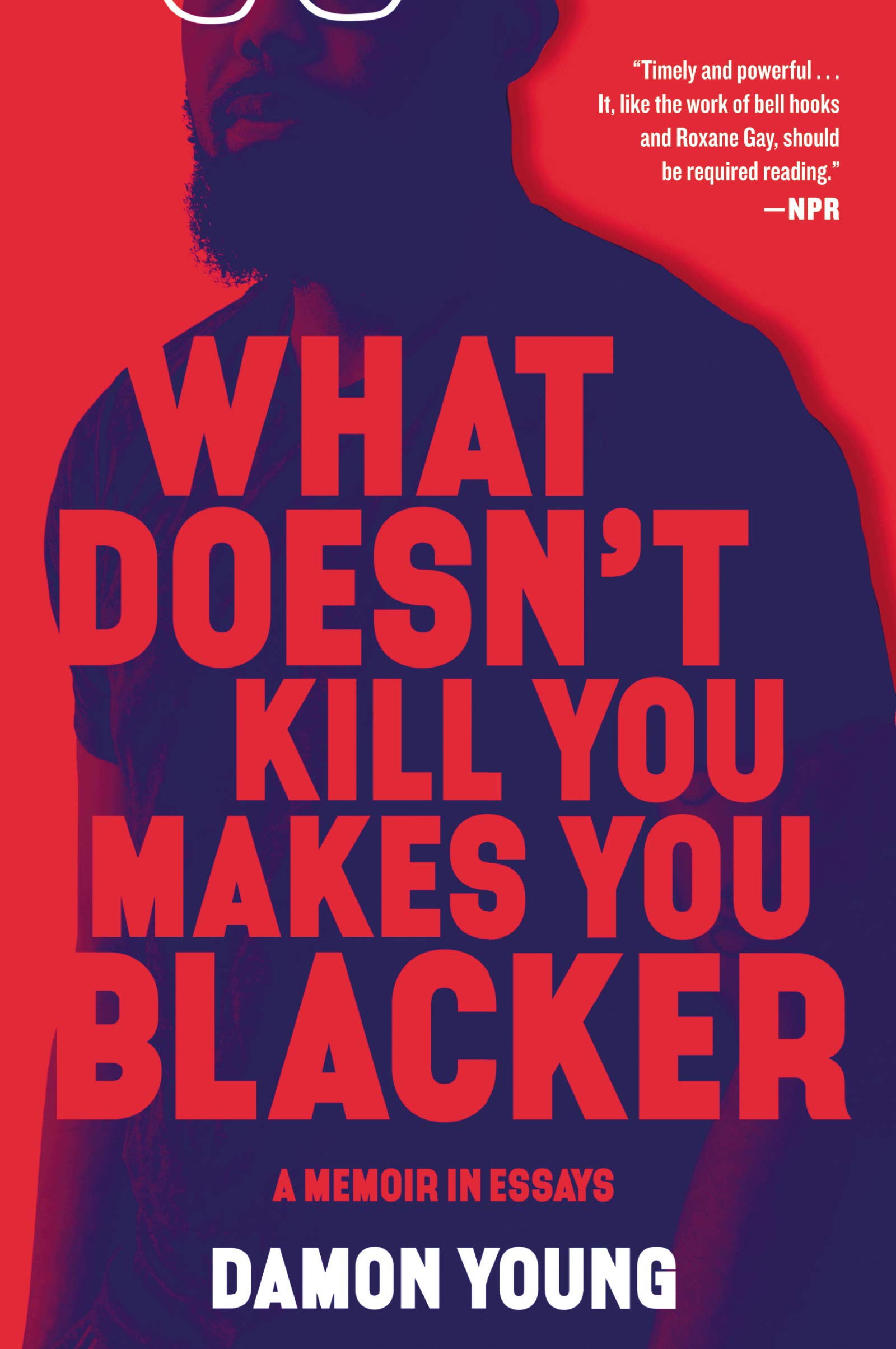 For Damon Young, existing while Black is an extreme sport. The act of possessing black skin while searching for space to breathe in America is enough to induce a ceaseless state of angst where questions such as “How should I react here, as a professional black person?” and “Will this white person’s potato salad kill me?” are forever relevant. WHAT DOESN’T KILL YOU MAKES YOU BLACKER chronicles Young’s efforts to survive while battling and making sense of the various neuroses his country has given him. It’s a condition that’s sometimes stretched to absurd limits, provoking the angst that made him question if he was any good at the “being straight” thing, as if his sexual orientation was something he could practice and get better at, like a crossover dribble move or knitting; creating the farce where, as a teen, he wished for a white person to call him a racial slur just so he could fight him and have a great story about it; and generating the surreality of watching gentrification transform his Pittsburgh neighborhood from predominantly Black to “Portlandia . . . but with Pierogies.” And, at its most devastating, it provides him reason to believe that his mother would be alive today if she were white. From one of our most respected cultural observers, WHAT DOESN’T KILL YOU MAKES YOU BLACKER is a hilarious and honest debut that is both a celebration of the idiosyncrasies and distinctions of Blackness and a critique of white supremacy and how we define masculinity.
 Anyone who has ever been told “You should speak up!” during a presentation at the office, a group project at school, or even a conversation among friends can attest to the misunderstanding at the heart of that demand. For those of us—women, people of color, immigrants, outsiders—who find it hard to speak up, the issue is not just about willpower. Many of us have internalized the same messages since birth: that because of the pitch of our voice, the accent we possess, or the slang we use, we will not be taken seriously. Power, we’re told, sounds like the mostly white, straight, wealthy men who wield it.