
Now is the moment to change course towards a future that is stable. A future worth living on a finite planet. This book is the operating manual to do just that.
EARTH FOR ALL
by The Club of Rome
New Society Publishing, Summer 2022
 Almost 50 years ago a group of scientists published a remarkable book that shocked the world. The book, The Limits to Growth, was a warning to humanity. Based on the results from one of the first computer models of the global economy, it showed that population and industrial growth was pushing humanity towards a cliff. Fifty years on, the scenarios explored by the authors still hold true. We know we are crossing planetary boundaries. Inequality is causing deep instabilities in societies making it impossible to make long-term decisions for the benefit of all. There seems to be no way out.
EARTH FOR ALL is an antidote to despair. Using state-of-the-art computer models combining the global economy, population, health, inequality, food, and energy, a leading group of scientists and economic thought leaders present short- term levers for long-term systems change. They show for the first time it is possible to have long-term prosperity for all if key turnarounds are put in place and foundational paradigm shifts adopted. It is possible to stabilize our planet and ensure greater wellbeing for all. And it is possible to do this in a single generation: by 2050. This is arguably the most profound scientific and economic insight of our age.
EARTH FOR ALL describes five systemic shifts that need to happen to upend poverty and inequality, lift up marginalized people, and transform our food and energy systems. Decade by decade, the book details what needs to happen, where and when. It explores eight geographical areas, each with their own distinct characteristics: from the US to Asia and Africa; and recommends key principles for the necessary economic paradigm shifts to enable a new kind of growth within limits.
The Club of Rome is an NGO founded in 1968 to address the multiple crises facing humanity and the planet. Drawing on the know-how of its 100 members – notable scientists, economists, business leaders and former politicians – the organization seeks to define comprehensive solutions to the complex, interconnected challenges of our world. Its goal is to actively advocate for paradigm and systems shifts which will enable society to emerge from our current crises, by promoting a new way of being human, within a more resilient biosphere. Its seminal, best-selling 1972 report, The Limits to Growth, alerted the world to the consequences of the interactions between human systems and the health of our planet. Since then, more than 45 Reports have reinforced and expanded that intellectual foundation.
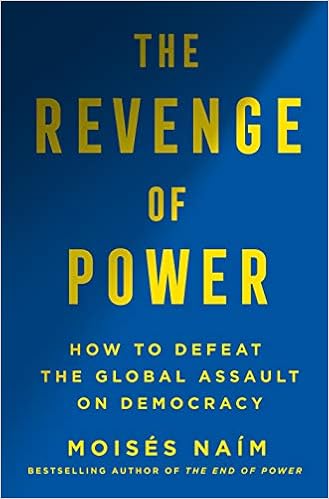 Moisés Naím concentrates on the three “P”s—populism, polarization, and post-truths. Using the best available data and insights taken from recent research in the social sciences, Naim reveals how the same set of strategies to consolidate power pop up again and again in places with vastly different political, economic, and social circumstances. The outcomes of these battles for power will determine if our future will be more autocratic or more democratic. These outcomes will, in turn, depend on the capacity of our democracies to survive the attacks and dirty tricks of autocratic leaders bent on weakening the checks and balances that limit their power. Naim addresses the questions at the heart of the matter: What are, in practice, those attacks and tricks? Why is power concentrating in some places while in others it is fragmenting and degrading? And the big question: what is the future of freedom?
 In its earliest days, WeWork promised the impossible: to make the American work place cool. Adam Neumann, an immigrant determined to make his fortune in the United States, landed on the idea of repurposing surplus New York office space for the burgeoning freelance class. Over the course of ten years, WeWork attracted billions of dollars from some of the most sought-after investors in the world, while spending it to build a global real estate empire that he insisted was much more than that: an organization that aspired to nothing less than « elevating the world’s consciousness. » Moving between New York real estate, Silicon Valley venture capital, and the very specific force field of spirituality and ambition erected by Adam Neumann himself, Billion Dollar Loser lays bare the internal drama inside WeWork. Based on more than two hundred interviews, this book chronicles the breakneck speed at which WeWork’s CEO built and grew his company along with Neumann’s relationship to a world of investors, including Masayoshi Son of Softbank, who fueled its chaotic expansion into everything from apartment buildings to elementary schools. Culminating in a day-by-day account of the five weeks leading up to WeWork’s botched IPO and Neumann’s dramatic ouster, Wiedeman exposes the story of the company’s desperate attempt to secure the funding it needed in the final moments of a decade defined by excess. Billion Dollar Loser is the first book to indelibly capture the highly leveraged, all-blue-sky world of American business in President Trump’s first term, and also offers a sober reckoning with its fallout as a new era begins.
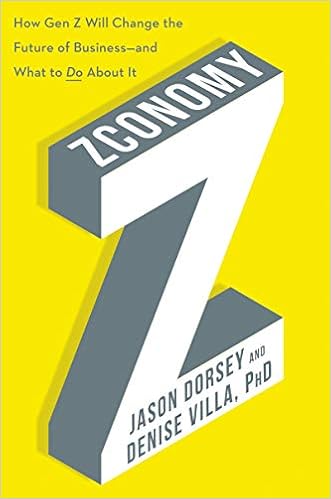 Gen Z changes everything. Today’s businesses are not built to sell and market the way Gen Z shops and buys, or to recruit and employ Gen Z the way they find and keep jobs. Leaders need answers now as Gen Z is the fastest growing generation of employees and the most important group of consumer trendsetters. The companies that quickly and comprehensively adapt to Gen Z thinking will be the winners for the next twenty years. Those that don’t will be the losers or become extinct. ZCONOMY is the comprehensive survival guide on how leaders must understand and embrace Generation Z. Researched and written by Dr. Denise Villa and Jason Dorsey from The Center for Generational Kinetics, the insights in ZCONOMY are based on their extensive research—they’ve led more than 60 generational studies—and their work with more than 500 companies around the world. In ZCONOMY, Dr. Villa and Dorsey answer: Who is Gen Z? What do employers, marketers, and sales leaders need to know? And, most importantly, what should leaders do now?
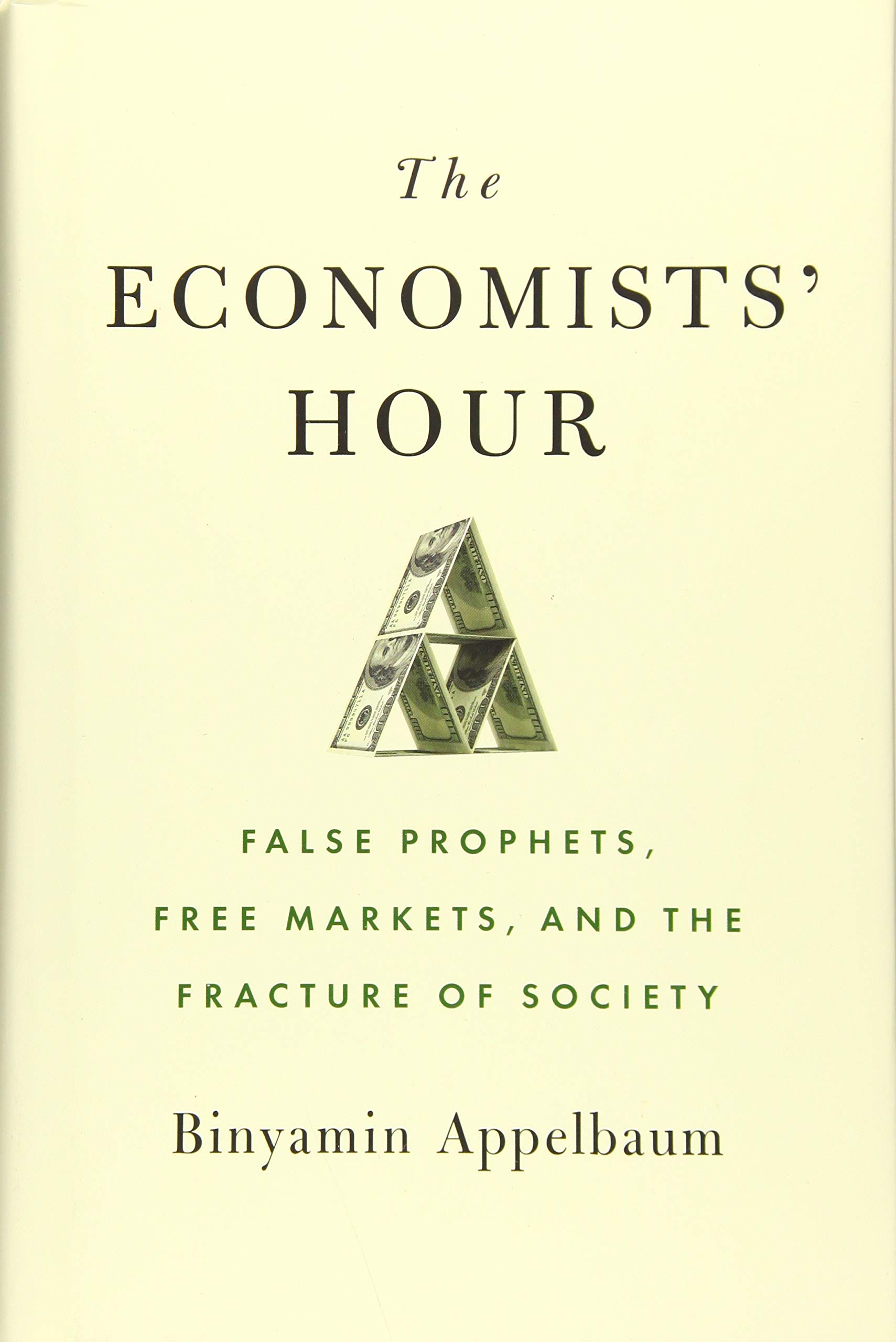 The story is of how, in the decades that followed World War II, a single academic discipline—Economics, one long seen as a “soft,” imprecise, and inferior science, much to the resentment of its disciples—moved out of the realm of the classroom and peer-reviewed journals and in short order took hold of the levers of power and policy in government, first in the U.S., and then around the world. For the past 40 years or so, most of the world has been living in what amounts to a grand experiment, in which the theories of free-market orthodoxy—lower taxes, low inflation, deregulation, free trade, markets in all things—have been put into practice in the laboratory of our lives.