
A radical framework for understanding and improving the lives of women, using a data-driven approach to overcoming the structural, economic, and biological factors that force and constrain women’s choices and limit their potential for wellbeing.
FEMONOMICS
Winning the Bread and Baking It Too: A Data Driven Approach to Happiness in Work, Life, and Home
by Corinne Low
Flatiron, Fall 2025
(via Park & Fine Literary and Media)
 Where mostly male behavioral psychologists have previously dominated the categories of happiness and optimization, Corinne, a professor at University of Pennsylvania’s Wharton School, applies economic principles to uniquely female concerns. Teaching readers how to use concepts like personal utility function (how we individually maximize profit and joy) and constrained optimization (making the best choice within external limits) to think about decisions and tradeoffs like the cost of a biological clock, Corinne will arm women with the tools they need to ask for more: from their partners, from their bosses, and from the system itself.
Because Corinne researches the key decisions that shape women’s lives, she finds herself most often answering surprisingly everyday (and existential!) questions from students during office hours, colleagues at conferences, and journalists behind the scenes. Questions like:
- Should I break up with my boyfriend?
- What kind of career gives me the life I want?
- How should I pick a partner?
- What kind of parent do I want to be?
- When should I consider freezing my eggs?
- Why should I fight to get the house in the divorce?
This book is not about optimizing — women are already optimized. It is about moving beyond the work-life binary to help women enjoy a better deal at work, in life, and at home.
Corinne Low is an Associate Professor of business Economics and Public Policy at the Wharton School, specializing in labor and development economics. Her research brings together applied microeconomic theory with lab and field experiments to understand the determinants of who gets how much across gender and age lines. Corinne received her PhD in economics from Columbia University and her undergraduate degree in economics and public policy from Duke University.
 It is an unseasonably warm Sunday in November 1957. Katheen, a college tennis champion turned Delaware housewife, decides not to join her flagrantly handsome life insurance salesman husband, Virgil, or their two young boys, at church. Instead, she takes a dip in the kidney-shaped swimming pool of their apartment complex. And then she won’t come out.
 Muse, secretary, wife: these are some of the labels used to describe the women whose influence on history has been erased. Their achievements have brought honour and fame to the men close to them – such as Karl Marx, Bertolt Brecht and Albert Einstein, who couldn’t have done what they did without their female friends, daughters or lovers – but they themselves remain largely unknown. The list includes scientists like Rosalind Franklin and Lise Meitner, who, unlike their male colleagues, were never celebrated for their discoveries; and authors and artists like Marie Hirsch, Lou Andreas-Salomé and Hedwig Thun, who hid behind male pseudonyms all their lives in order to be taken seriously. In « Stolen Fame », Schöler tells their stories, introducing us to the women who changed human history and showing that there are still issues around participation and visibility. Behind every successful man is a system that empowers him – and that system stands in every woman’s way.
 We live in a world of mixed messages for women: You can be anything you want to be, but don’t expect to be paid equally for it; It’s what is inside that counts, but be sure to wax, bleach, and slim down what’s outside first; You deserve respect and equality, but our laws won’t always protect your rights. Most parents find it easier to tell girls how strong, equal, and powerful they are than to talk about how the world can be particularly difficult or scary for them. But when we don’t address the challenging or disturbing experiences most girls endure, we contribute to the problem.
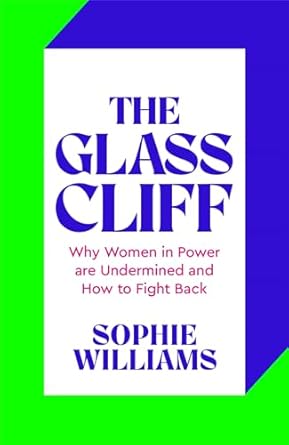 Have you ever wondered why there are so few success stories of women in business leadership? Or maybe you’ve wondered what life is really like on the other side of The Glass Ceiling? The world of work is supposedly changing, embracing diversity – yet are the opportunities we’re giving to women really equal to those of men?