
How women made history – and men took the credit.
BEKLAUTE FRAUEN
(Stolen Fame: Philosophers, Scholars, Pioneers: History’s Invisible Heroines)
by Leonie Schöler
Penguin, February 2024
 Muse, secretary, wife: these are some of the labels used to describe the women whose influence on history has been erased. Their achievements have brought honour and fame to the men close to them – such as Karl Marx, Bertolt Brecht and Albert Einstein, who couldn’t have done what they did without their female friends, daughters or lovers – but they themselves remain largely unknown. The list includes scientists like Rosalind Franklin and Lise Meitner, who, unlike their male colleagues, were never celebrated for their discoveries; and authors and artists like Marie Hirsch, Lou Andreas-Salomé and Hedwig Thun, who hid behind male pseudonyms all their lives in order to be taken seriously. In « Stolen Fame », Schöler tells their stories, introducing us to the women who changed human history and showing that there are still issues around participation and visibility. Behind every successful man is a system that empowers him – and that system stands in every woman’s way.
For fans of Invisible Women by Caroline Criado Perez, Unlearn Patriarchy by Lisa Jaspers et al., The Patriarchy of Thing » by Rebekka Endler and Hidden Figures by Margot Lee Shetterly.
Leonie Schöler is a historian, journalist and presenter. Her articles have been published in taz and Zeit Online, and she also works as an editor and online filmmaker (« Jäger und Sammler », « Y-Kollektiv » and « Auf Klo ») for various broadcasters. Her documentary exposing fraud and money laundering at Germany’s largest meat processing company came out in 2021, and she is the author and director of a 2022 online series about the infamous Wannsee Conference (both shown by ZDF). She produces popular history content for TikTok and Instagram and talks to her more than 170k followers about politics past and present. In 2022, she became presenter of ZDF’s Heureka programme (shown on YouTube).
 We live in a world of mixed messages for women: You can be anything you want to be, but don’t expect to be paid equally for it; It’s what is inside that counts, but be sure to wax, bleach, and slim down what’s outside first; You deserve respect and equality, but our laws won’t always protect your rights. Most parents find it easier to tell girls how strong, equal, and powerful they are than to talk about how the world can be particularly difficult or scary for them. But when we don’t address the challenging or disturbing experiences most girls endure, we contribute to the problem.
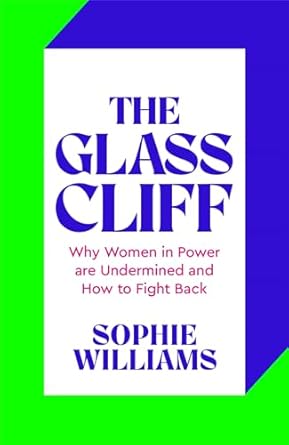 Have you ever wondered why there are so few success stories of women in business leadership? Or maybe you’ve wondered what life is really like on the other side of The Glass Ceiling? The world of work is supposedly changing, embracing diversity – yet are the opportunities we’re giving to women really equal to those of men?
 Abigail blends reporting, research, and history to create an international portrait of new motherhood and the policies that scaffold this transitional phase of life. As debates surrounding paid leave, universal daycare, and national healthcare rage on across different corners of the globe, FOUR MOTHERS is an intimate narrative of what those policies mean in the everyday lives of four women—and a compelling argument for the necessity and urgency of supporting parents.