
The first accessible, non-esoteric book about traditional female knowledge.
WEISE FRAUEN
by Miriam Stein
Goldmann/PRH Germany, October 2024
 Healers, shamans, priests, midwives, soothsayers: in antiquity, female communities and networks exchanged valuable, even life-saving, knowledge about nursing, healing, spirituality and sexuality. But in our patriarchal societies with their male-dominated academic discourse, female knowledge was often dismissed as irrelevant or un-serious and esoteric.
In her new book, culture journalist and bestselling author Miriam Stein goes in search of the forgotten heroes of our past, whose work still shapes our lives and thoughts today. It is a very personal journey, on which she talks to the modern heirs of our wise foremothers, including sex workers and shamans. She invites us to rediscover traditional female knowledge, and use it to live a feminist life of modern, empowered sisterhood.
Miriam Yung Min Stein is a journalist and author. She was born in South Korea in 1977 and adopted by a family in Osnabrück, where she grew up. She has performed on stage with Christoph Schlingensief and Rimini Protokoll, and published several books, including the bestselling Die gereizte Frau (‘The Irritated Woman’).
 When Nancy Reddy had her first child, she found herself suddenly confronted with the ideal of a perfect mother—a woman who was constantly available, endlessly patient, and immediately invested in her child to the exclusion of all else. Nancy had been raised by a single working mother, considered herself a feminist, and was well on her way to a PhD. Why did doing motherhood “right” feel so wrong?
 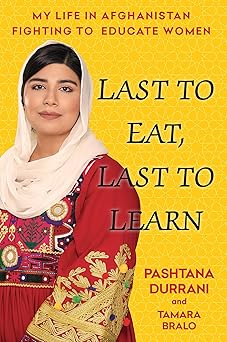 LAST TO EAT, LAST TO LEARN is the remarkable memoir of Pashtana Durrani, a 23-year-old Afghan woman, who has pursued her passion for educating the “disappearing girls” of the remote, contested rural tribal regions, amidst all the turmoil, violence and oppression that has enveloped her country – and her family — over a generation.
 Where mostly male behavioral psychologists have previously dominated the categories of happiness and optimization, Corinne, a professor at University of Pennsylvania’s Wharton School, applies economic principles to uniquely female concerns. Teaching readers how to use concepts like personal utility function (how we individually maximize profit and joy) and constrained optimization (making the best choice within external limits) to think about decisions and tradeoffs like the cost of a biological clock, Corinne will arm women with the tools they need to ask for more: from their partners, from their bosses, and from the system itself.
 It is an unseasonably warm Sunday in November 1957. Katheen, a college tennis champion turned Delaware housewife, decides not to join her flagrantly handsome life insurance salesman husband, Virgil, or their two young boys, at church. Instead, she takes a dip in the kidney-shaped swimming pool of their apartment complex. And then she won’t come out.