
Bestselling and award-winning author Megan Abbott’s revelatory, mesmerizing, and game-changing new novel set against the hothouse of a family-run ballet studio, and an interloper who arrives to bring down the carefully crafted Eden-like facade.
THE TURNOUT
by Megan Abbott
Putnam, June 2021
(chez Writers House – voir catalogue)
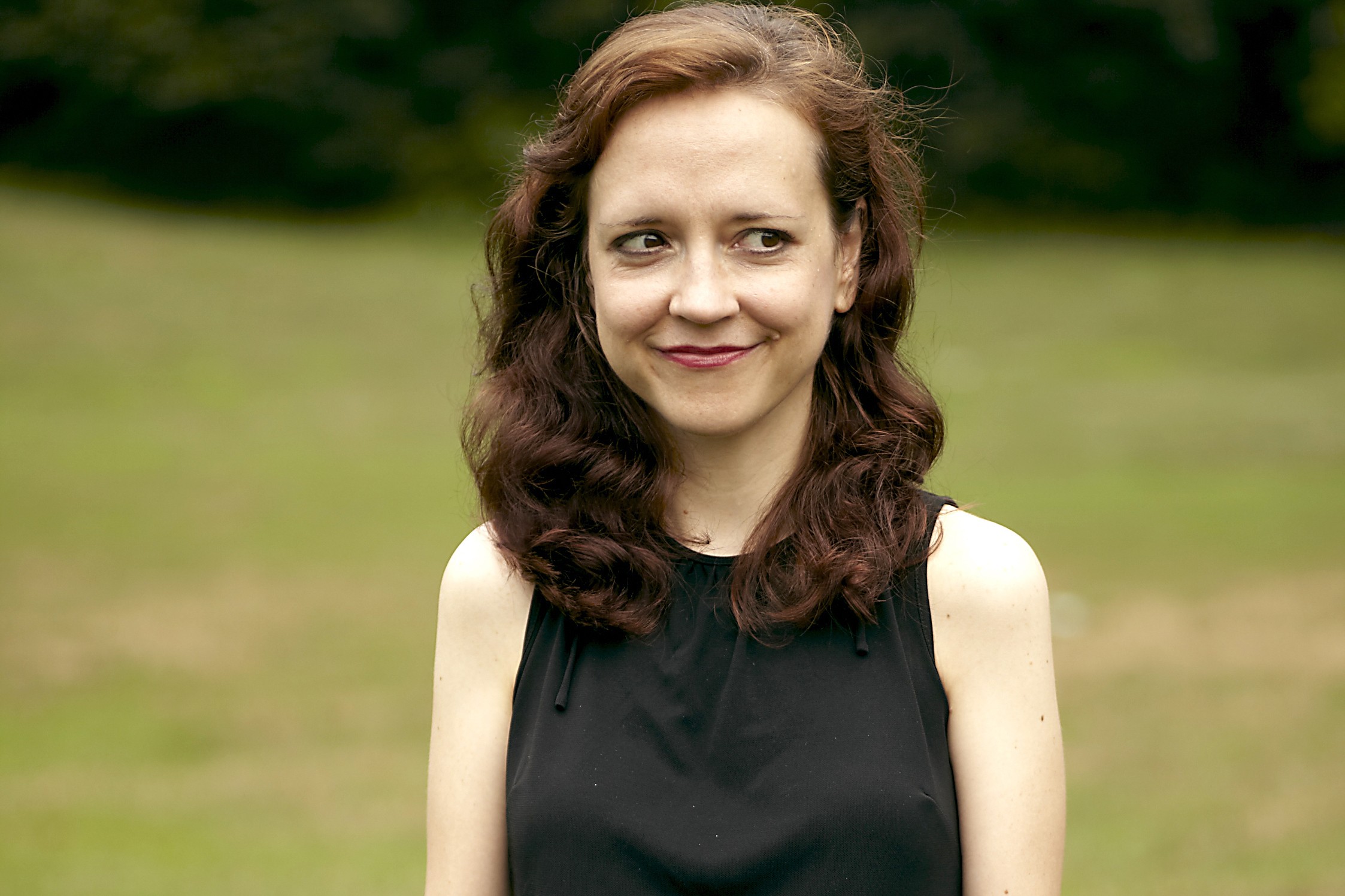 Ballet flows through their veins. Dara and Marie Durant were dancers since birth, with their long necks and matching buns and pink tights, homeschooled and trained by their mother. Decades later the Durant School of Dance is theirs. The two sisters, together with Charlie, Dara’s husband and once their mother’s prize student, inherited the school after their parents died in a tragic accident nearly a dozen years ago. Marie, warm and soft, teaches the younger students; Dara, with her precision, trains the older ones; and Charlie, back broken after years of injuries, rules over the back office. Circling around each other, the three have perfected a dance, six days a week, that keeps the studio thriving. But when a suspicious accident occurs, just at the onset of the school’s annual performance of The Nutcracker, a season of competition, anxiety, and exhilaration, an interloper arrives and threatens the delicate balance of everything they’ve worked for.
Taut and unnerving, THE TURNOUT is Megan Abbott at the height of her game. With uncanny insight and hypnotic writing, it is a sharp and strange dissection of family ties and sexuality, femininity and power, and a tale that is both alarming and irresistible
Megan Abbott is the award-winning author of nine novels, including Give Me Your Hand, You Will Know Me, The Fever, Dare Me, and The End of Everything. She received her PhD in literature from New York University. Her writing has appeared in The New York Times, the Wall Street Journal, the Los Angeles Times Magazine, The Guardian, and The Believer. She is the co-creator and executive producer of USA’s adaptation of Dare Me and was a staff writer on HBO’s David Simon show, The Deuce. She lives in New York City.
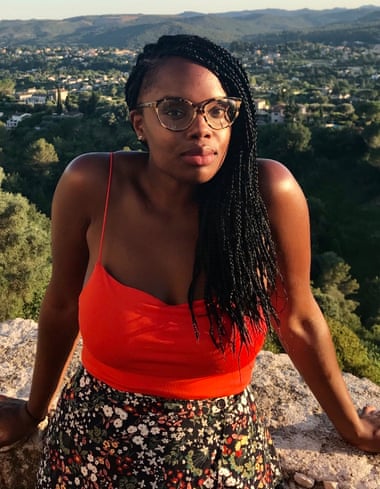 When Sutanya Dacres married her French boyfriend and moved to Paris in 2013, she felt like she was living out her very own fairy tale. Jamaican-born and New York-raised, she had never entertained fantasies of living abroad, until her grad school days when she discovered the blogs of expat women living in Paris and began to dream of a different life in a different land. Then she met a French man in a bar, fell in love, and voilà, almost as if she willed it, she was living her Parisian fantasy, embarking on her own “happily ever after” … until her marriage fell apart. Sutanya looked back to her beloved bloggers for guidance, but realized their rosé-tinted reality didn’t match up to her own. For one thing, they weren’t writing about divorce. For another, they weren’t Black. While her marriage had ended and the façade of picture-perfect Paris had cracked, Sutanya wasn’t giving up on the City of Light. Instead, she decided to figure out for herself what happens after the Paris fairy tale ends, and to find a way to mend her broken heart and create a home for herself, beginning in her kitchen. Determined to share her genuine, candid perspective and offer a counter-narrative to the typical idealized expat story, Sutanya launched her podcast, Dinner for One, in February 2018. In each episode, she invites listeners into her Paris kitchen as she shares her experiences as a 30-something hopeless romantic embracing her post-divorce life and celebrating the joy of learning to love cooking for herself. This book grew out of the podcast.
 Taking us from the slave era, when white women fought in court to keep “ownership” of their slaves, through the centuries of colonialism, when they offered a soft face for brutal tactics, to the modern workplace, White Tears/Brown Scars tells a charged story of white women’s active participation in campaigns of oppression. It offers a long overdue validation of the experiences of women of color. Discussing subjects as varied as The Hunger Games, Alexandria Ocasio-Cortez, the viral BBQ Becky video, and 19th century lynchings of Mexicans in the American Southwest, Ruby Hamad undertakes a new investigation of gender and race. She shows how the division between innocent white women and racialized, sexualized women of color was created, and why this division is crucial to confront. Along the way, there are revelatory responses to questions like: Why are white men not troubled by sexual assault on women? (See Christine Blasey Ford.) With rigor and precision, Hamad builds a powerful argument about the legacy of white superiority that we are socialized within, a reality that we must apprehend in order to fight.
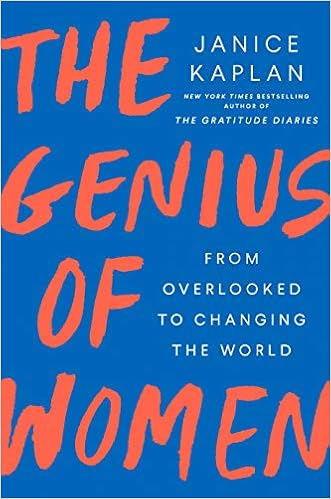 Even in this time of rethinking women’s roles, we define genius almost exclusively through male achievement. When asked to name a genius, people mention Albert Einstein, Leonardo da Vinci, and Steve Jobs. As for great women? In one survey, the only female genius anyone listed was Marie Curie. Janice Kaplan, the New York Times bestselling author of The Gratitude Diaries, set out to determine why the extraordinary work of so many women has been brushed aside. Using her unique mix of memoir, narrative, and inspiration, she makes surprising discoveries about women geniuses now and throughout history, in fields from music to robotics. Through interviews with neuroscientists, psychologists, and dozens of women geniuses at work in the world today—including Nobel Prize winner Frances Arnold and AI expert Fei-Fei Li—she proves that genius isn’t just about talent. It’s about having that talent recognized, nurtured, and celebrated. Across the generations, even when they face less-than-perfect circumstances, women geniuses have created brilliant and original work. In THE GENIUS OF WOMEN, you’ll learn how they ignored obstacles and broke down seemingly unshakable barriers. The geniuses in this moving, powerful, and very entertaining book provide more than inspiration—they offer a clear blueprint to everyone who wants to find her own path and move forward with passion.
  Most of us do not give much thought to the centerpiece of our bathrooms, but the toilet is an unexpected paradox. On the one hand, it is a modern miracle: a ubiquitous fixture in a vast sanitation system that has helped add decades to human lifespan by reducing disease. On the other hand, the toilet is also a tragic failure: less than half of the world’s population can access a toilet that safely manages bodily waste, including many right here in the United States. And it is inefficient, squandering clean water as well as the nutrients and energy contained in the waste we flush away. While we see radical technological change in almost every other aspect of our lives, we remain stuck in a sanitation status quo—in part because the topic of toilets is taboo. Fortunately, there’s hope—and PIPE DREAMS daringly profiles the growing army of scientists, engineers, philanthropists, entrepreneurs, and activists worldwide who are overcoming their aversions and focusing their formidable skills on making toilets accessible and healthier for all. This potential revolution in sanitation has many benefits, including reducing inequalities, mitigating climate change and water scarcity, improving agriculture, and optimizing health. Author Chelsea Wald takes us on a wild world tour from a compost toilet project in Haiti, to a plant in the Netherlands that harvests used toilet paper from sewage, and shows us a bot that hangs out in manholes to estimate opioid use in a city, among many other fascinating developments. Much more than a glorified trash can, the toilet, Wald maintains, holds the power to help solve many of the world’s problems, if only we can harness it.