
From New York Times-bestselling author Alyssa Sheinmel comes a haunting, layered novel about loss, mental health, and the danger of keeping secrets for fans of Girl in Pieces and We Were Liars.
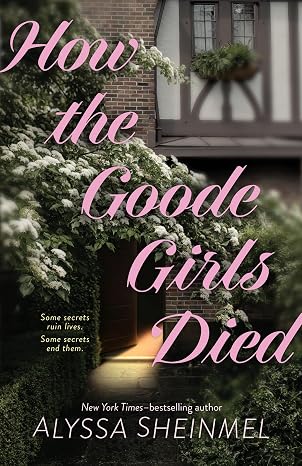
HOW THE GOODE GIRLS DIED
by Alyssa Sheinmel
Farrar, Straus and Giroux, April 2027
(via Park, Fine & Brower)
 Francie, Now:
Francie Buck is the new girl at Arborville Country Day, a prestigious private school ruled by a gossip app only the most popular students can access. At her old school, Francie was a loser—she lost her mother to cancer and her best friend to the popular kids—but enrolling at ACD is her chance to be someone new. When Francie’s the first to learn her classmates Arden and Abigial Goode have died, the app’s shadowy creator forces Francie into the mystery surrounding their deaths.
Abby, Then:
Abby Goode is used to being alone. Her vicious older sister, Arden, who sits at the top of their prep school’s strict hierarchy, keeps it that way. But when Abby finds an unexpected friend in lacrosse player Leo Finch, she realizes that together, they might be able to expose her sister’s cruelty to the world.
As every twist brings Francie closer to the truth about what happened, the stakes for Abby grow higher, and both girls must reconsider who they can trust in this suspenseful, deeply-felt tale about the secrets that ruin lives—and the secrets that end them.
Alyssa Sheinmel is the New York Times-bestselling author of several novels for young adults, including A Danger to Herself and Others, The Castle School for Troubled Girls, and Faceless as well as her adult debut, Such Sheltered Lives. Alyssa grew up in Northern California and New York and currently lives and writes in New York. Follow her on Instagram @AlyssaSheinmel or visit her online at AlyssaSheinmel.com.
 Maggie May has a lot going for her.
 As children, three wayward sisters―wandering the grounds of the family’s mysterious seaside hotel in Northern California, on the day of an annual masquerade auction―discover (and steal) a highly desirable and expensive book. . . and accidentally fall into another, more magical world.
 Filled with 5,000 tantalizing facts and more than 300 charts, maps, and photographs, this book offers a dazzling look at the cosmos from our home planet to the farthest reaches of outer space.
 Chef Daniel Boulud’s career to date has spanned four decades, more than a dozen restaurants worldwide, and the mentorship of countless chefs, many of whom have become household names in their own right. He first trained under a succession of influential figures in his native France, but as readers will learn in this book, it’s been his relationship with New York City, and by extension America, that has been the greatest catalyst for his seemingly boundless ideas, energy, and success. As the fortieth anniversary of his moving to New York City approaches, Danie is ready to tell his story, and that of his times, mingling it with a