
A spectacular cold case from 1930s Berlin – the new book by the bestselling author.
DAS VERSCHWINDEN DES DR. MÜHE
(Dr Mühe’s Disappearance)
by Oliver Hilmes
Penguin Random House Germany, August 2020 (voir catalogue)
 During the final months of the Weimar Republic, a highly regarded doctor disappears. His sports car is found abandoned on the shores of a lake near Berlin. The homicide division investigates and discovers that the respectable medic’s carefully cultivated façade has been hiding a shady double life, whose trail leads from Berlin all the way to Barcelona. Oliver Hilmes has reconstructed this sensational and puzzling case from files discovered in Berlin’s regional archive. Enriched with fictional touches, Dr Mühe’s Disappearance is the gripping and ingenious story of the search for truth, and of the dark side of middle-class life on the eve of dictatorship.
Oliver Hilmes, born in 1971, studied history, politics and psychology in Marburg, Paris and Potsdam. He is the author of bestselling biographies of Alma Mahler-Werfel, Cosima Wagner, Franz Liszt and Ludwig II. His award-winning bestseller Berlin 1936: Sixteen Days in August was translated into several languages.
 When someone asks Mavie about her cool glow-in-the-dark tattoo at a party, she thinks they’re joking. But then she sees it herself, in the light on the dancefloor – and panics. How did the scorpion get on her skin? Mavie has no idea that the sign makes her the target of a sinister game. Meanwhile, detectives Inga Björk and Christian Brand are investigating the case of a jogger found brutally murdered in a forest. They don’t know that this is just the beginning of a sadistic series of murders – and that the only way they can stop it is by changing sides and joining in the deadly game …
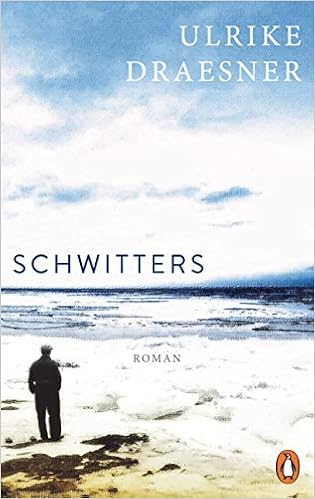 How do you begin a future that has essentially already ended, separated from your home, your language and yourself by a stretch of water? Kurt Schwitters is forty-nine years old when the Nazis force him to flee Germany. His success, work, possessions, parents, and wife Helma stay behind – and art gives way to the art of survival. Schwitters’s second life in a foreign language begins in Norway, then takes him to London and finally to the Lake District. Wantee, the new woman at his side, keeps him on course and his head above water, even when the word artist falls silent. With his Merzbau installation, Schwitters has discovered a new way to capture sky and serenity, shimmering meadows and transparent air. He is ludicrously disciplined, to the point of exhaustion. As we watch him at work, we learn that art doesn’t interpret the world: It translates it into forms that move us. In SCHWITTERS, Ulrike Draesner follows the writer and artist Kurt Schwitters into exile, giving voice to Kurt, his wife, his son and his lover. Through a virtuoso blend of fact and fiction, she has created a panorama of a time when the struggle for freedom and art was renewed in the face of a world on fire.
 How we present ourselves and how we are perceived by others are in effect part of our personality. The image we project and the roles we play are crucial to our success in both professional and private contexts. Tijen Onaran, a renowned speaker and networker, masterfully explains how to create a personal brand, find our own agenda, and shape how we are perceived online in social media and offline as well. In doing so, she recounts her own experiences in politics and the digital world, including her setbacks, learning effects, and her own personal branding.
 Actors Romy Schneider and Alain Delon were the dream couple of the 1960s. They fell in love when they first met in Paris in 1958 on the set of the Arthur Schnitzler adaptation Christine, and their extraordinary roller-coaster affair would last five years. Four years later, they are reunited in front of the camera, playing lovers in the cult film The Swimming Pool, and thus begins a friendship that would last until Romy Schneider’s untimely and tragic death in 1982. When she died, it was Alain Delon who took care of everything. She was the love of his life: « Our love didn’t end. It changed. » To tell their story, the author and biographer Thilo Wydra has conducted countless in-depth interviews with Romy Schneider and Alain Delon’s friends and colleagues in France and Germany, among them Jane Birkin, Senta Berger, Mario Adorf, Jean-Claude Carrière, Michael Verhoeven, Volker Schlöndorff, and many others – and in their personal recollections the German-French lovers come alive once again.