
A powerful portrait of an unforgettable woman with a talent for survival, whose life spans the early twentieth century, from a writer acclaimed for her “unwavering passion and insight” (Jess Walter, NYT bestselling author of The Cold Millions)
WILD ASTER
by Anna Hogeland
Bloomsbury, Fall 2026
(DeFiore and Co.)
Mae Smith starts her life as a stolen good: her biological mother, Ida, kidnaps her from her adoptive parents, and Mae grows up on the run, constantly changing towns and names, never able to find a home. After her mother’s death, Mae is determined to live a different kind of life. But over the next half century, as she reinvents herself against the backdrop of the Depression and Second World War and pursues stability amid the personal upheavals of marriage and motherhood, she must reckon with the choices she’s made and life’s inexorable turns.
For readers of Zorrie by Laird Hunt, The Ninth Hour by Alice McDermott, and The Boston Girl by Anita Diamant, Wild Aster explores the price of security, the drive to be a different mother than your own, and the daily gains and losses that define who we become. Ultimately, Mae’s story challenges us to confront the choices we make for personal fulfillment and family obligation and the perseverance that even a seemingly ordinary life demands.
Anna Hogeland is the author of the novel The Long Answer (Riverhead, 2022). She is a psychotherapist in private practice, with an MSW from Smith College School for Social Work and an MFA from UC Irvine. Her essays have appeared in Literary Hub, Big Issue, Gloss Magazine, Romper, and elsewhere. She lives in Massachusetts.
 The city you grew up in is gone, as if sunk to the bottom of the ocean. So much has vanished with it—classmates, teachers, counterfeit watches, the erotic toe cleavage that used to lead the way down secret passages. Yet you still catch snatches of conversation lingering in the air and glimpse sun-dazzled residents retreating into dark crevices.
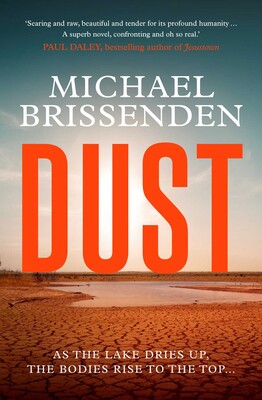 Lake Herrod, a once-thriving community, now lies in the shadow of a nearly dry lake. The town, like the water, is evaporating and its residents are left clinging to what little remains.