How can we be more mindful when the world is this f*cked up? HOW TO STAY HUMAN IN A F*CKED UP WORLD is the fresh, engaging answer to this important question.
HOW TO STAY HUMAN IN A F*CKED UP WORLD:
Mindful Practices for Real Life
by Tim Desmond
HarperOne, June 2019
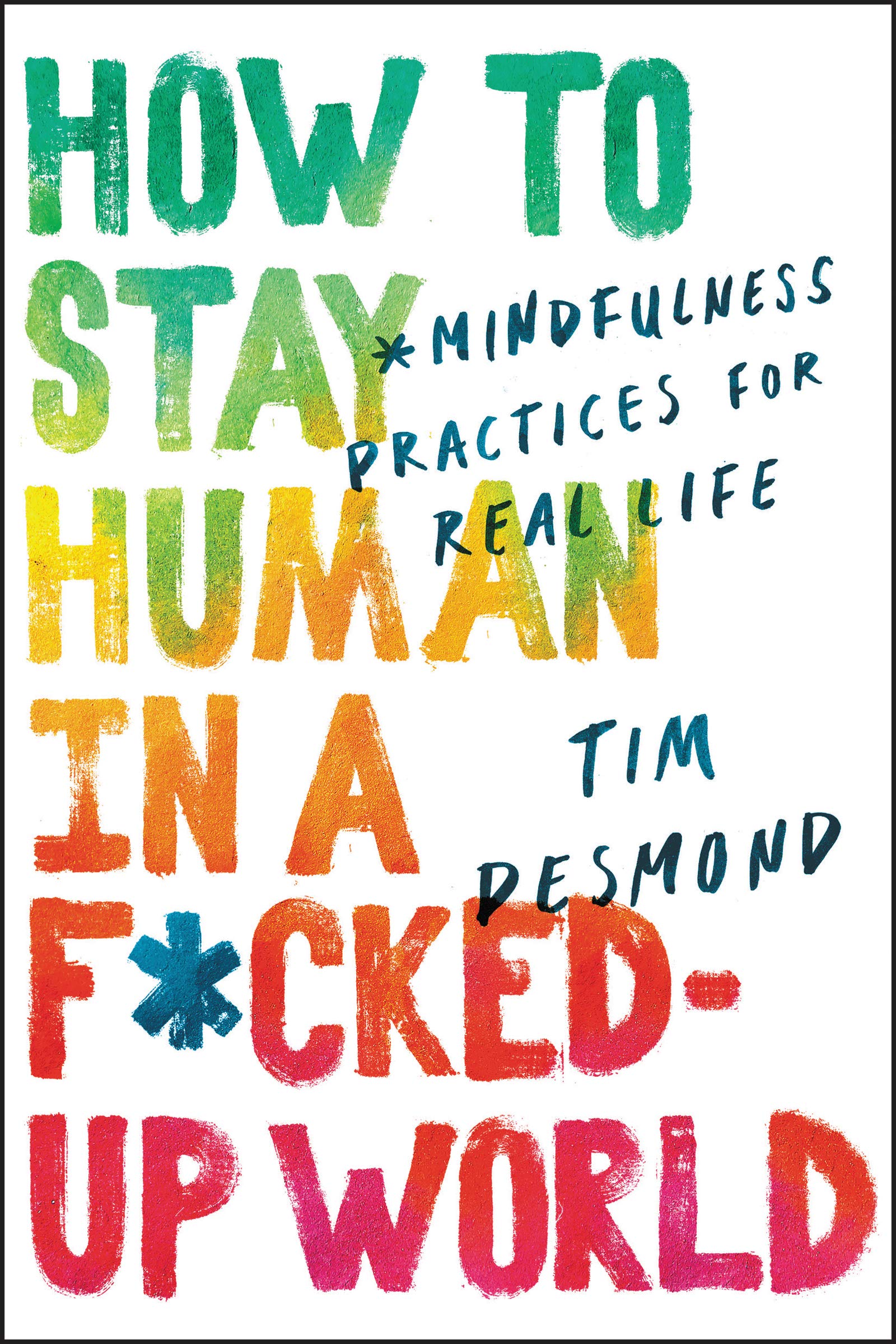 If you’ve tried mindfulness before and failed, we get it. Likely you were told to sit on a pillow in a dark room, meditate, or count your breaths. But mindfulness isn’t about separating ourselves from the problems in the world. Instead, it is about re-learning how to get out there, connect with the suffering of every living being and in so doing, embrace your own personal suffering to heal, transform, grow, and finally find peace. Tim Desmond—an esteemed Buddhist philosopher who has lectured on psychology at both Harvard and Yale and studied under Zen master Thich Nhat Hanh—has spent his life cultivating new ways to bridge the gap between the ancient tradition of mindfulness and modern life. With How to Stay Human in a F*cked Up World Desmond gets right to the heart of our collective pain with a life-changing mindfulness practice for surviving the sometimes-miserable world we live in, featuring strategies and guidance you can start using to feel more connected, joyful, and present today.
Timothy Ambrose Desmond is a Distinguished Faculty Scholar at Antioch University teaching professional psychology rooted in self-compassion. He has lectured at Yale School of Medicine, and taught mindfulness in all 50 states. After having grown up poor in Boston with a single alcoholic mother and having been homeless as a teenager, Desmond was exposed to the teachings of Thich Nhat Hanh, and eventually studied closely with Thich Nhat Hanh and his senior monastics at Plum Village. In 2011, Desmond co-founded Morning Sun Mindfulness Center, an intentional community and retreat center in Alstead, NH. When he isn’t teaching, advising, or on retreat, Desmond is organizing progressive political demonstrations, and was one of the core organizers of Occupy Wall Street.

 Dans cet article récemment publié sur le site de l’entreprise Thrive Global, créée par Ariana Huffington pour lutter contre le stress au travail, l’auteure Sarah Wilson conseille à ceux qui souffrent d’anxiété en cette période difficile de l’affronter pour la faire disparaître, plutôt que de la fuir.
 In today’s fractured world we’re constantly flooded with breaking news that causes anger, grief, and pain. People are feeling more stressed out than ever and in the face of this fear and anxiety they can feel so burnt out and overwhelmed that they end up frozen in their tracks and can’t do anything. In REAL CHANGE Sharon Salzberg, a leading expert in Lovingkindness meditation, shares sage advice and indispensable techniques to help free ourselves from these negative feelings and actions. She teaches us that meditation is not a replacement for action, but rather a way to practice generosity with ourselves and summon the courage to break through boundaries, reconnect to a movement that’s bigger than ourselves, and have the energy to stay active.
 Empathy is in short supply. Isolation and tribalism are rampant. We struggle to understand people who aren’t like us, but find it easy to hate them. Studies show that we are less caring than we were even thirty years ago. In 2006, Barack Obama said that the United States is suffering from an “empathy deficit.” Since then, things only seem to have gotten worse. It doesn’t have to be this way. In this groundbreaking book, Jamil Zaki argues that empathy is not a fixed trait—something we’re born with or not—but rather a skill that we can all strengthen through effort. Drawing on both classic and cutting-edge research, including experiments from his own lab, Zaki shows how we can harness this new mindset to overcome toxic cultural divisions. He also tells the stories of people who are living these principles—fighting for kindness in the most difficult of circumstances. We meet a former neo-Nazi who is now helping extract people from hate groups, ex-prisoners discussing novels with the judge who sentenced them, Washington police officers changing their culture to decrease violence among their ranks, and NICU nurses fine-tuning their empathy so that they don’t succumb to burnout. Written with clarity and passion, The War for Kindness is an inspiring call to action. The future may depend on whether we accept the challenge.