
From the New York Times bestselling author of Love & Gelato comes a poignant and romantic novel about two teens trying to find their place in the world after being unceremoniously dragged to Salem, Massachusetts, for the summer.
SPELLS FOR LOST THINGS
by Jenna Evans Welch
Simon & Schuster BYR, September 2022
(via Sterling Lord Literistic)
 Willow has never felt like she belonged anywhere and is convinced that the only way to find a true home is to travel the world. But her plans to act on her dream are put on hold when her aloof and often absent mother drags Willow to Salem, Massachusetts, to wrap up the affairs of an aunt Willow didn’t even know she had. An aunt who may or may not have been a witch.
There, she meets Mason, a loner who’s always felt out of place and has been in and out of foster homes his entire life. He’s been classified as one of the runaways, constantly searching for ways to make it back to his mom; even if she can’t take care of him, it’s his job to try and take care of her. Isn’t it?
Naturally pulled to one another, Willow and Mason set out across Salem to discover the secret past of Willow’s mother, her aunt, and the ambiguous history of her family. During all of this, the two can’t help but act on their natural connection. But with the amount of baggage between them—and Willow’s growing conviction her family might be cursed—can they manage to hold onto each other?
Jenna Evans Welch was the kind of insatiable child reader who had no choice but to grow up to become a writer. She is the New York Times bestselling author of Love & Gelato, Love & Luck, and Love & Olives. When she isn’t writing girl abroad stories, Jenna can be found chasing her children or making elaborate messes in the kitchen. She lives in Salt Lake City, Utah, with her husband and two young children.
 Guided by its eccentric, eponymous narrator, readers of PLAGUED! will learn the stories of history’s most virulent sicknesses—such as bubonic plague, rabies, scurvy, polio, tuberculosis, and smallpox—and how medicine tried to combat them through the ages. The book will look at successful measures, such as the closure of ports to halt the spread of the Black Death; to weird and hopeless remedies, such as urine mouthwashes to cure scurvy.
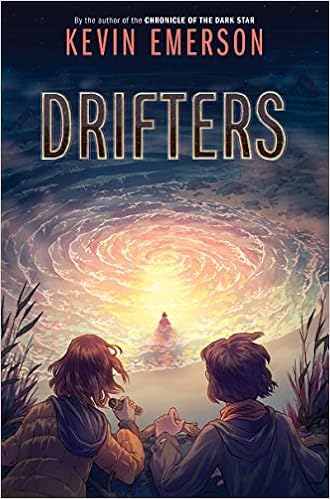 Jovie is adrift. She’d been feeling alone ever since her best friend, Micah, left her behind for a new group of friends—but when Micah went missing last fall, Jovie felt truly lost. Now, months later, the search parties have been called off, and the news alerts have dried up. There’s only Jovie, biking around Far Haven, Washington, putting up posters with Micah’s face on them, feeling like she’s the only one who remembers her friend at all. This feeling may be far closer to the truth than Jovie knows. As strange storms beset Far Haven, she is shocked to discover that Micah isn’t just missing—she’s been forgotten completely by everyone in town. And Micah isn’t the only one: there are others, roaming the beaches, camped in the old bunkers, who have somehow been lost from the world. When Jovie and her new friend Sylvan dig deeper, they learn that the town’s history is far stranger and more deadly than anyone knows. Something disastrous is heading for Far Haven, and Jovie and Sylvan soon realize that it is up to them to save not only Micah, but everyone else who has been lost to the world and set adrift—now, in the past, and in the future.
 A stinging, elegiac snapshot of contemporary Los Angeles, told, you guessed it, from the perspective of a queer, dangerously hungry mountain lion, isolated and struggling to survive in a drought-devastated Griffith Park. As it protects the precarious welfare of a nearby homeless encampment from its thicket, it confronts a carousel of temptations and threats, taking us on a tour that spans the city’s cruel inequalities to the toll of climate grief, all while grappling with the complexities of its own gender identity and memories of a vicious, absent father.
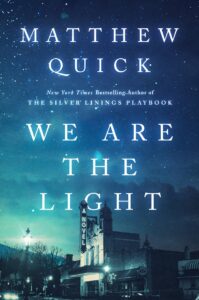 Lucas Goodgame lives in a small town in Pennsylvania, a community that has been torn apart by a recent tragedy at the local movie house. Everyone in town sees Lucas as a hero—everyone, that is, except Lucas himself. Lucas spends his time writing letters to his former Jungian analyst Karl, and he insists that his deceased wife Darcy visits him every night in the form of an angel. It is only when 18-year-old Eli, a young man who the community has ostracized, begins camping out in Lucas’s backyard that an unlikely alliance forms and the two begin a journey to heal their neighbors and, most importantly, themselves.