
THE PHOENIX PENCIL COMPANY combines the cross-generational relationships and epistolary form of Ruth Ozeki’s A Tale for the Time Being with the magical alternate history and probing questions of R.F. Kuang’s Babel. Told in dual timelines, its overarching question is: who owns a story?
THE PHOENIX PENCIL COMPANY
by Allison King
HarperCollins, Summer 2025
(via The Gernert Company)
 Yun is a ninety-year-old woman recounting her time growing up in the Phoenix Pencil Company in 1940s Shanghai. While Japan invades China, Yun’s cousin moves in with them, and the two develop a competitive yet loving relationship. When the government discovers their family can magically Reforge a pencil’s words, bringing its words back to life, the cousins are separated and forced into a life of betraying stories in order to survive.
Monica is Yun’s granddaughter, a modern-day college student in America, set on using her software engineering skills to help reunite Yun with her long lost cousin. Through her attempts, she meets Louise, an aspiring digital archivist, ruthlessly determined to record the stories of those who survived World War II. As Monica learns more of Yun’s story, she must confront the same questions her grandmother once did—of what kinds of stories should be preserved, and when data should be left private—all while navigating her growing feelings towards Louise.
THE PHOENIX PENCIL COMPANY is part historical fantasy, part romance, all complex family dynamics, with a smattering of data privacy thrown in. It is loosely inspired by Allison’s own grandparents and the pencil company they once ran in Shanghai.
Allison King is a software engineer based in Cambridge, Massachusetts, and has dedicated time to sharing local community stories and working in data privacy. A story of hers is to be featured on LeVar Burton’s podcast this fall, and other pieces have appeared in Fantasy Magazine, Diabolical Plots, and Paula Guran’s Year’s Best Fantasy, among others. She is also a 2023 Reese’s Book Club LitUp fellow.
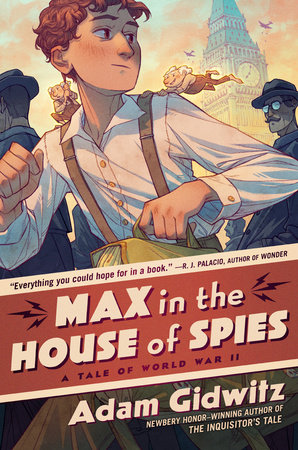 Max Bretzfeld doesn’t want to move to London.
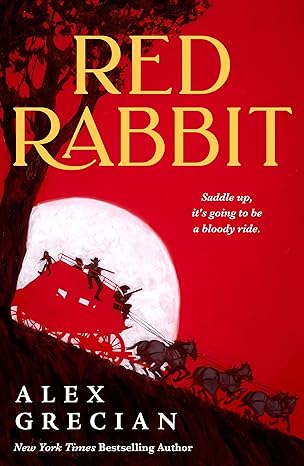 Sadie Grace is wanted for witchcraft, dead (or alive). And every hired gun in Kansas is out to collect the bounty on her head, including bona fide witch hunter Old Tom and his mysterious, mute ward, Rabbit. On the road to Burden County, they’re joined by two vagabond cowboys with a strong sense of adventure – but no sense of purpose – and a recently widowed schoolteacher with nothing left to lose. As their posse grows, so too does the danger. Racing along the drought-stricken plains in a stolen red stagecoach, they encounter monsters more wicked than witches lurking along the dusty trail. But the crew is determined to get that bounty, or die trying. Written with the devilish cadence of Stephen Graham Jones and the pulse-pounding brutality of Nick Cutter, Red Rabbit is a supernatural adventure of luck and misfortune.
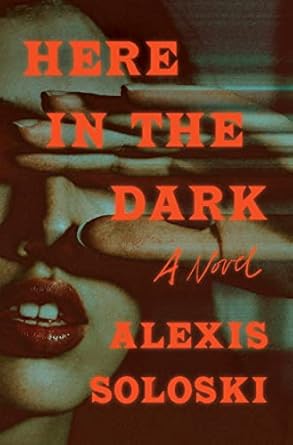 Vivian Parry likes the dark. A former actress, she now works as the junior theater critic at a major Manhattan magazine. Her nights are spent beyond the lights, in a reserved seat, giving herself over to the shows she loves. By day, she savages them, with words sharper than a knife. Angling for a promotion, Vivian reluctantly agrees to give an interview in which the conversation, with a stranger who seems to know her work, reveals secrets she thought she had long since buried. When her interviewer disappears soon thereafter, she learns from his devastated fiancé that Vivian was the last person to have seen him alive. When the police refuse to investigate, Vivian assumes the role of amateur detective. . As she nears the final act of this investigative ruse, she finds that the boundaries between theater and the real world are more tenuous and more dangerous than even she could have believed. Gripping, propulsive, and shot through with menace and dark glamour, HERE IN THE DARK takes us behind the scenes of New York theater, lifting the curtain on the lies we tell ourselves and each other.
 A leading scholar of artificial intelligence explores the ways in which AI is shaping contemporary culture: how it will change our lives, for better and for worse, and what it means to live in this crucial, watershed moment. The book will be structured around five parts, each centered on a basic ingredient of human creation: Words, Images, Sounds, Motion, and Systems. The chapters contend with how each element is transformed by AI systems, and how the industries that depend upon it are changing, Asking what does this mean for us, as individuals and as a society, Professor Crawford posits that the best way to understand the cultural metamorphosis underway is to start with how AI makes things for us, and what we are making of it. In this way, the book speaks to changes at the foundational level of human creation, as well as addressing a dramatic series of simultaneous industrial shifts.