A passionate call for a new internet – one that wrests control from big tech and puts it back in the hands of the people, through the use of blockchain technology.
READ. WRITE. OWN. :
Building the Next Era of the Internet
by Chris Dixon
Random House, January 2024
(via The Gernert Company)
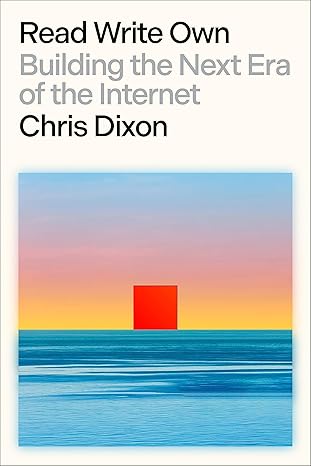 Though few outside a passionate subset of the tech world seem to realize it, the internet has arrived at an inflection point, in two respects. The first regards the history of the internet itself; the second, the technology that will power its future.
Evidence of the first inflection point is all around us. The top 1% of internet services, mostly run by an oligopoly of tech giants, account for 95% of web traffic. Content creators and small businesses depend upon algorithms over which they have no control, and that are subject to change at any time. A tiny handful of people make unilateral decisions with profound consequences for public discourse and who can participate in it, and increasingly for democracy itself. An even tinier handful has become unprecedentedly wealthy off our data, which–unless we want to opt out entirely–we have no choice but to turn over for free.
Chris Dixon remembers the halcyon days of the early internet–Web 1.0, as it’s known–when it was an open, egalitarian, and decentralized place, before it was intermediated by Big Tech. The next era, Web 2.0, brought transformative technologies like social media that connected billions of people–but it also centralized power in the hands of the companies that run them, with increasingly negative consequences for society as a whole.
For over five years, Chris has been advocating for a new kind of internet, which would combine the ethos of the early web while maintaining and innovating upon the benefits of corporate networks. Web3 (a term Chris has done more than anyone else to popularize) would be powered by blockchains, a new kind of computing that does everything corporate networks can do, and much more. They would return power and ownership to users, and foster innovation, precisely because their architecture makes it impossible for one person or company to seize control.
That brings us to the second inflection point. For many people, the past year has turned crypto into a dirty word–even a risible one. But that’s because cryptocurrency, which is but one use case of blockchains, has become in the public mind the province of speculators and grifters. The average person fails to understand that the true power and potential of crypto lies in blockchains themselves, not in the market for their tokens. It’s easy to forget that when the tech bubble burst in 2000, and the speculative frenzy that fueled the spectacular failure of companies like Pets.com and Webvan had subsided, many people thought it was the internet itself that had been overhyped. And yet that same era, and its immediate aftermath, gave us Amazon, Google, and Facebook–three of the most valuable companies in the world, which have fundamentally changed the way we live and work, but whose success has brought us to this crossroads.
There is a battle underway over the soul of crypto: “the computer v. the casino,” as Chris puts it. Sam Bankman-Fried was the figurehead for the latter camp. Chris is the unquestioned thought leader of the former. While the casino gets all the mainstream attention, the future of the internet is quietly being built. READ. WRITE. OWN. is its ZERO TO ONE–and having represented both, that’s not a comparison I make lightly.
Chris Dixon is a general partner at Andreessen Horowitz, where he has been since 2012. He founded and leads a16z crypto, which invests in web3 technologies through four dedicated funds with more than $7 billion under management. In 2022, he was ranked #1 on Forbes’ Midas List of the top venture capitalists. Previously, he founded and was CEO of two internet companies, SiteAdvisor and Hunch, which were acquired by McAfee and eBay, respectively. A programmer by training, he has a BA and MA in Philosophy from Columbia, and an MBA from Harvard. He tweets at @cdixon and blogs at Mirror.

 BEARTOOTH is the story of Thad and Hazen, two brothers from Yellowstone country. Fatherless, abandoned by their mother, and tired of eking out a livelihood poaching bears and chopping firewood, they reluctantly agree to help a mysterious, kilt-wearing Scotsman smuggle elk antlers out of the national park; it turns out rich folks building ski houses want them for chandeliers.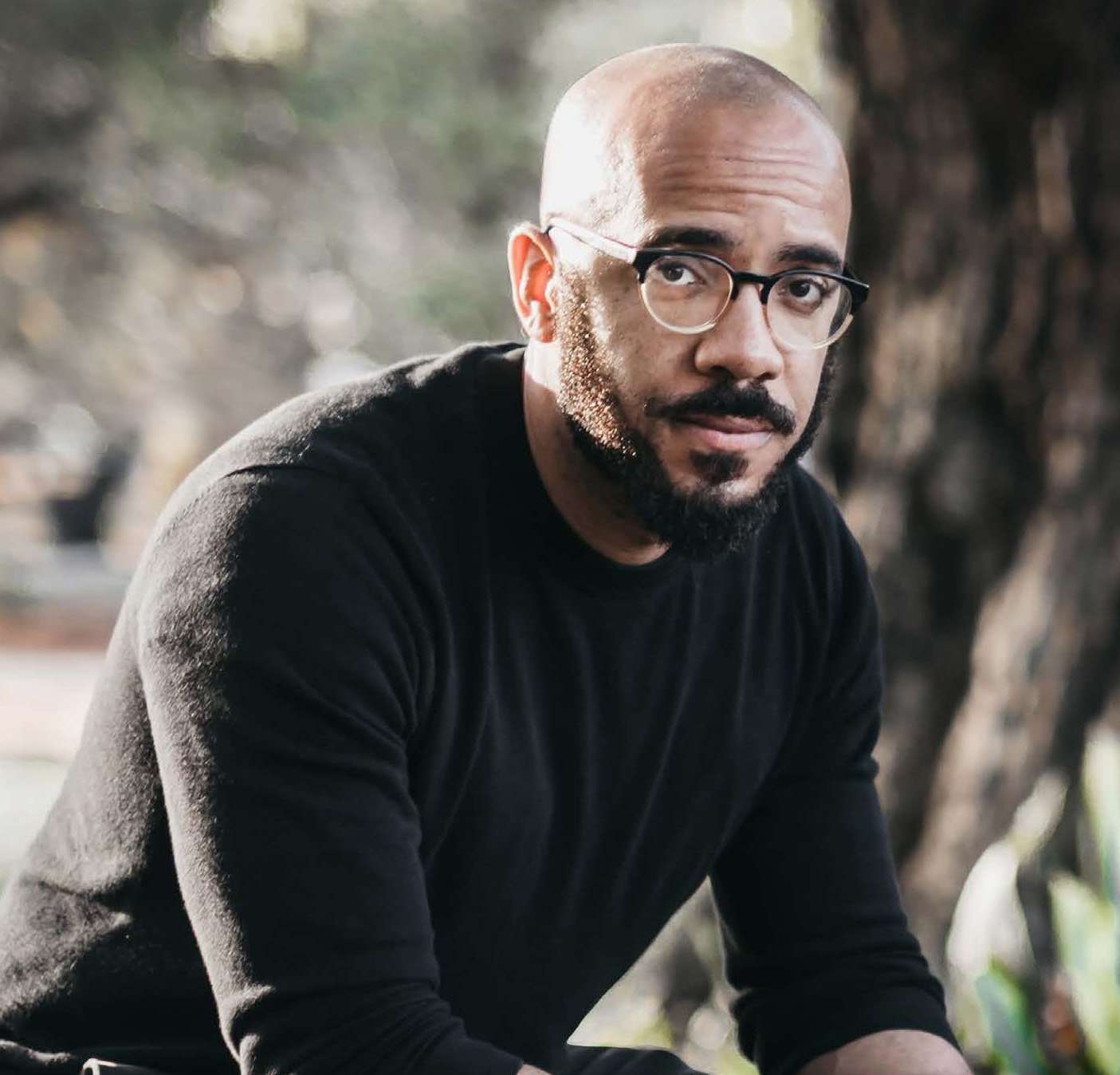
 Reveling in the triumph of a high school football win, a group of newly-friended boys find themselves at a party and—as sometimes happens—might or might not have beaten the crap out the kid that has annoyed them all their lives. These all-stars are suspended for the season, but instead of dwelling tight on the boys, Sameer wraps the narrative around their troubled parents and how they react and interact and judge and confront this family crisis. THE BOYS is about class, and race, and education and the privilege of passing and the lack of privilege if you don’t, and the conflict we find when all of those slam together. It’s about the kids inside each parent, and the games the world makes each of us play.
 Terence Bailey is about to be released from prison for breaking and entering, though investigators have long suspected him in the murders of six women. As his release date approaches, Bailey gets a surprise visit from Maddison Logan, a hot, young influencer with a huge social media following. Hours later, Maddison disappears, and police suspect she’s been kidnapped―or worse. Is Maddison’s disappearance connected to her visit to Bailey? And why was she visiting him in the first place?