Blending history of science, cultural criticism, and memoir, THE GOOD MOTHER MYTH pulls back the curtain on the flawed social science behind our contemporary understanding of what makes a good mom.
THE GOOD MOTHER MYTH
Unlearning Our Bad Ideas About How to Be a Good Mom
by Nancy Reddy
St. Martin’s Press, January 2025
 When Nancy Reddy had her first child, she found herself suddenly confronted with the ideal of a perfect mother—a woman who was constantly available, endlessly patient, and immediately invested in her child to the exclusion of all else. Nancy had been raised by a single working mother, considered herself a feminist, and was well on her way to a PhD. Why did doing motherhood “right” feel so wrong?
For answers, Nancy turned to the mid-twentieth century social scientists and psychologists whose work still forms the basis of so much of what we believe about parenting. It seems ludicrous to imagine modern moms taking advice from mid-century researchers. Yet, their bad ideas about so-called “good” motherhood have seeped so pervasively into our cultural norms. In THE GOOD MOTHER MYTH, Nancy debunks the flawed lab studies, sloppy research, and straightforward misogyny of researchers from Harry Harlow, who claimed to have discovered love by observing monkeys in his lab, to the famous Dr. Spock, whose bestselling parenting guide included just one illustration of a father interacting with his child. This timely and thought-provoking book will make you laugh, cry, and want to scream (sometimes all at once).
Nancy Reddy‘s previous books include the poetry collections Pocket Universe and Double Jinx, a winner of the National Poetry Series. With Emily Pérez, she’s co-editor of The Long Devotion: Poets Writing Motherhood. Her essays have appeared in Slate, Poets & Writers, Romper, The Millions, and elsewhere. The recipient of grants from the New Jersey State Council on the Arts and the Sustainable Arts Foundation and a Walter E. Dakin Fellowship from the Sewanee Writers’ Conference, she teaches writing at Stockton University and writes the newsletter Write More, Be Less Careful.
 A population calamity is unfolding before our eyes. It started in parts of the developed world and is spreading to the four corners of the globe. There are just too few babies being born for humanity to replace itself. Before the end of the current century at the latest, and probably much sooner, the world’s population will start to decline.
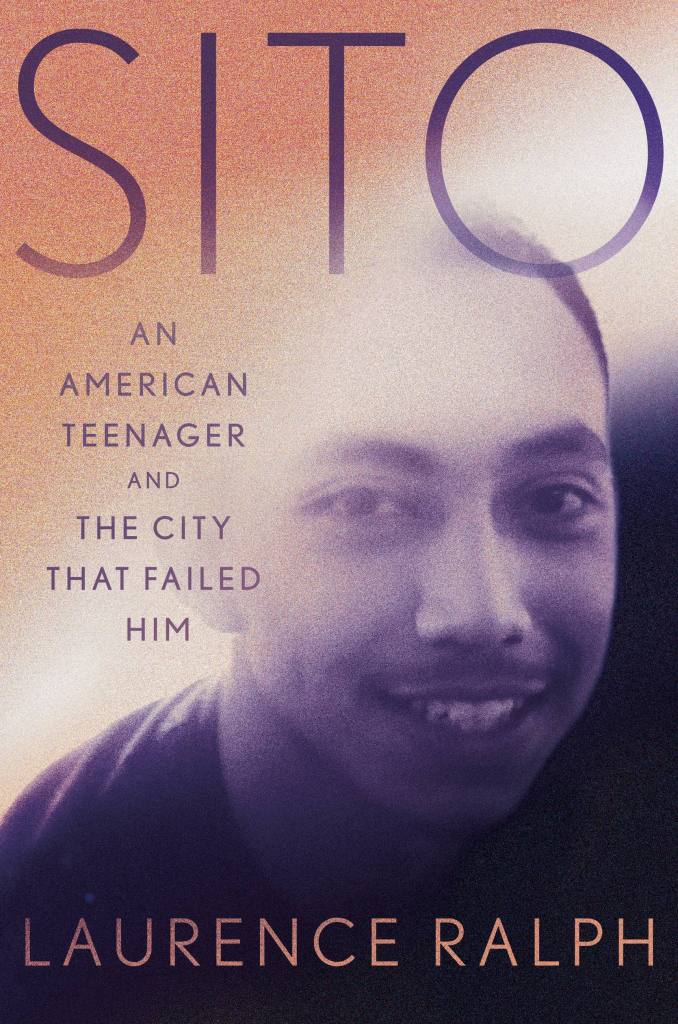 In September of 2019, Luis Alberto Quiñonez—known as Sito— was shot to death as he sat in his car in the Mission District of San Francisco. He was nineteen. His killer, Julius Williams, was seventeen. It was the second time the teens had encountered one another. The first, five years before, also ended in tragedy, when Julius watched as his brother was stabbed to death by an acquaintance of Sito’s. The two murders merited a few local news stories, and then the rest of the world moved on. But for the families of the slain teenagers, it was impossible to move on. And for Laurence Ralph, the stepfather of Sito’s half-brother who had dedicated much of his academic career to studying gang-affiliated youth, Sito’s murder forced him to revisit a subject of scholarly inquiry in a deeply personal way. Written from Ralph’s perspective as both a person enmeshed in Sito’s family and expert on the entanglement of class and violence, SITO is an intimate story with an message about the lived experience of urban danger, and about anger, fear, grief, vengeance, and ultimately grace.
 When Cody Delistraty lost his mother to cancer in his early 20s, he found himself unsure how to move forward. Planning for her recovery, he and his family had a purpose. But after she was gone, there seemed to exist only the empty advice on grief: move through the five stages, achieve closure, get back to work, go back to normal. So begins a journey into the new frontiers of grief, where Delistraty seeks out the researchers, technologists, therapists, marketers, and communities around the world looking to cure the pain of loss in novel ways. From the neuroscience of memory deletion to book prescriptions, laughter therapy, psilocybin, and Breakup Bootcamp, what ultimately emerges is not so much a cure as a fresh understanding of what living with grief truly means.