
Award-winning climate journalist Eduardo Garcia offers a deeply researched and user-friendly guide to the things we can do every day to reduce climate change. Based on his popular New York Times column « One Thing You Can Do, » this fully illustrated book turns an overwhelming problem into simple actions.
THINGS YOU CAN DO:
How to Fight Climate Change and Reduce Waste
by Eduardo Garcia
illustrations by Sara Boccaccini Meadows
Ten Speed Press, April 2022
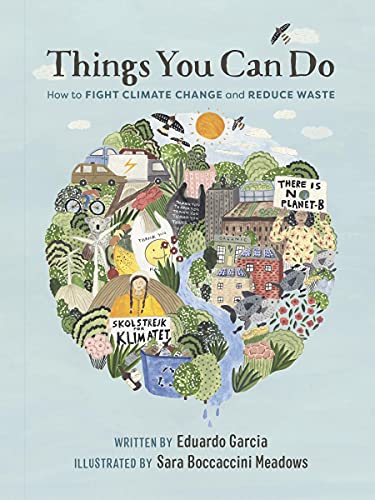 Award-winning climate journalist Eduardo Garcia offers a deeply researched and user-friendly guide to the things we can do every day to fight climate change. Based on his popular New York Times column “One Thing You Can Do,” this fully illustrated book proposes simple solutions for an overwhelming problem. No lectures here—just accessible and inspiring ideas to slash emissions and waste in our daily lives, with over 350 explanatory illustrations by talented painter Sara Boccaccini Meadows.
In each chapter, Garcia digs into the issue, explaining how everyday choices lead to carbon emissions, then delivers a wealth of “Things You Can Do” to make a positive impact, such as:
• Eat a climate-friendly diet
• Reduce food waste
• Cool your home without an air conditioner
• Save energy at home
• Adopt zero-waste practices
• Increase the fuel efficiency of your car
• Buy low-carbon pet food
• Hack your toilet to save water
• Slash the carbon footprint of your online shopping
Delivering a decisive hit of knowledge with every turn of the page, THINGS YOU CAN DO is the book for people who want to know more—and do more—to save the planet.
Eduardo Garcia has written news stories and features from more than a dozen countries in his more than fifteen years as a journalist. A native of Spain, Eduardo cut his teeth working as a Reuters correspondent in Guatemala, Bolivia, Argentina, Colombia, and Ecuador. In recent years, Eduardo has written dozens of stories giving New York Times readers advice on how to reduce their carbon footprint. Eduardo strives to lead a sustainable lifestyle and believes in using words to empower people.
Sara Boccaccini Meadows is a print designer and illustrator living in Brooklyn, New York, originally from the rolling hills of the Peak District, England. Since arriving in New York City, she has been splitting her time between working as a textile designer, illustrator, and artist. She uses watercolor and gouache to create quirky illustrations and has collaborated with many amazing brands, publishers, and agencies.

 Thirteen essays are included that explore the evocative scents of trees, from the smell of a book just printed as you first open its pages, to the calming scent of Linden blossom, to the ingredients of a particularly good gin & tonic. In your hand: a highball glass, beaded with cool moisture. In your nose: the aromatic embodiment of globalized trade. The spikey, herbal odour of European juniper berries. A tang of lime juice from a tree descended from wild progenitors in the foothills of the Himalayas. Bitter quinine, from the bark of the South American cinchona tree, spritzed into your nostrils by the pop of sparkling tonic water. Take a sip, feel the aroma and taste of three continents converge.
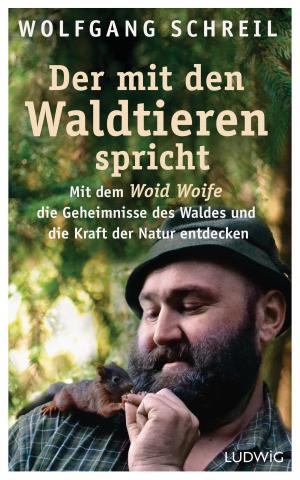 No one is as at home among wild woodland animals as Wolfgang Schreil: he gets up close and personal with red deer and lynxes, photographs a hunting stoat at ten paces, gets within touching distance of poisonous snakes, and stands among roe deer grazing peacefully by his side. How does he manage to get so unbelievably close to them, to share moments of connectedness that count among the happiest times of his life? For Wolfgang ‘Woid Woife’ Schreil, the woods represent a safe haven and place where we can be truly free. His gripping stories, his priceless knowledge of the animal world and his close-up animal photographs have made him a very special woodland ambassador. His immense passion for life and animals, his faith in the power of love, and his belief that nature’s greatest gifts are revealed to us if we are only patient, are an inspiration for each and every one of us who yearn to be mindful of what really matters.
 These new and collected essays from the acclaimed naturalist Barry Lopez—his final undertaking—represent the culmination of a lifetime’s thought in service of our relationship with wilderness, and with each other. Here, his collected essays offer a unifying vision; his drive to reconnect the cultural and the natural is unflinching, and major, never-published pieces offer profound commentary on topics that veer from the autobiographical—his abuse as a child—to the evolution of his views on the untamed. His classic prose, like the arctic landscape he elegized, remains as ever: “spare, balanced, extended…” It has been said that Barry Lopez understood what we gain when we accept the enormity of what we don’t know; these essays hinge on that tantalizing concept.