
A literary self-portrait in which the author’s entire life is revealed through the brief moments of accident, absurdity, and loss which have made it.
AUTOPORTRAIT
by Jesse Ball
Catapult, TBD 2022
(via Sterling Lord Literistic)

Photo by James Foster
Inspired by Édouard Levé’s novel of the same title and format, Jesse Ball haswritten a slim, uninterrupted stream of compact reflections with no obvious order, that brilliantly construct AUTOPORTRAIT. These reflections range from the mundane, the crude, and the crass, to the mysterious, poignant and the brutally beautiful. With spare prose, marked by its humility and precision, Jesse Ball has rendered life, memory, and existence so vividly there are many places where the reader wonders if it is their own existence being described. The novel, which borrows its name from Levé’s, and which preceded Levé’s final work published mere weeks before his tragic suicide, deals with similar themes in a similar register. However, Ball’s voice is entirely his own, and the speaker of this novel is frighteningly honest, while inspiring a deep, tender fondness. Among the many treasures of this piece, Ball includes comments on his difficult upbringing, his marriages, his drug use, his teaching and pedagogy, the things he likes about cats and rats, and the things he adores about gullies and sumps.
Ambitious, serious, witty, and provocative, Jesse Ball’s latest work is a disciplined novel that chronicles the chaos of a life. AUTOPORTRAIT, both through its form and its content, suggests that human beings are made up of contradictions, and encourages us to contradict ourselves more often.
Jesse Ball is the author of fourteen books. His works have been published to acclaim in many parts of the world and translated into more than a dozen languages. He is on the faculty at the School of the Art Institute of Chicago, won the 2018 Gordon Burn Prize, the 2008 Paris Review Plimpton Prize, was longlisted for the National Book Award, and is a 2017 Granta Best Young American Novelist. Ball has also been a fellow of the NEA, Creative Capital, and the Guggenheim Foundation.
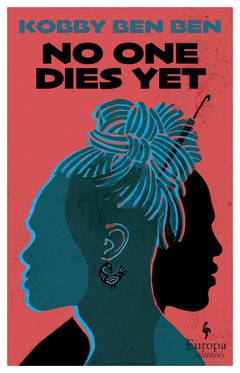 The Year of Return, linked to the 400th anniversary of slaves landing in the US, memorialised the many who died during the slave trade in Ghana, particularly at Elmina Castle, while encouraging members of the African diaspora to visit. As Black diasporans around the world make the pilgrimage to West Africa, three African-American friends join in the festivities to explore Ghana’s colonial past and its underground queer scene. They are thrust into the hands of two guides, Kobby and Nana, whose intentions aren’t clear, yet they are the narrators we have to trust. Kobby, a modern deviant according to Nana’s traditional and religious principles, offers a more upscale and privileged tour of Ghana and also becomes the friends’ link to Accra’s secret gay culture. Nana’s adherence to his pastor’s teachings against sin makes him hate Kobby enough to want to kill.
 Every Tuesday and Thursday morning, 32-year old musician Natalie Fincher plays at a busy London train station piano. Since the death of her husband two years ago, it’s the only time she forgets how lonely she is, and the only place she feels comfortable playing music anymore – where she’s anonymous, and nobody’s really listening. Then sheet music starts being left anonymously in the lid of the piano stool – specific songs she played only for her husband when he was sick. Is someone up there looking down on her? Or has someone down here been listening all along? Natalie is about to find out…
  Jai is a Captive in the Sabine Court – ever since his father Rohan, leader of the Plainsfolk, led an uprising and was put to death by the Emperor who Jai must now serve. The Sabine Empire has a powerful tool, the Gryphon Guard: elite warriors who ride gryphons. Only one thing is more powerful than them: dragons, exclusive to a rival kingdom. When the emperor’s son is betrothed to Princess Erica of the Dansk Kingdom she brings with her a powerful dowry: dragons. These powerful beasts come in several forms, but secrecy surrounds them and only the Dansk Royalty can soul-bond with these magical beasts to draw on their power and strength.
 1944. Marguerite Segal, an artist living under a false identity on the Cote d’Azur to escape her criminal past, is blackmailed by British Intelligence into befriending Father Etienne Valade, a local priest suspected of being an Nazi collaborator. Her mission is to persuade him to pass on information from the high ranking German officers who attend his church. Connected by a passion for art, they soon fall in love. As she tries to convince him to pass on information learned in the confessional box, her association with him increasingly puts her in danger of violent reprisals from the local people. At the same time, her covert work, creating false identity cards to camouflage those hiding from the Third Reich, brings her under the scrutiny of the occupying enemy.