
An authoritative, illuminating, and deeply humane history of addiction—a phenomenon that remains baffling and deeply misunderstood despite having touched countless lives—by an addiction psychiatrist striving to understand his own family and himself.
THE URGE: Our History of Addiction
by Carl Erik Fisher
Penguin Press, January 2022
(via The Gernert Company)
 Even after a decades-long opioid overdose crisis, intense controversy still rages over the fundamental nature of addiction and the best way to treat it. With uncommon empathy and erudition, Carl Erik Fisher draws on his own experience as a clinician, researcher, and alcoholic in recovery as he traces the history of a phenomenon that, centuries on, we hardly appear closer to understanding—let alone addressing effectively.
As a psychiatrist-in-training fresh from medical school, Fisher was soon face-to-face with his own addiction crisis, one that nearly cost him everything. Desperate to make sense of the condition that had plagued his family for generations, he turned to the history of addiction, learning that the current quagmire is only the latest iteration of a centuries-old story: humans have struggled to define, treat, and control addictive behavior for most of recorded history, including well before the advent of modern science and medicine.
A rich, sweeping history that probes not only medicine and science but also literature, religion, philosophy, and sociology, THE URGE illuminates the extent to which the story of addiction has persistently reflected broader questions of what it means to be human and care for one another. Fisher introduces us to the people who have endeavored to address this complex condition through the ages: physicians and politicians, activists and artists, researchers and writers, and of course the legions of people who have struggled with their own addictions. He also examines the treatments and strategies that have produced hope and relief for many people with addiction, himself included. Only by reckoning with our history of addiction, he argues—our successes and our failures—can we light the way forward for those whose lives remain threatened by its hold.
THE URGE is at once an eye-opening history of ideas, a riveting personal story of addiction and recovery, and a clinician’s urgent call for a more expansive, nuanced, and compassionate view of one of society’s most intractable challenges.
Carl Erik Fisher is an addiction physician and bioethicist. He is an assistant professor of clinical psychiatry at Columbia University, where he works in the Division of Law, Ethics, and Psychiatry. He also maintains a private psychiatry practice focusing on complementary and integrative approaches to treating addiction. His writing has appeared in Nautilus, Slate, and Scientific American MIND, among other outlets. He lives in Brooklyn, New York, with his partner and son.
 Publié en janvier 2020 chez Grove Atlantic, le livre de David Zucchino intitulé WILMINGTON’S LIE: The Murderous Coup of 1898 and the Rise of White Supremacy vient de remporter le prestigieux prix Pulitzer dans la catégorie « General Nonfiction ».
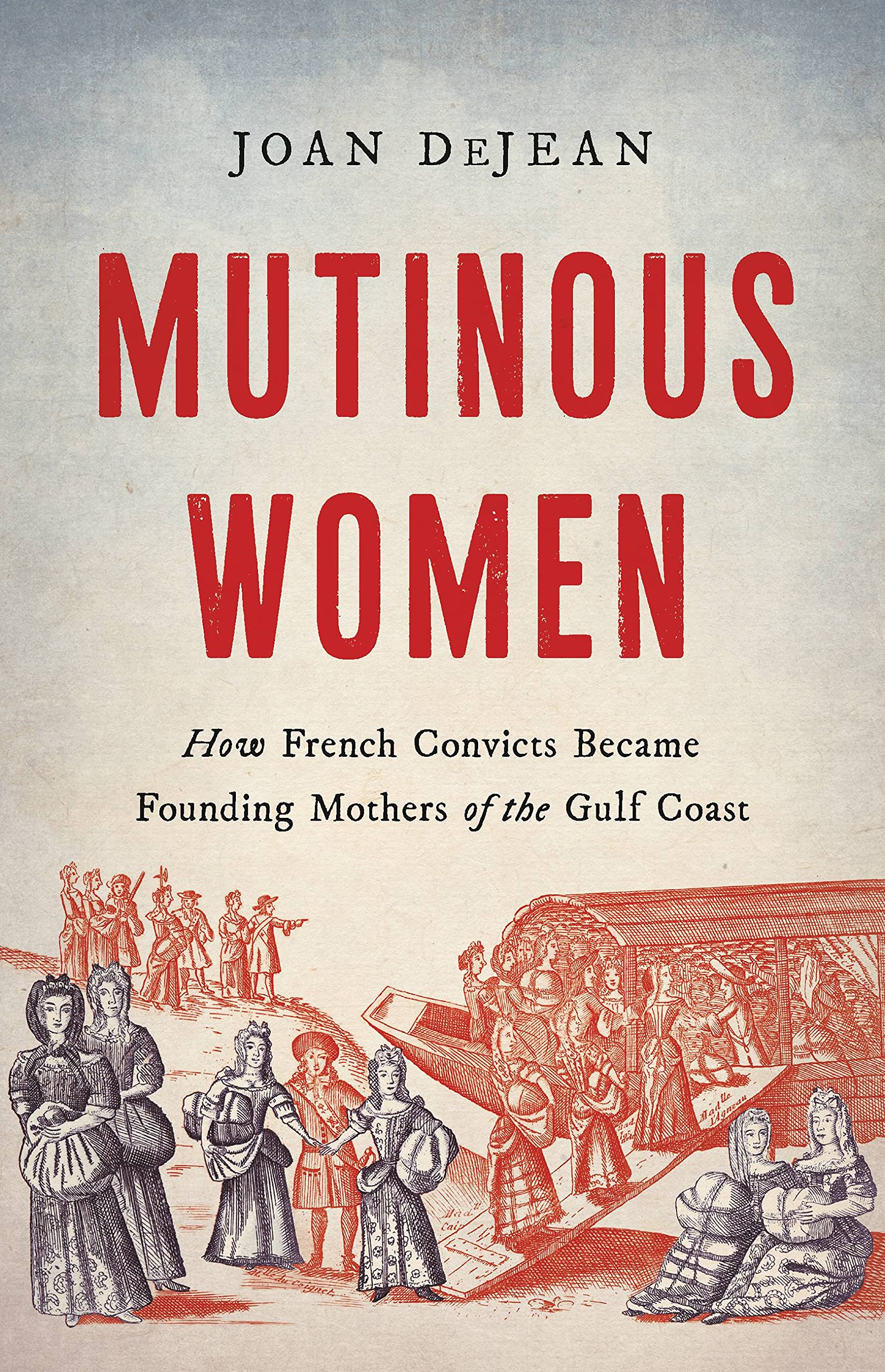 In 1719, a ship named La Mutine (the mutinous woman), sailed from the French port of Le Havre, bound for the Mississippi. It was loaded with urgently needed goods for the fledgling French colony, but its principal commodity was a new kind of export: women. Falsely accused of sex crimes, these women were prisoners, shackled in the ship’s hold. Of the 132 women who were sent this way, only 62 survived. But these women carved out a place for themselves in the colonies that would have been impossible in France, making advantageous marriages and accumulating property. Many were instrumental in the building of New Orleans and in settling Louisiana, Alabama, Arkansas, Illinois, and Mississippi.
 Joan DeJean
 Moisés Naím concentrates on the three “P”s—populism, polarization, and post-truths. Using the best available data and insights taken from recent research in the social sciences, Naim reveals how the same set of strategies to consolidate power pop up again and again in places with vastly different political, economic, and social circumstances. The outcomes of these battles for power will determine if our future will be more autocratic or more democratic. These outcomes will, in turn, depend on the capacity of our democracies to survive the attacks and dirty tricks of autocratic leaders bent on weakening the checks and balances that limit their power. Naim addresses the questions at the heart of the matter: What are, in practice, those attacks and tricks? Why is power concentrating in some places while in others it is fragmenting and degrading? And the big question: what is the future of freedom?