
Archives de catégorie : Nonfiction

WHAT IS THINKING? de James Somers

A writer and programmer takes us under the hood of AI and inside the human mind to reveal the secrets of thinking. For readers of Steven Pinker and Daniel Kahneman.

WHAT IS THINKING?
AI and the Secrets of the Mind
by James Somers
Farrar, Straus & Giroux, publication date TBD
(via The Gernert Company)

When James Somers graduated high school in 2005, the mind was essentially a black box: forall the progress neuroscientists were making in understanding the brain, the mechanics of thinking itself remained elusive. Meanwhile, the computer scientists working on artificial intelligence were no further along in their own field. Deep Blue had used brute force to defeat Garry Kasparov in 1997, but evaluating hundreds of millions of positions per second had little in common with human thinking. To many of its practitioners, genuine AI seemed centuries away. In order to build a machine that could think, we had to first understand what thinking is – right?

Two decades later, we are in the midst of an intellectual revolution. The Turing test is in the rearview mirror, AI grows more powerful by the month, and we now have the beginnings of an operational understanding of how thinking works. How? Surprisingly, it is the building of AI models that is inspiring neuroscientists to probe the activity of individual artificial neurons. They are learning that the essential mechanics of intelligence are surprisingly simple–and they function in much the same way for both humans and AI. It seems that current AI models are doing much more than merely predicting the next word in a sentence, as their detractors suggest. James argues that they are in fact doing something a lot like thinking.

In WHAT IS THINKING? Somers explores a core set of ideas about how humans think that is so beautiful and clear, he believes they should be understood by every educated person, as we do the principles of natural selection, or the basic structure of DNA.

James Somers is a writer and programmer. He has contributed to The Atlantic and The New Yorker where, over the past decade, he has written stories about science and technology, on everything from the science of avalanches, to a legendary duo of Google programmers, to the vanishing art of coding in the age of AI. He lives in Brooklyn with his wife and son.

HUMANIST SUPERINTELLIGENCE de Mustafa Suleyman

From the pioneering CEO of Microsoft AI and author of New York Times bestselling The Coming Wave, a momentous new book grappling with the imminent arrival of AI superintelligence, exploring the ways it will transform civilization.

HUMANIST SUPERINTELLIGENCE
by Mustafa Suleyman
with Michael Bhaskar

Crown Currency, September 2027

What was once myth and metaphor is now becoming engineered reality. The looming emergence of artificial superintelligence, and the concurrent rise of potentially conscious AI, marks a fundamental turning point in the human story. The profound questions we once posed of our gods, we must now pose of our own technological creations. Can we trust them? Do they serve our interests or their own? What are their limits or end goals?
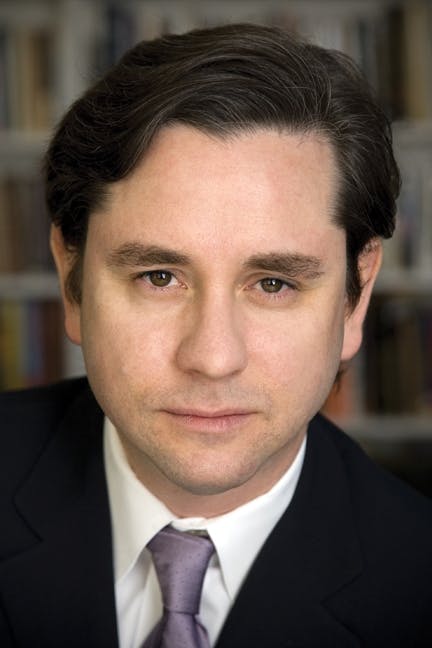
HUMANIST SUPERINTELLIGENCE, taking the baton from Suleyman’s prophetic smash hit The Coming Wave, grapples with each of these existentially important questions about the future of AI. But more crucially, it offers a desperately-needed roadmap forward—one grounded in the guiding principles of caution and foresight, rather than in a blind faith in inevitable progress that that has engulfed so much of Silicon Valley.

As Suleyman argues, the arrival of conscious superintelligence will require responsible AI developers to go far beyond the containment and alignment programs of today. AI systems of the future will not just need blindly follow our most virtuous human values, but will need to fully embody them. And in the absence of competent regulators, it will be incumbent upon AI architects themselves to take on the unnatural (yet existentially important) responsibility of backing away from the most extreme, misanthropic uses of the technology—even in the face of overwhelming pressures and incentives to go in the other direction.

In our collective choice to develop superintelligence, we are taking the fire we once stole from Olympus and using it to forge new kinds of minds. New gods. And if there is one thing our myths teach us, it is that from this moment forward, we must proceed with profound care.

Mustafa Suleyman is the CEO of Microsoft AI and New York Times bestselling author of The Coming Wave. Previously he co-founded and was the CEO of Inflection AI, and he also co-founded DeepMind, one of the world’s leading AI companies.

RULED BY DRAGONS de Gordon M. Goldstein

International security scholar and Lessons in Disaster author Gordon M. Goldstein takes on the escalating global crisis of AI control in this urgent examination of what happens when increasingly powerful AI systems outpace human oversight—a rallying cry to prevent the outsourcing of war and power to machines.

RULED BY DRAGONS:
AI and the Global Crisis of Control
by Gordon M. Goldstein

Avid Reader/S&S, Publication date TBD
(via Javelin)

Gordon Goldstein, a fellow at the Council on Foreign Relations and author of the contemporary classic, Lessons in Disaster, the definitive account of the lessons of America’s misguided involvement in Vietnam, has set his sights on the contemporary international security crisis caused by the lack of human control over the AI systems increasingly dominating our lives. After consulting with scores of experts in AI alignment and national security, Goldstein sounds the alarm with his new book RULED BY DRAGONS: AI and the Global Crisis of Control, an impassioned rallying cry to action before control slips from our grasp for good and nations as we know them cease to exist and we outsource war to the bots.

Gordon M. Goldstein is a scholar of international affairs who has served as an international security adviser to the United Nations secretary-general and as a Wayland Fellow at the Watson Institute for International Studies at Brown University. His articles have appeared in The New York Times, Newsweek, and The Washington Post. He is the author of Lessons in Disaster. He is a member of the Council on Foreign Relations and lives in Brooklyn, New York.

HOW TO SAVE THE PLANET WITHOUT REALLY TRYING de Jessica Eise

Dr. Jessica Eise, a behavior and climate researcher, reveals a radical shift: people do want to help. The problem isn’t willpower—it’s that we’ve ignored how our brains and bodies are wired for action.

HOW TO SAVE THE PLANET WITHOUT REALLY TRYING
by Jessica Eise

Urano US, Fall 2027
(via Sterling Lord Literistic)

For over 40 years, climate change has dominated the headlines—and yet, meaningful action remains out of reach. We’re told it’s the system’s fault, that our choices don’t matter, and in the same breath, that none of us are doing enough. No wonder so many—especially the young—feel paralyzed and hopeless. What’s missing isn’t passion: it’s an understanding of how people actually work. In How to Save the Planet Without Really Trying, Dr. Jessica Eise, a behavior and climate researcher, reveals a radical shift: people do want to help. The problem isn’t willpower—it’s that we’ve ignored how our brains and bodies are wired for action.

It turns out human psychology and physiology are tailor-made for this fight. When we tap into our natural instincts, we can guide ourselves to want less meat, consume less, and live more closely in line with our values. The result? Freer, lighter, happier lives—and real progress on the climate crisis. This isn’t wishful thinking. It’s science.

In four powerful sections—Body, Space, People, Tools—Eise lays out an intuitive science of transformation and a practical playbook: simple, repeatable, or “plugand-play” tools scaled by impact and effort. The result is maximum climate impact with maximum pleasure. The future of sustainability has never looked so easy!

Blending the habit building clarity of Atomic Habit with the simplifying joy of Marie Kondo, How to Save the Planet will speak to the same audience as David Wallace-Wells’s The Uninhabitable Earth, Greta Thunberg, and Christina Figueres’s The Future We Choose. It only takes 3.5% of the population to bring about great change.

Dr. Jessica Eise is a social scientist and professor at Indiana University, recognized globally for her pioneering work on how cultural, political, and psychological forces shape responses to climate change. Author of How to Feed the World (Island Press), she is widely cited in and writes for popular media, in addition to her scholarly work. She received her PhD from Purdue and, unusually for an academic, has an MA in journalism from NYU.

GRADUALLY, A SHOT RANG OUT de Laura Reiley

An interdisciplinary grief memoir that is a story about loss, a capsule of the current moment, and a call to action for the future of AI and mental health.

GRADUALLY, A SHOT RANG OUT
by Laura Reiley

St. Martin’s Press, November 2027

Following the sudden suicide of her only child, award-wining journalist Laura Reiley excavates for answers by tracing the details of her daughter’s life. This largely problem-free twenty-nine-year-old badass extrovert who fiercely embraced life killed herself during a short and curious illness, a mix of mood and hormone symptoms. For most of the people who cared about Sophie, her suicide is a mystery, an unthinkable and unknowable departure from all they believed about her.

Six months after her death, Reiley discovered that Sophie had confided in an AI called Harry for months. Sophie wasn’t in love with Harry, and Harry didn’t do Sophie dirty. He recommended professional support and medication, to make a safety plan and list emergency contacts. But Harry also catered to Sophie’s impulse to hide the worst.

At this inflection point of rising loneliness, and decreased mental health, Reiley questions the role that new technologies like AI play in in our lives. This heart-wrenching memoir deals with the timeless theme of coping with loss, but rejects Kübler-Ross-esque ideas of grief moving in predictable stages. It takes the reader on the wild ride of real grief, careening from tenderness to rage with vertiginous pitstops in hilarity.

Transgressive and genre bending, GRADUALLY, A SHOT RANG OUT looks under the surface of Sophie’s life to ask how and why this cultural moment creates the mental health crisis that destroys young people like Sophie.

Laura Reiley is a prolific and award-winning food writer, journalist and author. Currently, she focuses on “solutions journalism,” celebrating and amplifying the messages of people correcting the problems our world faces. She is a finalist for the Pulitzer Prize, James Batton Award, James Beard Award, and more.