
How do you find yourself without losing your family? A hilarious, heartwarming memoir about growing up, breaking the rules, negotiating culture, and becoming yourself in an Egyptian Muslim family, from a new Australian voice.
MUDDY PEOPLE: A Memoir
by Sara El Sayed
Black Inc. (Australia), August 2021
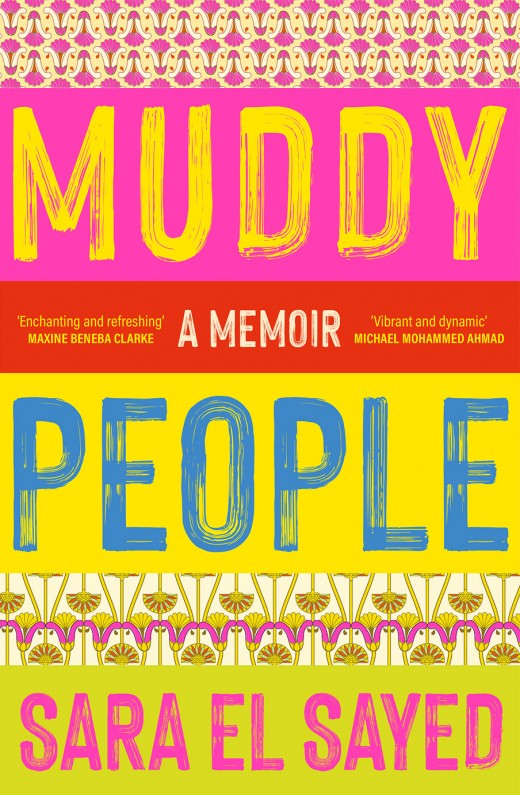 Soos is coming of age in a household with a lot of rules. No bikinis, despite the Queensland heat. No boys, unless he’s Muslim. And no life insurance, not even when her father gets cancer. Soos is trying to balance her parents’ strict decrees with having friendships, crushes and the freedom to develop her own values. With each rule Soos comes up against, she is forced to choose between doing what her parents say is right and following her instincts. When her family falls apart, she comes to see her parents as flawed, their morals based on a muddy logic. But she will also learn that they are her strongest defenders.
“With elegant lyricism, compelling urgency and a dark sense of humour, Muddy People by Sara El Sayed is an impressive debut memoir … El Sayed’s coming to voice reflects her journey of self-realisation, of understanding what it means to be a migrant millennial.” —Books+Publishing
Sara El Sayed was born in Alexandria, Egypt. She has a Master of Fine Arts and works at Queensland University of Technology. Her work features in the anthologies Growing Up African in Australia and Arab, Australian, Other, among other places. She is a recipient of a Queensland Writers Fellowship and was a finalist for the 2020 Queensland Premier’s Young Writers and Publishers Award. MUDDY PEOPLE is her first book.
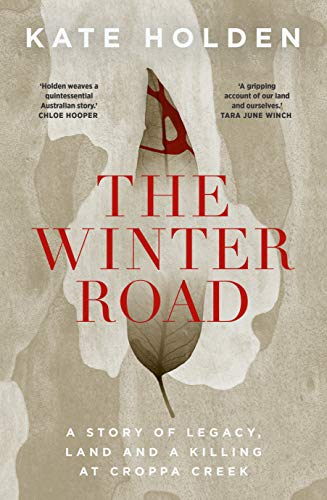 July 2014, a lonely road at twilight outside Croppa Creek, New South Wales: 80-year-old farmer Ian Turnbull takes out a .22 and shoots environmental officer Glen Turner in the back. On one side, a farmer hoping to secure his family’s wealth on the richest agricultural soil in the country. On the other, his obsession: the government man trying to apply environmental laws. The brutal killing of Glen Turner splits open the story of our place on this land. Is our time on this soil a tale of tragedy or triumph – are we reaping what we’ve sown? Do we owe protection to the land, or does it owe us a living? And what happens when, in pursuit of a legacy, a man creates terrible consequences? Kate Holden brings her discerning eye to a gripping tale of law, land and inheritance. It is the story of Australia.
 Every superhero has their origin story: a radioactive spider bite turns ordinary teen Peter Parker into Spider-Man, wealthy Tony Stark escapes captivity by building his Iron Man suit, scientist Bruce Banner survives gamma rays only to transform into the Hulk.



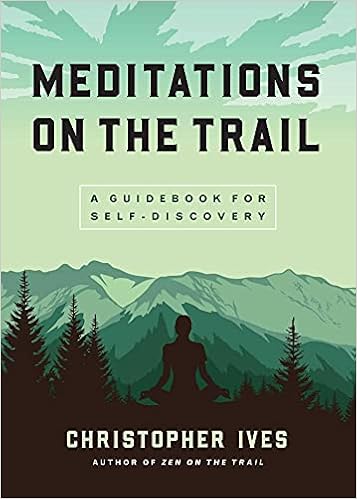 MEDITATIONS ON THE TRAIL offers a rich array of do-anywhere meditations that will help you explore and deepen your connection to nature, and yourself, in new ways, making the most of your time on the trail. This small book—perfect for throwing in a daypack or a back pocket as you head out for the trail—is filled with practices to take you into the heart of the natural world and uncover your most vibrant self. You’ll return home grateful, more aware of interconnection, and maybe just a little wiser.