
How women made history – and men took the credit.
BEKLAUTE FRAUEN
(Stolen Fame: Philosophers, Scholars, Pioneers: History’s Invisible Heroines)
by Leonie Schöler
Penguin, February 2024
 Muse, secretary, wife: these are some of the labels used to describe the women whose influence on history has been erased. Their achievements have brought honour and fame to the men close to them – such as Karl Marx, Bertolt Brecht and Albert Einstein, who couldn’t have done what they did without their female friends, daughters or lovers – but they themselves remain largely unknown. The list includes scientists like Rosalind Franklin and Lise Meitner, who, unlike their male colleagues, were never celebrated for their discoveries; and authors and artists like Marie Hirsch, Lou Andreas-Salomé and Hedwig Thun, who hid behind male pseudonyms all their lives in order to be taken seriously. In « Stolen Fame », Schöler tells their stories, introducing us to the women who changed human history and showing that there are still issues around participation and visibility. Behind every successful man is a system that empowers him – and that system stands in every woman’s way.
For fans of Invisible Women by Caroline Criado Perez, Unlearn Patriarchy by Lisa Jaspers et al., The Patriarchy of Thing » by Rebekka Endler and Hidden Figures by Margot Lee Shetterly.
Leonie Schöler is a historian, journalist and presenter. Her articles have been published in taz and Zeit Online, and she also works as an editor and online filmmaker (« Jäger und Sammler », « Y-Kollektiv » and « Auf Klo ») for various broadcasters. Her documentary exposing fraud and money laundering at Germany’s largest meat processing company came out in 2021, and she is the author and director of a 2022 online series about the infamous Wannsee Conference (both shown by ZDF). She produces popular history content for TikTok and Instagram and talks to her more than 170k followers about politics past and present. In 2022, she became presenter of ZDF’s Heureka programme (shown on YouTube).
 In a speculative future, Abel, a menial worker, is called to serve in a secretive and fabled jury system. At the heart of this system is the repeat room, where a single juror, selected from hundreds of candidates, is able to inhabit the defendant’s lived experience, to see as if through their eyes.
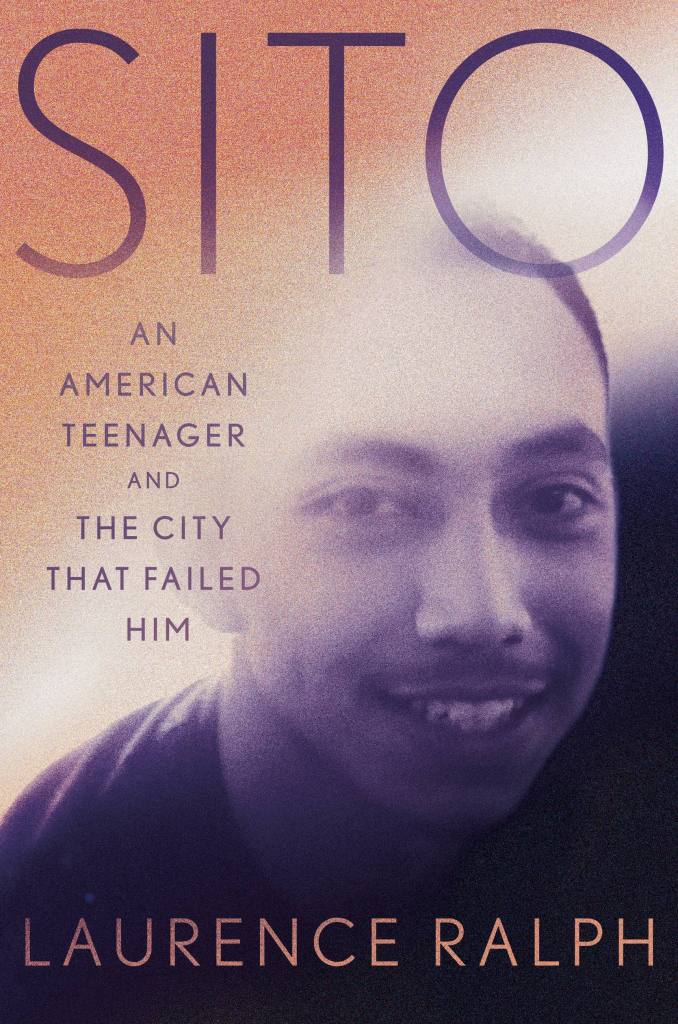 In September of 2019, Luis Alberto Quiñonez—known as Sito— was shot to death as he sat in his car in the Mission District of San Francisco. He was nineteen. His killer, Julius Williams, was seventeen. It was the second time the teens had encountered one another. The first, five years before, also ended in tragedy, when Julius watched as his brother was stabbed to death by an acquaintance of Sito’s. The two murders merited a few local news stories, and then the rest of the world moved on. But for the families of the slain teenagers, it was impossible to move on. And for Laurence Ralph, the stepfather of Sito’s half-brother who had dedicated much of his academic career to studying gang-affiliated youth, Sito’s murder forced him to revisit a subject of scholarly inquiry in a deeply personal way. Written from Ralph’s perspective as both a person enmeshed in Sito’s family and expert on the entanglement of class and violence, SITO is an intimate story with an message about the lived experience of urban danger, and about anger, fear, grief, vengeance, and ultimately grace.
 For twenty years, Sciona has devoted every waking moment to the study of magic, fueled by a mad desire to achieve the impossible: to be the first woman ever admitted to the High Magistry at the University of Magics and Industry. When Sciona finally achieves her ambition and becomes a Highmage, she finds that her challenges have just begun. Her new colleagues are determined to make her feel unwelcome, and instead of a qualified lab assistant they give her a janitor. What neither Sciona nor her peers realize is that her taciturn assistant was not always a janitor. Ten years ago he was a nomadic hunter who lost his family on their perilous journey from the wild plains to the city. But now he sees the opportunity to finally understand the forces that decimated his tribe, drove him from his homeland, and keep the privileged in power. At first, mage and outsider have a fractious relationship. But working together they uncover an ancient secret that could change the course of magic forever—if it doesn’t get them killed first.