
From the author of Something Happened to Ali Greenleaf comes another searing, affecting novel that follows one girl caught between two toxic worlds, perfect for fans of Kathleen Glasgow and Nina LaCour.
THE FALLING GIRLS
by Hayley Krischer
Razorbill, October 2021
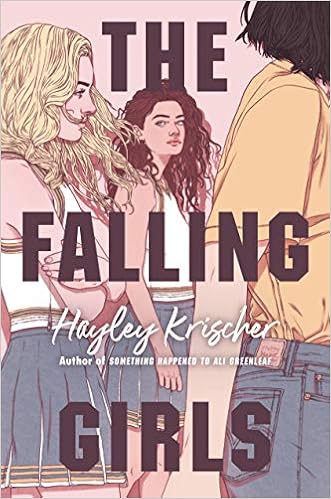 Shade and Jadis are everything to each other. They share clothes, toothbrushes, and even matching stick-and-poke tattoos. So when Shade unexpectedly joins the cheerleading team, Jadis can hardly recognize who her best friend is becoming. Shade loves the idea of falling into a group of girls; she loves the discipline it takes to push her body to the limits alongside these athletes. Most of all, Shade finds herself drawn to The Three Chloes—the insufferable trio that rules the squad—including the enigmatic cheer captain whose dark side is as compelling as it is alarming. Jadis won’t give Shade up so easily, though, and the pull between her old best friend and her new teammates takes a toll on Shade as she tries to forge her own path. So when one of the cheerleaders dies under mysterious circumstances, Shade is determined to get to the bottom of her death. Because she knows Jadis—and if her friend is responsible, doesn’t that mean she is, too?
In this compelling, nuanced exploration of the layered, intoxicating relationships between teen girls, and all the darkness and light that exists between them, novelist Hayley Krischer weaves a story of loss and betrayal, and the deep reverberations felt at a friendship’s breaking point.
Hayley Krischer is a writer and journalist. She is a regular contributor to The New York Times, where she covers women, teenage girls, celebrities, and cultural trends. Her work has also appeared in Marie Claire,The Atlantic, The New York Times Magazine, and more. Hayley is also the author of Something Happened to Ali Greenleaf. She lives in Glen Ridge, New Jersey, with her husband, two kids, one dog, and three cats.
 Josslyn Drake, former First Daughter of Ironport, doesn’t know much about magic. She only knows that it’s dangerous, rare, and completely illegal. So when she’s infected by a mysterious piece of magic confiscated from Lord Banyon, one of the most infamous criminals alive, Joss’s life turns upside down. She begins to have visions, not of the future, but of the past—Banyon’s past. All Joss wants is for things to go back to normal, but the cost for doing magic is death, and there’s nobody she can trust to help her. So when wanted criminal and blackheart Jericho Nox offers her a deal, a way to extract the magic and give it to him instead, she’s forced to accept.
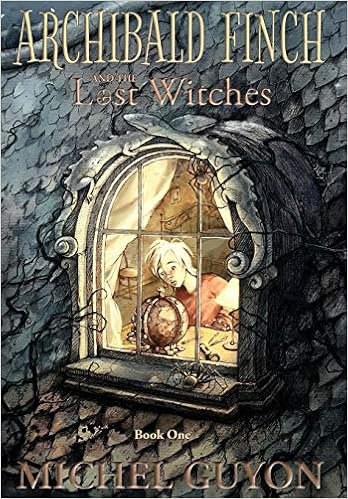 From myths and legends 500 years old, comes a fantastic adventure, even though Archibald was not looking for one… Exploring his grandma’s creepy manor, he just stumbled upon an ancient terrestrial globe, which turns out to be much more than an old relic. When he unlocks the storm trapped inside, Archibald gets whisked into the unknown, a mysterious land where a battle born in the Middle Ages is still unfolding. In the world of Lemurea, mostly forest, home to small wonders and great scares, it’s light versus darkness, magic versus fire… witches versus dragons. But not any kind of witches, an army of young girls, lost in time. And not your usual dragons, but the most intriguing creatures, half human, half beast. Through this unforgettable journey, Archibald will learn the true meaning of courage, friendship and tolerance. Meanwhile, left behind, his sister Hailee sets out on a quest across London to find out what happened to him, uncovering a dark secret and going through her own coming of age odyssey. Two stories, two plot threads, running parallel but tightly intertwined. Two worlds, on a perilous collision course…
 Ten-year-old Mary Lennox arrives at a secluded estate on the Yorkshire moors with a scowl and a chip on her shoulder. First, there’s Martha Sowerby: the too-cheery maid with bothersome questions who seems out of place in the dreary manor. Then there’s the elusive Uncle Craven, Mary’s only remaining family—whom she’s not permitted to see. And finally, there are the mysteries that seem to haunt the run-down place: rumors of a lost garden with a tragic past, and a midnight wail that echoes across the moors at night. As Mary begins to explore this new world alongside her ragtag companions—a cocky robin redbreast, a sour-faced gardener, and a boy who can talk to animals—she learns that even the loneliest of hearts can grow roots in rocky soil. Given new life as a graphic novel in illustrator Hanna Luechtefeld’s whimsical style, THE SECRET GARDEN is more enchanting and relevant than ever before. At the back of the book, readers can learn about the life of Frances Hodgson Burnett and the history of British colonialism that contextualizes the original novel.
 That’s what Jess was to me. I was the ground; she was the rain. I wasn’t anything until she woke me up.