
Why are some people more susceptible to bad ideas and others are more capable of repelling them?
MENTAL IMMUNITY:
Infectious Ideas, Mind Parasites, and the Search for a Better Way to Think
by Andy Norman
HarperWave, May 2021
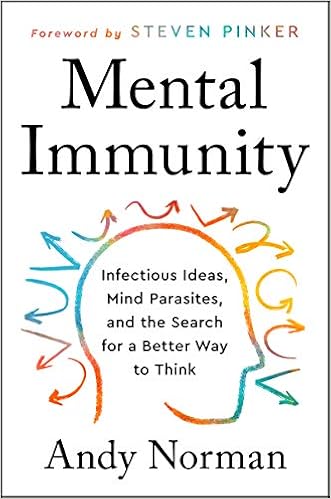 Andy Norman has spent years studying the destructive forces that can flip the minds of sensible people to understand how they take hold. He calls them mind-parasites, ideas that can poison our thinking and leave us more susceptible to wild conspiracies, lead us to reject scientific evidence, and convince us to double down on unfounded beliefs. Just as the body can be weakened by foreign organisms that make us sick, the mind too is vulnerable to infection. But just as antibiotics can be used to attack the biological organisms causing physical illness, we can treat the mind parasites that invade our heads. He shows us how to engage in productive discussion, analyzes the psychological evidence about how to change minds, and reveals how we can safeguard ourselves and protect those around us from mind-parasites like conspiracies and fake news. In MENTAL IMMUNITY Andy Norman calls for the study of cognitive immunology, a way of thinking where individuals and society learn to differentiate facts and reasons from disinformation and false memes. By strengthening our mental immunity, we become open to other ideas and learn how better to communicate about beliefs and policy without dissolving into partisan finger-pointing. Norman offers suggestions to create a value- and respect-based system of dialogue that can help us bolster cultural cognitive immunity as we protect our own minds from succumbing to bad ideas.
Steven Pinker will write the foreword and has already said that this is “a splendid idea for a book: original, controversial, and timely.”
Andy Norman teaches philosophy and directs the Humanism Initiative at Carnegie Mellon University. His work has appeared in Free Inquiry, Essays in the Philosophy of Humanism, and dozens of other journals.
 A quick, straightforward, fast-paced read about Mateo, a boy who not only can fight off disease in a world where antibiotics have lost all of their power, but can heal others. This amazing kid is being hunted by those who want to harness and potentially extinguish his ability. When two detectives find themselves caught in the crossfire of the pursuit, they put their careers and their lives at risk, deciding to deliver Mat to The Resistance—an organization they’ve been trained to view as an enemy to the State but soon start to realize is probably society’s last, best hope.
 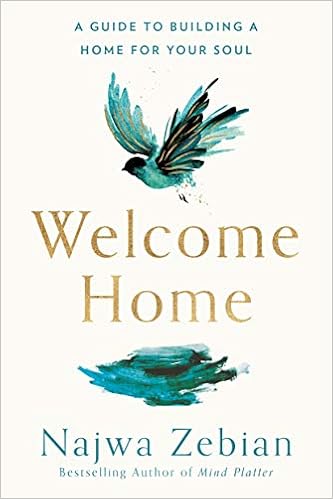 In her debut book of inspiration, Najwa Zebian shares her revolutionary concept of home—the place of safety where you can embrace your vulnerability and discover your self-worth. It’s the place where your soul feels like it belongs, where you are loved for who you are. Too many of us build our homes in other people in the hope that they will deem us worthy of being welcomed inside, and then we feel abandoned and empty when those people leave. Building your home inside yourself—and never experiencing inner homelessness again—begins here. In WELCOME HOME, Zebian shares her personal story for the first time, powerfully weaving memoir, poetry, and deeply resonant teachings into her storytelling, from leaving Lebanon at sixteen, to coming of age as a young Muslim woman in Canada, to building a new identity for herself as she learned to speak her truth. After the profound alienations she experienced, she learned to build a stable foundation inside herself, an identity independent of cultural expectations and the influence of others. The powerful metaphor of home provides a structure for personal transformation as she shows you how to construct the following rooms: Self-Love, Forgiveness, Compassion, Clarity, Surrender, and The Dream Garden. With practical tools and prompts for self-understanding, she shows you how to build each room in your house, which form a firm basis for your self-worth, sense of belonging, and happiness. Written with her trademark power, candor, and warmth, WELCOME HOME is an answer to the pain we all experience when we don’t feel at peace with ourselves. Every human deserves their own home. WELCOME HOME provides the life-changing tools for building that inner space of healing and solace.
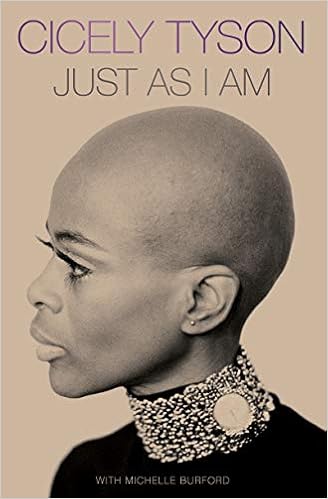 Over the course of her career, Cicely Tyson was nominated for 49 television and film awards and won 42, most notably an Oscar, a Tony Award, 3 Emmys, 8 NAACP Image Awards, the African American Film Critics Special Achievement Award, the BAFTA Film Award, the Black Film Critics Circle Award, 4 Black Reel Awards, the
 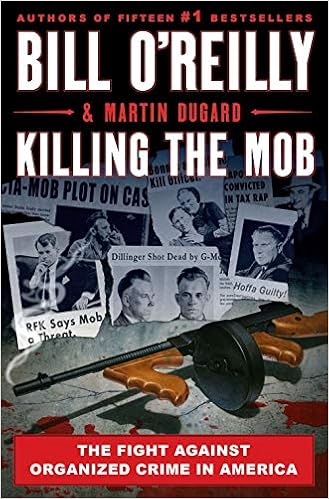 KILLING THE MOB is the tenth book in Bill O’Reilly’s #1