
From an acclaimed Harvard professor and one of Time’s most influential people, this paradigm-shifting book shows how almost everything we think we know about aging is wrong, offers a front-row seat to the amazing global effort to slow, stop, and reverse aging, and calls readers to consider a future where aging can be treated
LIFESPAN
The Revolutionary Science of Why We Age, and Why We Don’t Have To
by David Sinclair
Atria Books, September 2019
For decades, experts have believed that we are at the mercy of our genes, and that natural damage to our genes—the kind that inevitably happens as we get older—makes us become sick and grow old. But what if everything you think you know about aging is wrong? What if aging is a disease—and that disease is treatable? In LIFESPAN, one of the world’s foremost experts on aging and genetics reveals a groundbreaking new theory that will forever change the way we think about why we age and what we can do about it. Aging isn’t immutable; we can have far more control over it than we realize. This eye-opening and provocative work takes us to the frontlines of research that is pushing the boundaries on our perceived scientific limitations, revealing incredible breakthroughs—many from Dr. David Sinclair’s own lab—that demonstrate how we can slow down, or even reverse, the genetic clock. The key is activating newly discovered vitality genes—the decedents of an ancient survival circuit that is both the cause of aging and the key to reversing it. Dr. Sinclair shares the emerging technologies and simple lifestyle changes—such as intermittent fasting, cold exposure, and exercising with the right intensity—that have been shown to help lead to longer lives.
David Sinclair is Professor of Genetics at Harvard Medical School and Founding Director of the Paul F. Glenn Center for the Biological Mechanisms of Aging at Harvard. One of the leading innovators of his generation, he is listed by Time magazine as “one of the 100 most influential people in the world” (2014) and top 50 most important influential people in healthcare (2018). Dr. Sinclair and his work have been featured on 60 Minutes, Today, The Wall Street Journal, The New York Times, Fortune, and Newsweek, among others.
 Nathaniel hears a scream, then he is cut off. He has just been speaking to a woman on the phone. The anonymous app Be my Eyes connected the two and the woman has been helping Nathaniel choose the right shirt. Nathaniel may be blind, but the scream sounded unmistakable. What if something has happened to the woman? Nathaniel is certain of one thing: a crime must have been committed. Yet no one believes him, there is no proof, no clues. Together with a friend, journalist Milla, Nathaniel sets out to look for the truth. What he doesn’t realise is that for the woman he could be her only chance – or her doom…
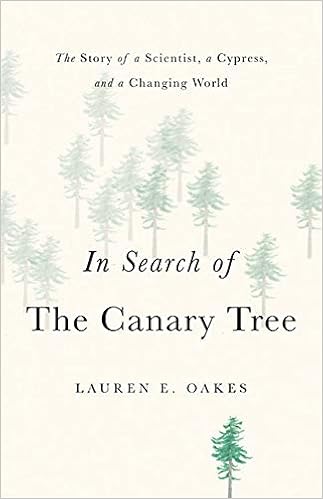 Where mountains meet ocean in Alaska’s Alexander Archipelago, white skeletons of dead yellow cedar trees stand in stark contrast to the verdant landscape of old-growth forests. Researchers spent nearly three decades deciphering the cause of the majestic species’ mysterious death: the culprit, they discovered, was neither pathogen nor pest, but instead climate change. In the wake of this discovery, Lauren Oakes, a young scientist, wondered if what the people in this region were experiencing—whatever ways they were finding to cope with their rapidly changing environment and the loss of this sacred tree—might be a scrying glass into the future.
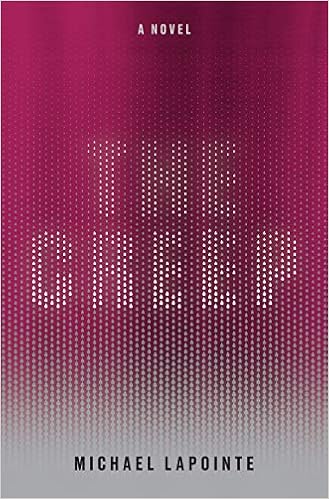 A respected byline in the culture pages of the venerable New York magazine The Bystander, journalist Whitney Chase grapples with a mysterious compulsion to enhance her coverage with intriguing untruths and undetectable white lies. She calls it « the creep »–an overpowering need to improve the story in the telling. And she has a particular genius for getting away with it. In the immediate aftermath of 9/11, Whitney yearns to transition from profiling rock stars and novelists to covering the stories that « really matter. » When a chance encounter brings her face-to-face with a potentially massive story about a game-changing medical discovery, Whitney believes she’s finally found a story that doesn’t need any enhancement. The brilliant and charismatic doctor behind the breakthrough claims she’s found « the Holy Grail of medical science »: a synthetic blood substitute that, if viable, promises to save millions of lives, and make her corporate backers rich beyond measure. But when Whitney’s investigation of this apparent medical miracle puts her on the trail of a string of grisly fatalities across the country, she becomes inexorably tied to a much darker and more nefarious story than even she could imagine.