
The story of a young man coming to terms with his father’s criminal legacy and forging his own path to peace.
BECAUSE OUR FATHERS LIED:
A Memoir of Truth and Family from Vietnam to Today
by Craig McNamara
Little, Brown, May 2022
(via Sterling Lord Literistic)
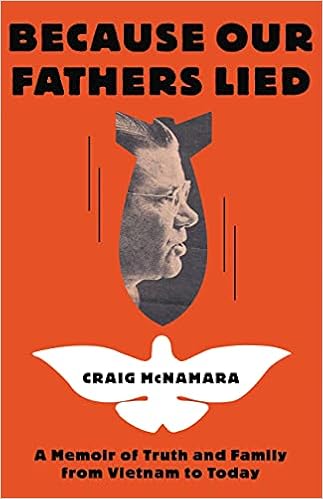 Craig McNamara is “the son of the war’s architect,” Robert McNamara, who served as John F. Kennedy’s Secretary of Defense and was responsible for the continuation of the Vietnam War. This memoir reflects on Craig’s adolescent struggles to discern right from wrong amidst a flurry of political escalation from his own father and anti-war sentiments from his peers, and eventually, what led him to embark on a lifelong journey of anti-war protest.
It is an intimate picture of one father and son at pivotal periods in American history.
Before Robert McNamara joined Kennedy’s cabinet, he was an executive who helped turn around Ford Motor Company. Known for his tremendous competence and professionalism, McNamara came to symbolize “the best and the brightest.” Craig, his youngest child and only son, struggled in his father’s shadow. When he ultimately fails his draft board physical, Craig decides to travel by motorcycle across Central and South America, learning more about the art of agriculture and the pleasures of making what he defines as an honest living. By the book’s conclusion, Craig McNamara is farming walnuts in Northern California and coming to terms with his father’s legacy.
Craig McNamara is an American businessman and farmer serving as the president and owner of Sierra Orchards, a diversified farming operation producing primarily organic walnuts. McNamara is also the founder and president of the Center for Land-Based Learning. He is the only son of three children of the former United States Secretary of Defense, Robert McNamara. He graduated from UC Davis in 1976 with a degree in plant and soil science, and lives in Winters, California with his wife and three children.
 Americans of good will on both the left and the right are secretly asking themselves the same question: how has the conversation on race in America gone so crazy? We’re told to read books and listen to music by people of color but that wearing certain clothes is “appropriation.” We hear that being white automatically gives you privilege and that being Black makes you a victim. We want to speak up but fear we’ll be seen as unwoke, or worse, labeled a racist. According to John McWhorter, the problem is that a well-meaning but pernicious form of antiracism has become, not a progressive ideology, but a religion—and one that’s illogical, unreachable, and unintentionally neoracist.
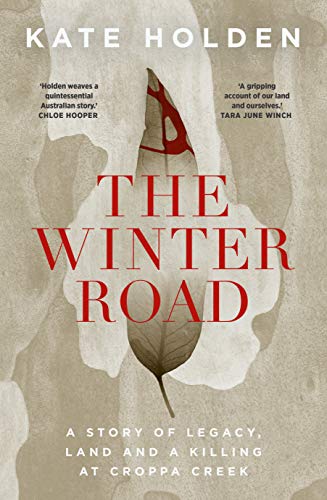 July 2014, a lonely road at twilight outside Croppa Creek, New South Wales: 80-year-old farmer Ian Turnbull takes out a .22 and shoots environmental officer Glen Turner in the back. On one side, a farmer hoping to secure his family’s wealth on the richest agricultural soil in the country. On the other, his obsession: the government man trying to apply environmental laws. The brutal killing of Glen Turner splits open the story of our place on this land. Is our time on this soil a tale of tragedy or triumph – are we reaping what we’ve sown? Do we owe protection to the land, or does it owe us a living? And what happens when, in pursuit of a legacy, a man creates terrible consequences? Kate Holden brings her discerning eye to a gripping tale of law, land and inheritance. It is the story of Australia.
 Moisés Naím concentrates on the three “P”s—populism, polarization, and post-truths. Using the best available data and insights taken from recent research in the social sciences, Naim reveals how the same set of strategies to consolidate power pop up again and again in places with vastly different political, economic, and social circumstances. The outcomes of these battles for power will determine if our future will be more autocratic or more democratic. These outcomes will, in turn, depend on the capacity of our democracies to survive the attacks and dirty tricks of autocratic leaders bent on weakening the checks and balances that limit their power. Naim addresses the questions at the heart of the matter: What are, in practice, those attacks and tricks? Why is power concentrating in some places while in others it is fragmenting and degrading? And the big question: what is the future of freedom?
 The COVID-19 crisis is the greatest shock to the world order since World War II. Millions have been infected and killed. The economic crash caused by the pandemic is the worst since the Great Depression, with the International Monetary Fund estimating that it will cost over $9 trillion of global wealth in the next few years. Many will be left impoverished and hungry. Fragile states will be further hollowed out, creating conditions ripe for conflict and mass displacement. Meanwhile, international institutions and alliances already under strain before the pandemic are teetering, while the United States and China, already at loggerheads before the crisis, are careening toward a new Cold War. China’s secrecy and assertiveness have shattered hopes that it will become a responsible stakeholder in the international order.