
In this moving, emotional narrative of love and resilience, a young couple confronts the start of
Argentina’s Dirty War in the 1970s, and a daughter searches for truth twenty years later.
ON A NIGHT OF A THOUSAND STARS
by Andrea Y. Clark
Grand Central, Spring 2022
(via Writers House)
 New York, 1998. Santiago Larrea, a wealthy Argentine diplomat, is holding court alongside his wife, Lila, and their daughter, Paloma, a college student and budding jewelry designer, at their annual summer polo match and soiree. All seems perfect in the Larreas’ world—until an unexpected party guest from Santiago’s university days shakes his usually unflappable demeanor. The woman’s cryptic comments spark Paloma’s curiosity about her father’s past, of which she knows little.
When the family travels to Buenos Aires for Santiago’s UN ambassadorial appointment, Paloma is determined to learn more about his life in the years leading up to the military dictatorship of 1976. With the help of a local university student, Franco Bonetti, an activist member of H.I.J.O.S—a group whose members are the children of the Desaparecidos, or the “Disappeared,” men and women who were forcibly disappeared by the state during Argentina’s “Dirty War”—Paloma unleashes a chain of events that not only leads her to question her family and her identity, but also puts her life in danger.
In compelling fashion, ON A NIGHT OF A THOUSAND STARS speaks to relationships, morality, and identity during a brutal period in Argentinian history, and the understanding—and redemption—people crave in the face of tragedy.
Andrea Y. Clark grew up in Argentina amid the political violence of the 1970s until her family moved to North America. After completing her university studies, she returned to Buenos Aires to reconnect with her roots. She followed with interest the stories then emerging about the children of the “Disappeared”—the youngest victims of Argentina’s military dictatorship in the 1970s—who were coming of age and grappling with the fates of their families. She conducted numerous interviews documenting their stories, which inspired her debut novel of historical fiction.
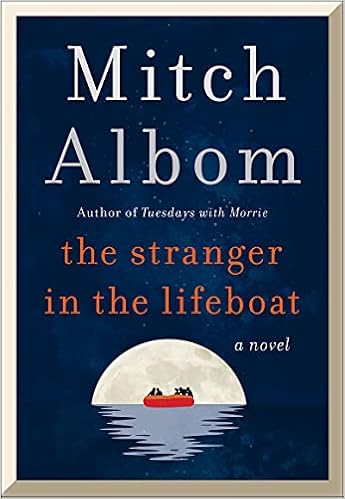 Adrift in a raft after a deadly ship explosion, nine people struggle for survival at sea. Three days pass. Short on water, food and hope, they spot a man floating in the waves. They pull him in. “Thank the Lord we found you,” a passenger says. “I am the Lord,” the man whispers.
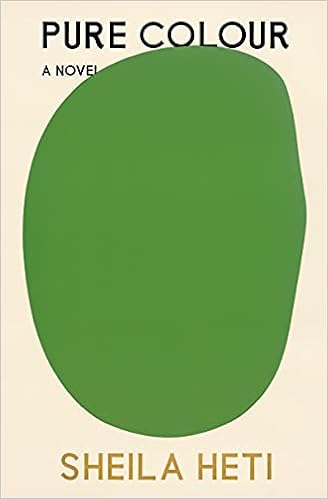 The world is failing to remain a world. It is coming apart. The ice cubes are melting. Species are dying. People, too―of different things. But what if this world is just a first draft, made by some great artist in order to be destroyed? In this first draft of the world, a woman named Mira leaves home to study. There, she meets Annie, whose tremendous power opens Mira’s chest like a portal―to what, she doesn’t know. When Mira is older, her beloved father dies, and his spirit passes into her. Together, they become a leaf on a tree. But photosynthesis gets boring and being alive is a problem that cannot be solved, even by a leaf. Eventually, Mira must remember the human world she’s left behind, including Annie, and choose whether or not to return.