
The women of the famous oatmeal dynasty have been fighting for more than half a century – for their lives, and for happiness.
DAS HAUS KÖLLN
(The Family Kölln Trilogy)
by Elke Becker
Heyne, 2024
 Book 1: GLÄNZENDE ZEITEN (Golden Age, January 2024)
North Germany, 1886: The life of Charlotte Kölln’s husband is tragically cut short by an accident at work. There is no time for Charlotte to grieve, though, because the gristmill has to keep grinding, otherwise her family will face ruin. As a woman, Charlotte can neither get credit nor officially run the business, but she doesn’t let that stop her. When her eldest son announces that he plans to marry one of the workers, Bertha, Charlotte isn’t pleased. She is worried about her family’s status, which she wants to preserve at all costs. The two headstrong women must find a way to get along – and in the process realise that they can do anything, so long as they stick together.
 Book 2: GROSSE HOFFNUNG (A New Hope, April 2024)
The sequel to the exciting family saga about the legendary oatmeal dynasty.
Northern Germany, 1912. Bertha Kölln’s new breakfast oatmeal is a huge success, and her family is working tirelessly to increase production. But then the Great War arrives in the sleepy little town near Hamburg, and the Kölln family, too, is affected. But they refuse to be broken, either by the war or by several accidents that have occurred in the mill. When Bertha’s son Peter marries the young bohemian Else Voormann, the couple don’t have it easy: Peter doesn’t understand confident, decisive Else – and Else for her part doesn’t trust her husband, who is spending far too much time with a pretty seamstress. Once again, two very different women must decide: will they fight each other, or stick together?
Elke Becker yearned for the sea and adventure, and travelled all over the world before settling down on Mallorca in 2005. The idea to write about the real-life Kölln family came to her over breakfast one day, as she was eating a bowl of the famous Kölln oatmeal; so she set off on a research trip to northern Germany, a beautiful place which has always been dear to her heart.
 Paula grew up in Minsk, was sent to New York when she was young, dreamt of studying medicine and was a committed anarchist. But then she met her future husband, the founder of the state of Israel, David Ben-Gurion – and at the end of her life, she finds herself in a kibbutz in the Negev Desert. Her husband is expecting the arrival of his friend, Konrad Adenauer, who has just resigned as German Chancellor. Once again, it is down to Paula to organise the visit and arrange everything. Poverty, war, motherhood, and – again and again – loneliness: this novel is a memorial to a strong, courageous woman, who had to make many compromises in life, and became the First Lady of a country in which she did not believe. And who, even in old age, never stops doubting, searching and hoping.
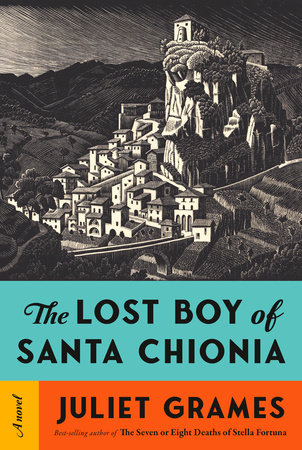 Calabria, 1960. Francesca Loftfield, a twenty-seven-year-old, starry-eyed American, arrives in the isolated mountain village of Santa Chionia tasked with opening a nursery school. There is no road, no doctor, no running water or electricity. And thanks to a recent flood that swept away the post office, there’s no mail, either.
 In late 1936, eighteen-year-old Isidro Elejalde leaves his Basque village in Northern Spain to join the fight to preserve his country’s democracy from the fascists. Months earlier, a group of Spanish generals launched a military coup to overthrow Spain’s newly elected left-wing government. They assumed the population would welcome the coup but throughout the country people like Isidro remained loyal to the ideals of democracy, and the Spanish Civil War began in bloody earnest.
 In 1924, four-year-old Cecily Larson’s mother reluctantly drops her off at an orphanage in Chicago, promising to be back once she’s made enough money to support both Cecily and herself. But she never returns, and shortly after high-spirited Cecily turns seven, she is sold to a traveling circus to perform as the “little sister” to glamorous bareback rider Isabelle DuMonde. With Isabelle and the rest of the circus, Cecily finally feels she’s found the family she craves. But as the years go by, the cracks in her little world begin to show. And when teenage Cecily meets and falls in love with a young roustabout named Lucky, she finds her life thrown onto an entirely unexpected—and dangerous—course.