
An original history of ideas, and an unforgettable portrait of power,
THE ECONOMISTS’ HOUR:
The Rise of a Discipline, the Failures of Globalization, and the Road to Nationalism
by Binyamin Appelbaum
Little Brown, September 2019
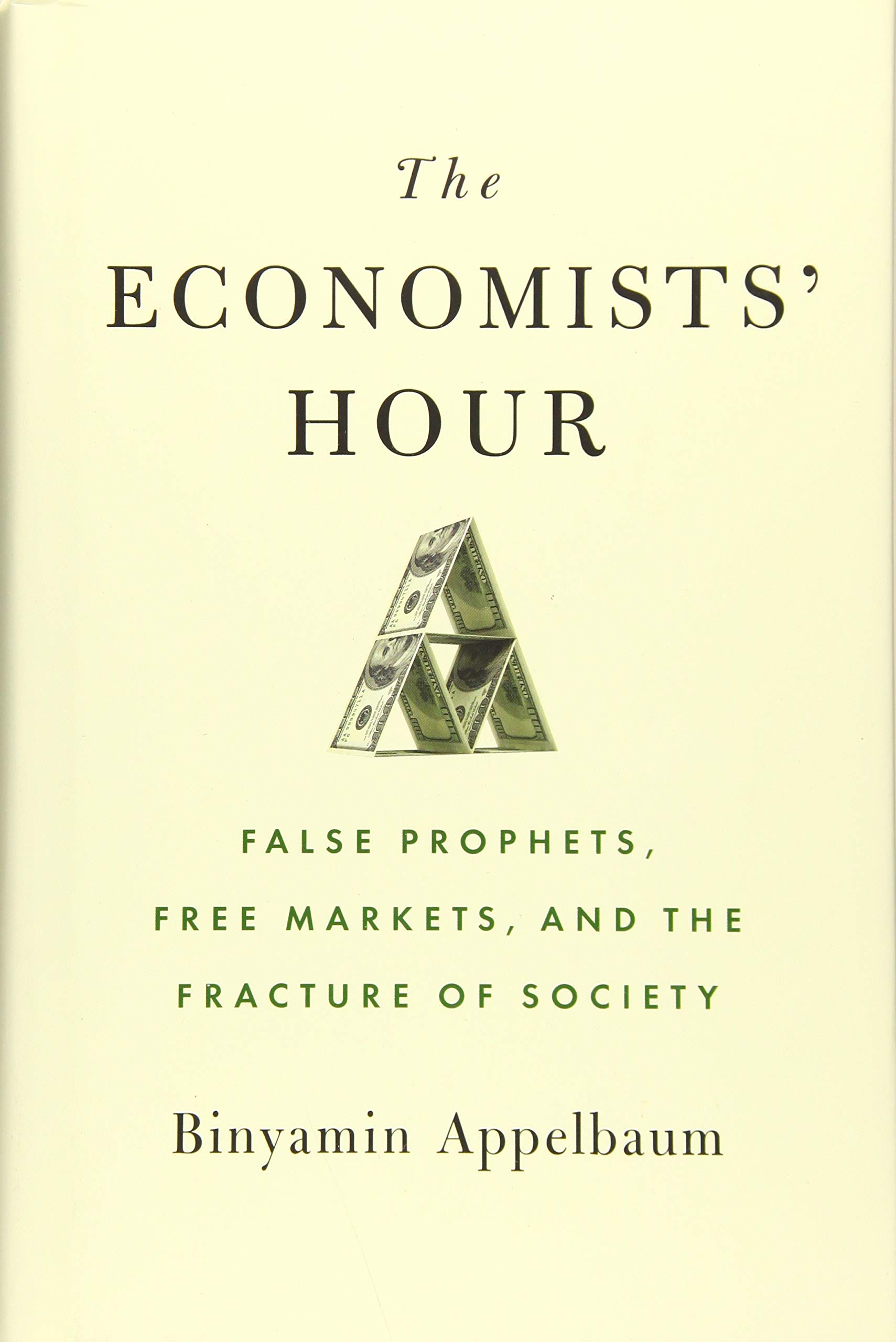 The story is of how, in the decades that followed World War II, a single academic discipline—Economics, one long seen as a “soft,” imprecise, and inferior science, much to the resentment of its disciples—moved out of the realm of the classroom and peer-reviewed journals and in short order took hold of the levers of power and policy in government, first in the U.S., and then around the world. For the past 40 years or so, most of the world has been living in what amounts to a grand experiment, in which the theories of free-market orthodoxy—lower taxes, low inflation, deregulation, free trade, markets in all things—have been put into practice in the laboratory of our lives.
It turns out most of the subjects don’t much like the results. And that we don’t quite behave in the way the Nobel-winning models and equations predicted we would. The Economists’ Hour is coming to an end, and the world they’ve left us with feels less predictable than when it began.
Binyamin Appelbaum is a Washington correspondent for the New York Times, where he covers the Federal Reserve and other aspects of economic policy. Before joining the Times in 2010, he was a reporter at The Washington Post, The Boston Globe, and The Charlotte Observer, where he was part of a team of reporters nominated for the Pulitzer Prize in 2008 for reporting that uncovered the earliest signs of the subprime mortgage crisis. Binyamin Appelbaum tells the story of the people who sparked four decades of economic revolution.

 Every year, glossy magazines describe the winning cultures of innovative companies. Smiling employees raise gleaming new products like runners raising the Olympic torch. Leaders reveal their secrets. And then, so often, those companies crash and burn. Bahcall, a physicist and entrepreneur, finds answers in the science of phase transitions. The Nobel laureate Phil Anderson once captured the essence of phase transitions with the phrase “more is different.” The collective behaviors of liquids and solids—water flows, ice shatters—are more than the sum of their parts. They are something new: phases of matter. Bahcall shows why the collective behaviors of teams and companies are something new: phases of organization. Small changes in structure can transform teams from nurturing breakthroughs to inhibiting them, just like small changes in temperature can transform flowing water to rigid ice. Structure can matter more than culture. Drawing on examples from Aristotle to Star Wars, from Isaac Newton to Steve Jobs, Bahcall distills these ideas into practical rules that creatives, entrepreneurs, and managers can use to innovate faster and better. Along the way, readers will learn what James Bond and Lipitor have in common; why traffic jams appear out of nowhere on highways; and how these ideas and rules underlie the most consistently innovative organization in the world.