
A book on the crisis of focus, by Dr. Gloria Mark, Chancellor’s Professor of Informatics at the University of California, Irvine, visiting senior researcher at Microsoft Research, and a leading expert in the fields of attention, multitasking, and human-computer interaction.
ATTENTION SPAN:
The Surprising Science of How We Focus, Why That’s Changing, and How Rhythm Became the New Flow
by Gloria Mark
Hanover Square Press, early 2023
(via Park & Fine)
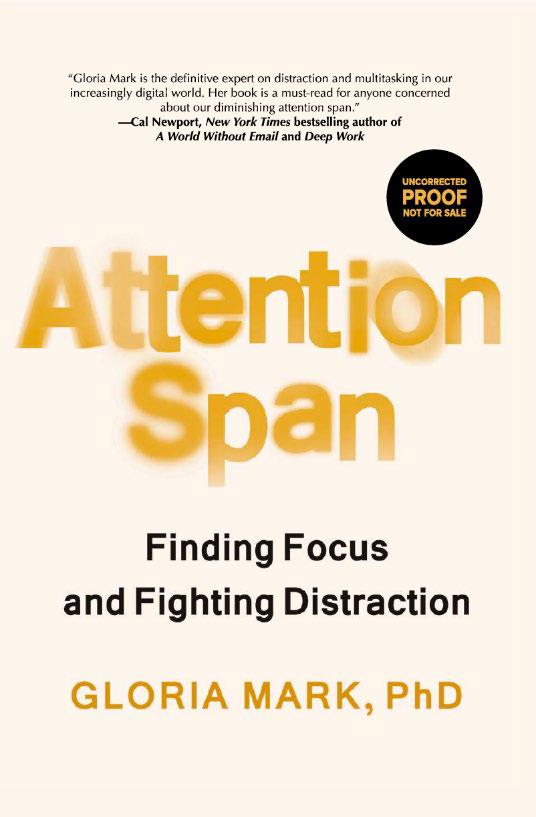 Psychologist Gloria Mark began researching how technology affects human attention when the first personal computers were beginning to arrive in offices. Over the last 30 years, she has tracked changes in our attention spans, stress levels, and the fundamental way our brains process information.
Now in ATTENTION SPAN, Dr Mark shows how much of what we think we know about attention is wrong. She explores the current crisis of focus and productivity that is so deeply entwined with rising rates of anxiety and depression, and investigates what we might be able to do about it. Delving into the newly celebrated concept of ‘kinetic attention’, she introduces a more balanced understanding of the rhythm between deep focus and less focused states, which may actually serve to make us happier and more productive in the long term.
« Gloria Mark is the definitive expert on distraction and multitasking in our increasingly digital world. Her book is a must-read for anyone concerned about our diminishing attention span. » —Cal Newport, New York Times bestselling author of A World Without Email and Deep Work
Dr. Gloria Mark is Chancellor’s Professor of Informatics at the University of California, Irvine, visiting senior researcher at Microsoft Research, and a leading expert in the fields of attention, multitasking, and human-computer interaction. Dr. Mark has spoken on stages that include SXSW, Talks at Google, Microsoft Faculty Summit, and the Aspen Ideas Festival, and her work has been featured in The New York Times, Fast Company, The Atlantic, The New Yorker, NPR, Quartz, Slate, and more.
 Every year millions of pediatric patients could benefit from hypnosis therapy to deal with and alleviate physical and psychological symptoms big and small. The benefits of hypnosis-facilitated therapy range from complete cures to small improvements. They extend beyond the physical and into the psychological and spiritual, building confidence, positivity and resilience. They include the empowerment of children with chronic health issues to feel more in control of their own minds, bodies and circumstances. They sometimes lead to the reduction or even elimination of medications. Hypnosis is painless, non-invasive, and cost-effective. It doesn’t preclude any other treatment, and drawbacks are virtually nonexistent.
 Gabriella Rosen Kellerman
 Martin Seligman
 In HOW TRUST WORKS, Dr. Kim will explain the two most powerful determinants of trust (perceived competence and perceived integrity) and why those determinants can be weighted so unevenly when we are deciding whether to trust or forgive someone—or not. We as humans are bad at determining the trustworthiness of other people, and we are even worse at defending our own trustworthiness when it comes under fire. Yet despite this shortcoming, and the fact that we are all keenly aware of how important trust is in all of our personal and professional relationships, surprisingly little substantive research had been done on the topic before Dr. Kim began his inquiries. In fact, the majority of our institutional knowledge at the time seemed to rely almost entirely on case studies and other anecdotes. Dr. Kim was forced to develop his own set of rigorous scientific tools that would help him analyze how people interact with one another in the face of conflict.
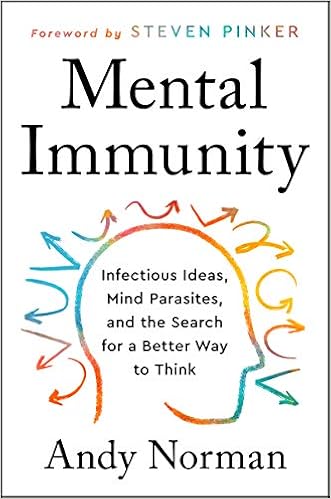 Andy Norman has spent years studying the destructive forces that can flip the minds of sensible people to understand how they take hold. He calls them mind-parasites, ideas that can poison our thinking and leave us more susceptible to wild conspiracies, lead us to reject scientific evidence, and convince us to double down on unfounded beliefs. Just as the body can be weakened by foreign organisms that make us sick, the mind too is vulnerable to infection. But just as antibiotics can be used to attack the biological organisms causing physical illness, we can treat the mind parasites that invade our heads. He shows us how to engage in productive discussion, analyzes the psychological evidence about how to change minds, and reveals how we can safeguard ourselves and protect those around us from mind-parasites like conspiracies and fake news. In MENTAL IMMUNITY Andy Norman calls for the study of cognitive immunology, a way of thinking where individuals and society learn to differentiate facts and reasons from disinformation and false memes. By strengthening our mental immunity, we become open to other ideas and learn how better to communicate about beliefs and policy without dissolving into partisan finger-pointing. Norman offers suggestions to create a value- and respect-based system of dialogue that can help us bolster cultural cognitive immunity as we protect our own minds from succumbing to bad ideas.