
In stunning full color and accessible text, a graphic adaptation of the American Book Award winning history of the United States as told from the perspective of Indigenous peoples—perfect for readers of all ages.
Roxanne Dunbar-Ortiz’s
INDIGENOUS PEOPLES’ HISTORY OF THE UNITED STATES:
A Graphic Interpretation
by Paul Peart-Smith
Beacon Press, October 2024
 Roxanne Dunbar-Ortiz’s influential New York Times bestseller exposed the brutality of the USA’s founding and its legacy of settler-colonialism and genocide. Through evocative full color artwork, renowned cartoonist Paul Peart-Smith brings this watershed book to life, centering the perspective of the peoples displaced by Europeans and their white descendants to trace Indigenous perseverance over four centuries against policies intended to obliterate them.
Recognized for his adaptation of W.E.B. DuBois’ The Souls of Black Folk and his extensive expertise in the comics industry, Peart-Smith collaborates with experienced graphic novel editor Paul Buhle to provide an accessible introduction to a complex history that will attract new generations of readers of all ages. This striking graphic adaptation will rekindle crucial conversations about the centuries-long genocidal program of the US settler-colonial regime that has largely been omitted from history.
Paul Peart-Smith is a celebrated cartoonist of over 35 years, with experience in concept art, graphic design, and animation. Having studied to be an Illustrator in Cambridge, England, he has worked on comics for2000 AD, including Slaughter Bowl from its digital-only collections. He is the illustrator and adapter of W. E. B. Du Bois Souls of Black Folk: A Graphic Interpretation. He lives in Tasmania, Australia.
Roxanne Dunbar-Ortiz grew up in rural Oklahoma in a tenant farming family. She has been active in the international Indigenous movement for more than four decades and is known for her lifelong commitment to national and international social justice issues. Dunbar-Ortiz is the winner of the 2017 Lannan Cultural Freedom Prize and a recipient of the American Book Award (2015) for An Indigenous History of the United States. The author or editor of numerous books, including Not “A Nation of Immigrants,”she lives in San Francisco. Connect with her at reddirtsite.com or on Twitter @rdunbaro.
 Gayl Jones, who was first edited by Toni Morrison, has been described as one of the great literary writers of the 20th century and was recently a finalist for the Pulitzer Prize in fiction. This new collection of short fiction is only the second in her rich career and one that displays her strengths in the genre in many facets. Opening with two novella-length works, “Butter” and “Sophia,” this collection features Jones’s legendary talents in a range of settings and styles, from the hyperrealist to the mystical, in intricate multipart stories, in more traditional forms, and even in short fragments.
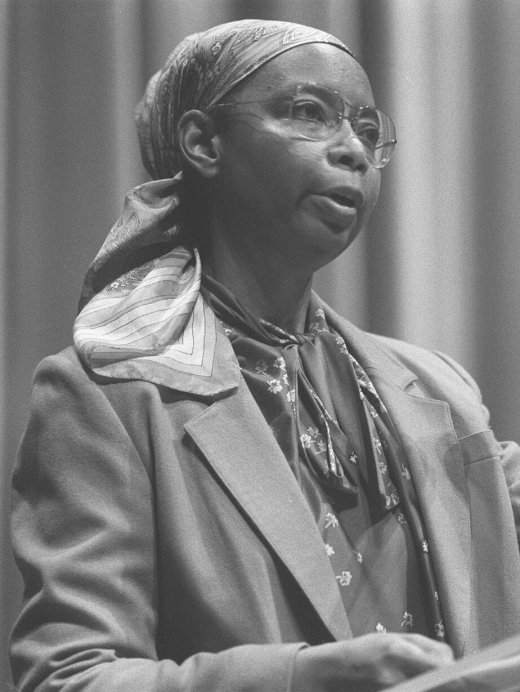
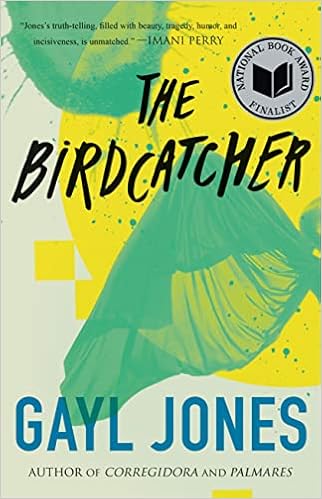 Gayl Jones, the novelist Toni Morrison discovered decades ago and Tayari Jones recently called her favorite writer, has been described as one of the great literary writers of the 20th century. Now, for the first time in over 20 years, Jones is publishing again. In the wake of her long-awaited fifth novel,
  Black army veteran named Buddy Ray Guy is a classic seeker: looking for religion, looking for meaning, looking for love. He moves around the south, having several women across different states. He recalls his love affairs in post-war France, both in the provinces and in Paris, as he embodies the fate of Black soldiers who return, not in glory, but into their Jim Crow communities.
 Political upheaval and social turmoil have peeled back the glitzy layers of capitalism to reveal an uncomfortable truth: historically, businesses have sourced materials from remote corners of the globe and moved millions of people and tons of cargo around the clock—all in the name of profit. Yet many of today’s startups are rewriting the rules of business: how it’s done, by whom, and, most importantly, for what purpose. Journalist Esha Chhabra draws on her decades of reporting to explore not only the “feel good, do good” factors of these restorative enterprises but also the nuanced realities and promise of regenerative business operations.