
Archives de catégorie : Nonfiction

DIE AUFGEREGTE GESELLSCHAFT de Philipp Hübl

                                                    Applied philosophy with some surprising eye-openers

                                                                       DIE AUFGEREGTE GESELLSCHAFT
                                                                                 by Philipp Hübl
                                                                                                      Blessing, publication Mars 2019
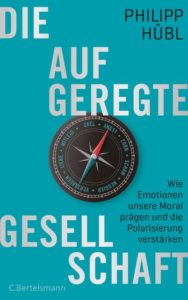
If you are a more conservative kind of person you are more likely to prefer dogs, while the progressive go for cats. And people driven by anger and rage seem to feel nothing but disgust. These are not simply clichés but reveal the core of our morality and are explained by Philipp Hübl in a book packed with amazing philosophical insights.
Research in the fields of psychology and philosophy have shown that emotions are not limited to personal matters but also include the daily news. Philipp Hübl demonstrates how our values and our political views are anchored in our emotional disposition. In other words, emotions influence our moral judgements. We are, however, not helplessly at their mercy; we can overcome them with reason and rational behaviour. With this theory, Hübl is provoking a critical self-examination and at the same time sharpens our view of society.
« The book is particularly interesting because it gives an explanatory approach for the evalutation of political movements in Europe. »

THE VOYAGE OF SORCERER II de J. Craig Venter & David Ewing Duncan

An epic science and adventure story about famed genome scientist Craig Venter’s global expeditions collecting tens of millions of marine microbes and revolutionizing our understanding of the microbiome that sustains us.

THE VOYAGE OF SORCERER II:
The Expedition That Unlocked the Secrets of the Ocean’s Microbiome
by Dr. J. Craig Venter & David Ewing Duncan
Harvard University Press, September 2023
(via Aaron Priest Literary)

In THE VOYAGE OF SORCERER II, Venter and science writer David Ewing Duncan tell the remarkable story of these expeditions and of the momentous discoveries that ensued―of plant-like bacteria that get their energy from the sun, proteins that metabolize vast amounts of hydrogen, and microbes whose genes shield them from ultraviolet light. The result was a massive library of millions of unknown genes, thousands of unseen protein families, and new lineages of bacteria that revealed the unimaginable complexity of life on earth. Yet despite this exquisite diversity, Venter encountered sobering reminders of how human activity is disturbing the delicate microbial ecosystem that nurtures life on earth. In the face of unprecedented climate change, Venter and Duncan show how we can harness the microbial genome to develop alternative sources of energy, food, and medicine that might ultimately avert our destruction.
J. Craig Venter, PhD, is regarded as one of the leading scientists of the 21st century for his numerous invaluable contributions to genomic research. Dr. Venter is Founder, Chairman, and CEO of the J. Craig Venter Institute (JCVI), a not-for-profit research organization with approximately 200 scientists and staff dedicated to human, microbial, plant, synthetic, and environmental genomic research, and the exploration of social and ethical issues in genomics. He is also the founder and CEO of Synthetic Genomics, Inc., and is the author of multiple nonfiction books. He lives in La Jolla, California.

David Ewing Duncan is an award-winning, bestselling author of nine books published in 21 languages, including Talking to Robots, Experimental Man, and The Calendar. David is the CEO and Curator of Arc Fusion, and a Health Strategist in Residence for IDEO.

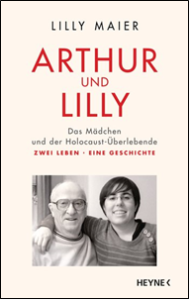
ATHUR UND LILLY de Lilly Maier

The girl and the Holocaust survivor

ARTHUR UND LILLY
by Lilly Maier
Heyne, November 2018

The poignant biography of a Holocaust survivor and the story of an unusual friendship: « I had a wonderful life », Arthur Kern muses, meaning his childhood in Vienna – up to that fateful moment in 1939, when at the age of just ten he is suddenly separated from his family. Hoping to save him from the Holocaust, his Jewish parents send him away to an unfamiliar world with a Kindertransport or children’s transport – a traumatic experience for the ten-year-old. He manages to escape to America via France, but he never sees his family again. 60 years later, while visiting the apartment of his childhood days in Vienna, he makes the acquaintance of eleven-year-old Lilly Maier – a fateful encounter for both of them and one that not only strongly influences Lilly’s future but also leads to Arthur being bestowed with a late legacy of his parents …

18 TINY DEATHS de Bruce Goldfarb

The fascinating story of the forgotten woman who pioneered forensic science

18 TINY DEATHS: The Untold Story of Frances Glessner Lee and the Invention of Modern Forensics
by Bruce Goldfarb
Sourcebooks, February 2020

As World War II rages across the Atlantic, Frances Glessner Lee stands at the front of a wood-paneled classroom within Harvard Medical School and addresses the young men attending her seminar on the developing field of forensic science. A grandmother without a college degree, Lee may appear better suited for a life of knitting than of investigation of unexpected death. Her colleagues and students, however, know her to be an extremely intelligent and exacting researcher and teacher—the perfect candidate, despite her gender, to push the scientific investigation of unexpected death out of the dark confines of centuries-old techniques and into the light of the modern day.

Lee’s decades-long obsession with advancing the discipline of forensic science was a battle from the very beginning. In a time when many prestigious medical schools were closed to female students and young women were discouraged from entering any kind of scientific profession, Lee used her powerful social skills, family wealth, and uncompromising dedication to revolutionize a field that was usually political, often corrupt, and always deeply rooted in the primal human fear of death.

18 Tiny Deaths transports the reader back in time and tells the story of how one woman, who should never have even been allowed into the classrooms she ended up teaching in, changed the face of science forever.

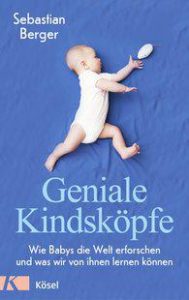
GENIALE KINDSKÖPFE de Sebastian Berger

A new look at human learning

GENIALE KINDSKÖPFE
(Brilliant Baby Brain)
by Sebastian Berger
Kösel, April 2019

Babies truly are miracles in learning: Sebastian Berger introduces us to the fascinating world of early infant learning, describes the development in the brain areas that enable learning, and gives insights into the respective cognitive research. He shows that babies not only learn much faster than adults, but similar to scientists explore the world experimentally, draw their conclusions from statistical information and deduce generally valid regularities from it. From individual observations, the child gains clues to the physical laws of nature and acquires important skills such as trust and the ability to cooperate. Within only a few years, children are able to understand and navigate the physical, psychological and social world perfectly. The book opens our eyes to a new view of the fascinatin world of early infant learning, thus allowing us to better understand and appreciate children.
Professor Sebastian Berger gained his PhD in business and social psychology at the University of Cologne. This was followed by research projects at the universities in Cologne, Stanford and Lausanne, and since 2015 he has been assistant professor for organisation research at the University of Bern. His research work has been discussed globally in such media as the New York Times, Washington Post, FAZ, SZ and NZZ. The birth of his child brought the focus of his research interest to early infant development.