
A first novel at once reminiscent of W.G. Sebald, Rachel Cusk, Ben Lerner and Lisa Halliday, and yet entirely unlike anything you’ve read before.
THE RED ARROW
by William Brewer
Knopf, Spring 2022
(chez The Gernert Company – voir catalogue)
 THE RED ARROW follows an unnamed narrator, a failed novelist deeply in debt to his publisher, on a high-speed train from Rome to Modena, where he is desperate to find the famous Italian physicist whose memoir he’s been ghostwriting, and an whose disappearance in the middle of the project has threatened the narrator and his newly formed family with financial ruin. Moving swiftly and seamlessly through his past—including a chemical spill in West Virginia, a failed New York art career, psychedelic therapy in California, and a luxury beach resort in Sicily—THE RED ARROW contains multitudes: it is at once one of the most authentic descriptions of the experience of depression I’ve ever read, and a joyously earnest celebration of freedom from the toxic power of the ego; a spiraling meditation on time, memory, and the nature of the self; and a novel with the ineffable mystery of a poem, one whose originality lies in admitting that it’s not original at all. For we are each just a cloud of quotations with no fixed center—or, as the Physicist might put it, we are nothing more than interactions, like subatomic particles—and when we’re finally able to let go of the fiction of our discrete selves, all that is left is love.
William Brewer is the author of I Know Your Kind (Milkweed Editions, 2017), a winner of the National Poetry Series, and Oxyana, selected for the Poetry Society of America’s 30 and Under Chapbook Fellowship. His work has appeared in American Poetry Review, The Nation, New England Review, The New Yorker, A Public Space, The Sewanee Review, and other journals. Born and raised in West Virginia, he received his MFA in poetry from Columbia, and was a Stegner Fellow at Stanford University, where he is currently a Jones Lecturer. Born in 1989, he lives with his wife in Oakland.
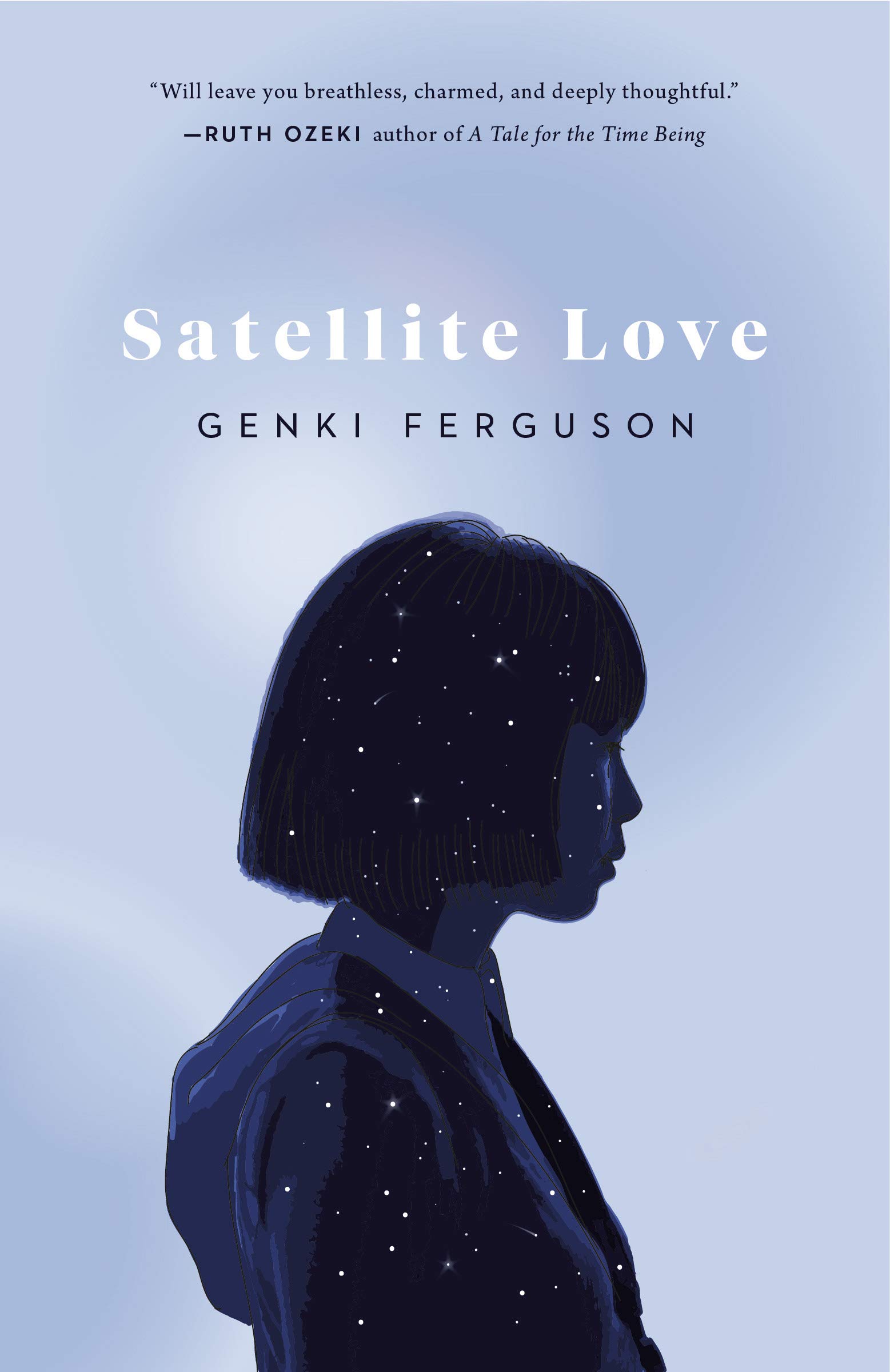 Anna Obata is a biracial teenager living in economically depressed Southern Japan just before the millennium. Left to fend for herself (and to look after her increasingly senile Grandfather) Anna copes with her devastating loneliness by calling upon her strongest inner resource: imagination. This is the story of girl who falls in love with a satellite, yes—but it is also the story of how the human mind attempts to repair itself, no matter the cost, no matter the odds. Told in alternating perspectives by Anna, the satellite, and several others, SATELLITE LOVE is exquisitely strange and refreshingly unconventional.
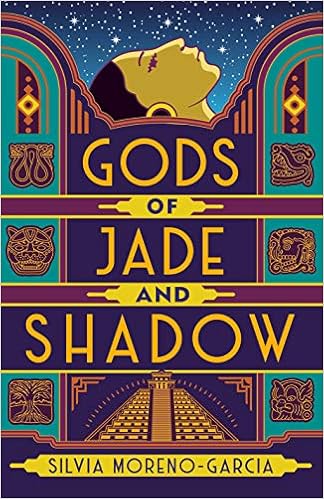 The Jazz Age is in full swing, but Casiopea Tun is too busy cleaning the floors of her wealthy grandfather’s house to listen to any fast tunes. Nevertheless, she dreams of a life far from her dusty small town in southern Mexico. A life she can call her own. Yet this new life seems as distant as the stars, until the day she finds a curious wooden box in her grandfather’s room. She opens it—and accidentally frees the spirit of the Mayan god of death, who requests her help in recovering his throne from his treacherous brother. Failure will mean Casiopea’s demise, but success could make her dreams come true. In the company of the strangely alluring god and armed with her wits, Casiopea begins an adventure that will take her on a cross-country odyssey from the jungles of Yucatán to the bright lights of Mexico City—and deep into the darkness of the Mayan underworld.
 When someone asks Mavie about her cool glow-in-the-dark tattoo at a party, she thinks they’re joking. But then she sees it herself, in the light on the dancefloor – and panics. How did the scorpion get on her skin? Mavie has no idea that the sign makes her the target of a sinister game. Meanwhile, detectives Inga Björk and Christian Brand are investigating the case of a jogger found brutally murdered in a forest. They don’t know that this is just the beginning of a sadistic series of murders – and that the only way they can stop it is by changing sides and joining in the deadly game …
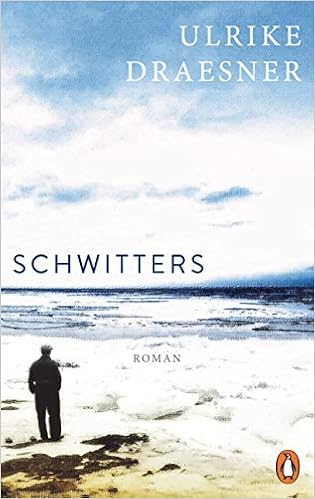 How do you begin a future that has essentially already ended, separated from your home, your language and yourself by a stretch of water? Kurt Schwitters is forty-nine years old when the Nazis force him to flee Germany. His success, work, possessions, parents, and wife Helma stay behind – and art gives way to the art of survival. Schwitters’s second life in a foreign language begins in Norway, then takes him to London and finally to the Lake District. Wantee, the new woman at his side, keeps him on course and his head above water, even when the word artist falls silent. With his Merzbau installation, Schwitters has discovered a new way to capture sky and serenity, shimmering meadows and transparent air. He is ludicrously disciplined, to the point of exhaustion. As we watch him at work, we learn that art doesn’t interpret the world: It translates it into forms that move us. In SCHWITTERS, Ulrike Draesner follows the writer and artist Kurt Schwitters into exile, giving voice to Kurt, his wife, his son and his lover. Through a virtuoso blend of fact and fiction, she has created a panorama of a time when the struggle for freedom and art was renewed in the face of a world on fire.