
An illustrated edition of The 1619 Project, with newly commissioned artwork and archival images, The New York Times Magazine‘s award-winning reframing of the American founding and its contemporary echoes, placing slavery and resistance at the center of the American story.
THE 1619 PROJECT: A VISUAL EXPERIENCE
by Nikole Hannah-Jones
and The New York Times Magazine
Clarkson Potter, October 2024
 Here, in these pages, Black art provides refuge. The marriage of beautiful, haunting and profound words and imagery creates an experience for the reader, a wanting to reflect, to sit in both the discomfort and the joy, to contemplate what a nation owes a people who have contributed so much and yet received so little, and maybe even, to act. –Nikole Hannah-Jones, from the Preface
Curated by the editors of The New York Times Magazine, led by Pulitzer Prize-winning journalist Nikole Hannah-Jones, this illustrated edition of The 1619 Project features seven chapters from the original book that lend themselves to beautiful, engaging visuals, deepening the experience of the content. The 1619 Project: A Visual Experience offers the same revolutionary idea as the original book, an argument for a new national origin story that begins in late August of 1619, when a cargo ship of enslaved people from Africa arrived on the shores of Jamestown, Virginia. Only by reckoning with this difficult history and understanding its powerful influence on our present can we prepare ourselves for a more just future.
Filled with original art by thirteen Black artists like Carrie Mae Weems, Calida Rawles, Vitus Shell, Xaviera Simmons, on the themes of resistance and freedom, a brand-new photo essay about slave auction sites, vivid photos of Black Americans celebrating their own forms of patriotism, and a collection of archival images of Black families by Black photographers, this gorgeous volume offers readers a dynamic new way of experiencing the impact of The 1619 Project.
Complete with many of the powerful essays and vignettes from the original edition, written by some of the most brilliant journalists, scholars, and thinkers of our time, The 1619 Project: A Visual Experience brings to life a fuller, more comprehensive understanding of American history and culture.
The 1619 Project began in 2019 as a special project from in The New York Times Magazine to commemorate the 400th anniversary of the beginning of American slavery. It is led by Pulitzer Prize-winning journalist Nikole Hannah-Jones, along with New York Times editor-in-chief Jake Silverstein and New York Times Magazine editors Ilena Silverman and Caitlin Roper.
 At the height of the Great Depression, Los Angeles oil mogul George Allan Hancock and his crew of Smithsonian scientists came upon a gruesome scene: two bodies, mummified by the searing heat, on the shore of a remote Galápagos island. For the past four years Hancock and other American elites had traveled the South Seas to collect specimens for scientific research. On one trip to the Galápagos, Hancock was surprised to discover an equally exotic group of humans: European exiles who had fled political and economic unrest, hoping to create a utopian paradise. One was so devoted to a life of isolation that he’d had his teeth extracted and replaced with a set of steel dentures.
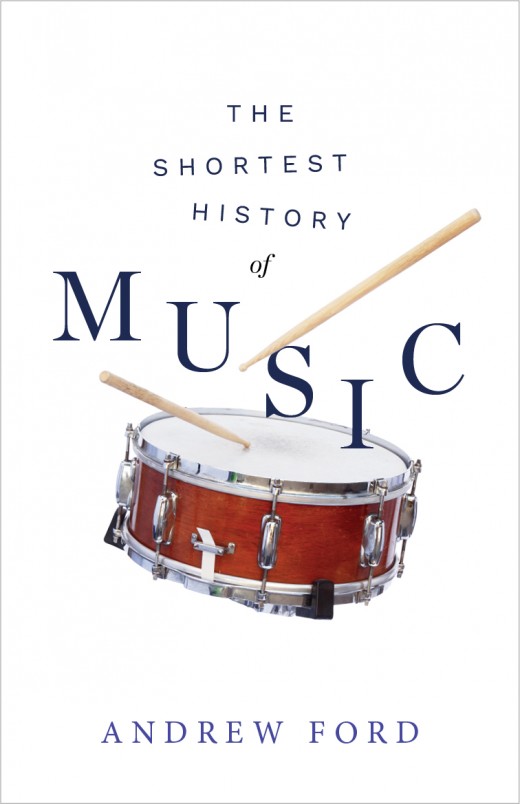 From award-winning broadcaster and composer Andrew Ford, The Shortest History of Music is a lively, authoritative tour through several thousand years of music. Packed with colourful characters and surprising details, it sets out to understand what exactly music is – and why humans are irresistibly drawn to making it.
 The first major English-language history of Ukraine from its emergence after the demise of the Soviet Union through the current Russian invasion.
 In the early 1800s the world was a safe and cozy place. But then a twelve-year-old farm boy in Massachusetts stumbled on a row of fossilized three-toed footprints the size of dinner plates—the first dinosaur tracks ever found. Soon, in England, Victorians unearthed enormous bones—bones that reached as high as a man’s head. Outside of myths and fairy tales, no one had even imagined that creatures like three-toed giants had once lumbered across the land. And if anyone had somehow conjured up such a scene, they would never have imagined that all those animals could have vanished, hundreds of millions years ago. The thought of sudden, arbitrary disappearance from life was unnerving and forced the Victorians to rethink everything they knew about the world.