For fans of Emily St. John Mandel, David Mitchell, and Kazuo Ishiguro, this “mind-bending take on time travel” (The New York Times) is about an isolated town neighbored by its own past and future, and a young girl who spots two elderly visitors from across the border: the grieving parents of the boy she loves.
THE OTHER VALLEY
by Scott Alexander Howard
Atria/Simon & Schuster, February 2024
(via Frances Goldin Literary Agency)
 Sixteen-year-old Odile Ozanne is an awkward, quiet girl, vying for a coveted seat on the Conseil. If she earns the position, she’ll decree who among the town’s residents may be escorted deep into the woods, who may cross the border’s barbed wire fence, who may make the arduous trek to descend into the next valley over. It’s the same valley, the same town. But to the east, the town is twenty years ahead in time. To the west, it’s twenty years behind. The only border crossings permitted by the Conseil are mourning tours: furtive viewings of the dead in towns where the dead are still alive.
When Odile recognizes two mourners she wasn’t supposed to see, she realizes that the parents of her classmate Edme have crossed the border from the future to see their son while he’s still alive in Odile’s present. Edme—who is brilliant and funny, and the only person to truly know Odile—is about to die. Sworn to secrecy by the Conseil so as not to disrupt the course of nature, Odile finds herself drawing closer to her doomed friend—imperilling her own future.
Masterful and original, THE OTHER VALLEY is an affecting modern fable about the inevitable march of time and whether or not fate can be defied. Above all, it is about love and letting go, and the bonds, in both life and death, that never break.
Jimmy Fallon’s Book Club Top Four Pick
A PBS Book Club Pick
Soon to be a TV series
« Beautifully written…a triumph »—Booklist (starred review) « This gripping speculative novel will make for wonderful book club discussions. » —Library Journal (starred review)
“A mind-bending take on time travel” and “a slow-boiling psychological thriller…Howard has a naturalist’s gift for the pastoral.” —The New York Times
« What a stunning debut! This coming-of-age story is filled to the brim with heart and hope and Howard’s prose is simply breathtaking. The Other Valley is a brilliant take on time travel and a thought-provoking exploration of the boundaries between fate and choice. Make room on your shelves, folks, this book is going to knock your socks off. » —Sylvain Neuvel, award-winning author of Sleeping Giants
Scott Alexander Howard lives in Vancouver, British Columbia. He has a PhD in philosophy from the University of Toronto and was a postdoctoral fellow at Harvard, where his work focused on the relationship between memory, emotion, and literature. THE OTHER VALLEY is his first novel.

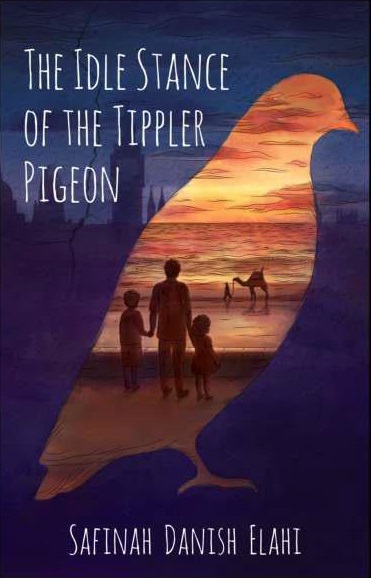 Zohaib, Misha and Nadia believed they would be in each other’s lives forever. As children they played, argued, teased and loved one another. Yet nothing could have prepared them for the tragic turn of events one fateful afternoon in Karachi, Pakistan, when the divisions and differences between them are revealed.
 Genderfluid Eamon Kastellakis wants to be beautiful. More than anything, he dreams of wearing couture dresses by the designers he worships, Alexander McQueen and Gucci, well away from the roar and threat of his alcoholic Greek da in their decaying house in Cork, Ireland.
 Jonathan Abernathy is screwed. Jobless, behind on his student loan payments, and a self-declared failure, the only thing Abernathy has in abundance is debt. When a government loan forgiveness program offers him a job he can do literally in his sleep, he thinks he’s found his big break. That is, until he finds himself auditing the dreams of white collar workers, flagging their anxieties and preoccupations for removal.
 As Jacob lies dying, he begins to write a letter to his only son, Isaac. They have not met or spoken in many years, and there are things that Isaac must know. Stories about his ancestral legacy in rural Arkansas that extend back to slavery. Secrets from Jacob’s tumultuous relationship with Isaac’s mother and the shame he carries from the dissolution of their family. Tragedies that informed Jacob’s role as a father and his reaction to Isaac’s being gay. But most of all, Jacob must share with Isaac the unspoken truths that reside in his heart. He must give voice to the trauma that Isaac has inherited. And he must create a space for the two to find peace.