
Set in the 1930s, this is a novel about a husband and wife who travel across the United States performing acts of aerial daring and a chance encounter they have with William Faulkner that has unexpected consequences for all.
WINGWALKERS
by Taylor Brown
St. Martin’s Press, April 2022
 One part epic adventure, one part love story, and—as is the signature for critically-acclaimed author Taylor Brown—one large part American history, WINGWALKERS follows Della and Zeno Marigold, a vagabond couple who fund their journey to the west coast in the middle of the Great Depression by performing death-defying aerial stunts from town to town. Woven into their story is that of the author (and thwarted fighter pilot) William Faulkner. Based on a tantalizing tidbit from Faulkner’s real life, this novel captures the true essence of a bygone era and sheds a new light on the heart and motivations of one of America’s greatest authors.
Taylor Brown grew up on the Georgia coast. He has lived in Buenos Aires, San Francisco, and the mountains of western North Carolina. He is the recipient of the Montana Prize in Fiction and a finalist for the Southern Book Prize. His novels include Fallen Land, The River of Kings, Gods of Howl Mountain, and Pride of Eden, and his short fiction and essays have appeared in The New York Times, The Rumpus, Garden & Gun, The Bitter Southerner, Chautuaqua, Southwest Review, and many others. He lives in Savannah, Georgia.
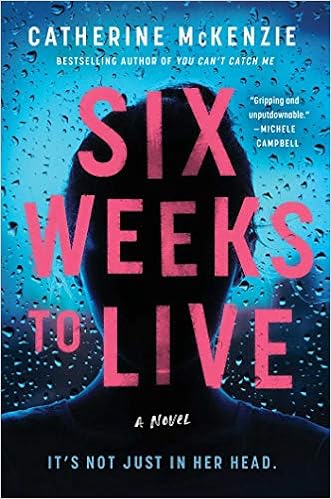 Jennifer Barnes never expected the shocking news she received at a routine doctor’s appointment: she has a terminal brain tumor—and only six weeks left to live. While stunned by the diagnosis, the forty-eight-year-old mother decides to spend what little time she has left with her family—her adult triplets and twin grandsons—close by her side. But when she realizes she was possibly poisoned a year earlier, she’s determined to discover who might have tried to get rid of her before she’s gone for good. Separated from her husband and with a contentious divorce in progress, Jennifer focuses her suspicions on her soon-to-be ex. Meanwhile, her daughters are each processing the news differently. Calm medical student Emily is there for whatever Jennifer needs. Moody scientist Aline, who keeps her mother at arm’s length, nonetheless agrees to help with the investigation. Even imprudent Miranda, who has recently had to move back home, is being unusually solicitous. But with her daughters doubting her campaign against their father, Jennifer can’t help but wonder if the poisoning is all in her head—or if there’s someone else who wanted her dead.
 THE SIGN FOR HOME tells the story of Arlo Dilly, a DeafBlind 23-year-old man raised by conservative family members who limit his use of technology. While taking a basic English composition class, Arlo is assigned a new sign language interpreter named Cyril Brewster who is recovering from a romantic breakup and is looking for a new challenge in his career. When Cyril begins to interpret Arlo’s classes he soon realizes that Arlo’s understanding of language, love, and life have been limited, governed, and often censored by iron-fisted guardians. Showing Arlo more of the world and the independence he could have puts Cyril in conflict with Arlo’s family. Against this external conflict of language mediation, we travel inside Arlo’s mind and inside his perceptions of the most important moments of his life, including his own linguistic awakenings, and a heartbreaking memory of first love and first friendship derailed by unspeakable tragedy. When the buried memories are eventually unlocked by a class writing assignment, Arlo convinces Cyril to abandon his own professional ethics to facilitate a forbidden meeting with his old school friends and first love. The narration of The Sign For Home alternates between Arlo’s voice (with its distinctive Deaf syntax) and Cyril’s fast and funny point of view, with dialogue rendered in both standard English and an approximation of American Sign Language structure. The resulting novel is not only unique, but fast-paced, delectable, emotional, and powerful.
 THE PARTY YEAR is a an ekphrastic, illuminating tour de force, inspired in part by Cunningham’s own time working on the 2008 presidential campaign of Barack Obama. In these pages, fundraising staffer David Hammond travels around the country for donor events, landing everywhere from a trailer in New Hampshire to a Beverly Hills mansion. Hammond is a keen and thoughtful observer, whose reflections on memory and history are interwoven throughout in a flowing counterpoint between past and present, the personal and the larger-than-life. Through intimate, candescent prose, THE PARTY YEAR contemplates the stories and arts that define and bring beauty to our lives.
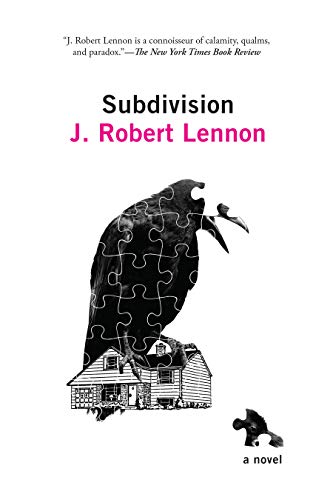 An unnamed woman checks into a guesthouse in a mysterious district known only as the Subdivision. The guesthouse’s owners, Clara and the Judge, are welcoming and helpful, if oddly preoccupied by the perpetually baffling jigsaw puzzle in the living room. With little more than a hand-drawn map and vague memories of her troubled past, the narrator ventures out in search of a job, an apartment, and a fresh start in life. Accompanied by an unusually assertive digital assistant named Cylvia, the narrator is drawn deeper into an increasingly strange, surreal, and threatening world, which reveals itself to her through a series of darkly comic encounters reminiscent of Gulliver’s Travels. A lovelorn truck driver…a mysterious child…a watchful crow. A cryptic birthday party. A baffling physics experiment in a defunct office tower where some calamity once happened. Through it all, the narrator is tempted and manipulated by the bakemono, a shape-shifting demon who poses a distinctly terrifying danger. Harrowing, meticulous, and deranged, SUBDIVISION is a brilliant maze of a novel from the writer Kelly Link has called “a master of the dark arts.” With the narrative intensity and mordant humor familiar to readers of