
The ambitious and experimental debut by Jamie Hood, author of Trauma Plot, interrogating the “good girl” archetype and the price one pays to embody it.
HOW TO BE A GOOD GIRL
by Jamie Hood
Vintage, March 2025
(via Frances Goldin Literary)
 In the thick of winter 2020, when so many books were buried beneath the catastrophe of the COVID-19 news cycle, one unlikely debut seemed to cut through the noise. Jamie Hood’s How to Be a Good Girl was an inventive and hybrid work of self-making, mingling diary entries, poetry, literary criticism, and love letters to interrogate the archetype of the “good girl,” and the ideas of femininity, passivity, desire, and trauma that come with it. Journeying from the ice age to our modern-day climate crisis, it devoured texts as expansive as Levinas and Plath to the Ronettes and after-school specials, all the while asking: what pound of flesh must a woman pay to be seen as “good.”
How to Be a Good Girl was a critical darling when it was first published by Grieveland. The Rumpus praised its “bold vulnerability,” and Vogue named it a Best Book of 2020. Now, Vintage is proud to reissue this provocative and genre-bending debut and find new readers for an exciting, new literary voice.
Jamie Hood is a critic, memoirist, and poet. Her work has appeared in Bookforum, The Baffler, The Nation, Los Angeles Review of Books, The New Inquiry, Observer, The Drift, SSENSE, Bookforum, Vogue, and elsewhere. She lives in Brooklyn.
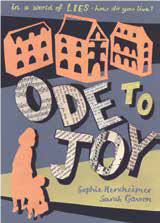
 After a decade of yearning for parenthood, years marked by miscarriage after miscarriage, Hala Alyan decides to use a surrogate. In this charged time, she turns to the archetype of the waiting woman—the Scheherazade who tells stories to ensure another dawn—to confront her own narratives of motherhood, love, and inheritance. As her baby grows in the body of another woman, in another country, Hala finds her own life unraveling—a husband who wants to leave; the cost of past traumas and addictions threatening to resurface; the city of her youth, Beirut, on the brink of crisis. She turns to family stories and communal myths: of grandmothers mapping their lives through Palestine, Kuwait, Syria, Lebanon; of eradicated villages and invading armies; of places of refuge that proved only temporary; of men that left and women that stayed; of the contradictions of her own Midwestern childhood, and adolescence in various Arab cities. Hala gathers the stories that are her legacy, which makes for emotionally charged, painstaking work, but now the stakes are higher: how to honor ancestors and future generations alike in the midst of displacement? How to impart love for those who are no longer here, for places one can no longer touch?
 In 2018, Noraly Schoenmaker was a thirty-something geologist living in the Netherlands when she learned that her live-in partner had been having a long-term affair. Suddenly without a place to stay, she quit her job, sold her house, and flew to India, planning to spend a year exploring before returning home. But an excursion on a rented motorcycle through the Himalayas changed her life forever—she had found a new obsession. Soon, she decided to purchase a motorcycle and a GoPro, and set off on more unconventional adventures.