
Covid’s serious neurological after-effects: causes, treatments, and your chance of recovery, by one of Germany’s best-known brain researchers, specializing in how inflammatory processes influence brain performance. Based on the latest research findings
LONG COVID
by Prof. Dr. Martin Korte
DVA, October 2022
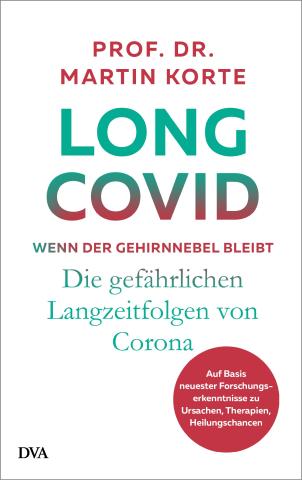 Exhaustion, breathlessness, loss of taste, brain fog, problems concentrating: about ten percent of Covid patients report these and other similar symptoms, months after first catching the virus. It doesn’t matter if their original symptoms were mild, and even the young and usually fit and healthy are affected. Not only that, but the latest studies show that Covid can accelerate brain ageing, meaning that the number of people suffering from dementia could rise sharply in the next few years. This alarming discovery suggests that long Covid really is the new endemic disease, and doctors and scientists have issued warnings about the long-term consequences for both individual patients and society at large.
In his new book, Martin Korte, who is researching long Covid at the Helmholtz Centre for Infection Research and Braunschweig Technical University, reveals how viral infections can damage our brains and cause lifelong conditions affecting people of all ages. He also explains how we can minimise the risk of long Covid, what treatments are available, and what we can do to regain our physical and mental fitness.
Martin Korte is one of Germany’s foremost neuroscientists. He is Professor of Neurobiology at Braunschweig Technical University and head of the Neuroinflammation and Neurodegeneration research group at the Helmholtz Centre for Infection Research in Braunschweig. He specialises in the cellular basis of learning and memory, and the interaction between the immune and nervous systems in the context of Alzheimer’s. He and his research group were among the first to show that viral respiratory diseases can cause the immune system to overreact, causing long-term damage to the brain. He is currently involved in research into long Covid. Korte is a much sought-after expert, and will be familiar to many from his frequent talks and TV appearances.
 As he did with THINK LIKE A MONK, Shetty offers advice from his unique background and experience, combining ancient wisdom with modern social science. In a world awash in guides to romance,
  The mind can be a potent tool, used to guide extraordinary achievements, inspire good works, and incline your spiritual path toward peace and awakening. But the mind can also produce thoughts that lead to suffering. For many people, thoughts run rampant and seem to oppress or control their lives. Even the Buddha tells us that before his enlightenment, he sometimes found his mind preoccupied by thoughts connected with sensual desire, ill will, and harm. But he figured out how to respond to thoughts skillfully and developed a step-by-step approach to calm the restless mind.
  In 1946, Günther Quandt—patriarch of Germany’s most iconic industrial empire, a dynasty that today controls BMW—was arrested for suspected Nazi collaboration. Quandt claimed that he had been forced to join the party by his archrival, propaganda minister Joseph Goebbels, and the courts acquitted him. But Quandt lied. And his heirs, and those of other Nazi billionaires, have only grown wealthier in the generations since, while their reckoning with this dark past remains incomplete at best. Many of them continue to control swaths of the world economy, owning iconic brands whose products blanket the globe. The brutal legacy of the dynasties that dominated Daimler-Benz, cofounded Allianz, and still control Porsche, Volkswagen, and BMW has remained hidden in plain sight—until now.
 As the speed of change in our increasingly complex world accelerates daily, leaders are tasked with performing outside of their familiar zones both in their personal and professional lives. This requires us to adapt. Yet, the same conditions that make adapting so important can also trigger fear, leading us to resist change and default to reactive behavior. The authors call this the “adaptability paradox”: when we most need to learn and change, we stick with what we know, often in ways that stifle learning and innovation. To avoid this trap, leaders must become proactive so they can lead ahead of the curve.