
Blending history of science, cultural criticism, and memoir, THE GOOD MOTHER MYTH pulls back the curtain on the flawed social science behind our contemporary understanding of what makes a good mom.
THE GOOD MOTHER MYTH
Unlearning Our Bad Ideas About How to Be a Good Mom
by Nancy Reddy
St. Martin’s Press, January 2025
 When Nancy Reddy had her first child, she found herself suddenly confronted with the ideal of a perfect mother—a woman who was constantly available, endlessly patient, and immediately invested in her child to the exclusion of all else. Nancy had been raised by a single working mother, considered herself a feminist, and was well on her way to a PhD. Why did doing motherhood “right” feel so wrong?
For answers, Nancy turned to the mid-twentieth century social scientists and psychologists whose work still forms the basis of so much of what we believe about parenting. It seems ludicrous to imagine modern moms taking advice from mid-century researchers. Yet, their bad ideas about so-called “good” motherhood have seeped so pervasively into our cultural norms. In THE GOOD MOTHER MYTH, Nancy debunks the flawed lab studies, sloppy research, and straightforward misogyny of researchers from Harry Harlow, who claimed to have discovered love by observing monkeys in his lab, to the famous Dr. Spock, whose bestselling parenting guide included just one illustration of a father interacting with his child. This timely and thought-provoking book will make you laugh, cry, and want to scream (sometimes all at once).
Nancy Reddy‘s previous books include the poetry collections Pocket Universe and Double Jinx, a winner of the National Poetry Series. With Emily Pérez, she’s co-editor of The Long Devotion: Poets Writing Motherhood. Her essays have appeared in Slate, Poets & Writers, Romper, The Millions, and elsewhere. The recipient of grants from the New Jersey State Council on the Arts and the Sustainable Arts Foundation and a Walter E. Dakin Fellowship from the Sewanee Writers’ Conference, she teaches writing at Stockton University and writes the newsletter Write More, Be Less Careful.
 For thousands of years, humans have wondered whether we are alone in the cosmos. Now, for the first time, we have the technology to investigate. The question should have an obvious answer: yes or no. But once you try to find life elsewhere, you realize it is not so simple. What is life, actually? How do you find it over cosmic distances? And where are we the aliens? As director of the Carl Sagan Institute at Cornell University, astronomer Lisa Kaltenegger works with teams of tenacious scientists building the uniquely specialized tool kit to find life on alien worlds. In Alien Earths, she provides an insider’s view of what scientists are learning from Earth’s history and its astonishing biosphere. With an infectious enthusiasm, she takes us on an eye-opening journey to a dozen of the most unusual exoplanets that have shaken our worldview—planets covered in oceans of lava, lonely wanderers lost in space, and planets with more than one sun in the sky! And she dives into the worlds of science fiction, using these imagined other worlds to entertainingly describe how close they come to reality. With the James Webb Space Telescope, other smaller telescopes, and the pioneering work that Dr. Kaltenegger is carrying out in her labs, we live in an incredible epoch of exploration.
 A population calamity is unfolding before our eyes. It started in parts of the developed world and is spreading to the four corners of the globe. There are just too few babies being born for humanity to replace itself. Before the end of the current century at the latest, and probably much sooner, the world’s population will start to decline.
 Ask anyone on Atbara Avenue how well they know their neighbours, and they’ll answer ‘well’.
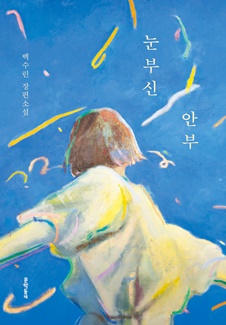 Haeni’s family falls apart after her older sister dies in a gas explosion accident in 1994. Unable to salvage the marriage, Haeni’s mother decides to separate from her father, and immigrates to Germany with Haeni and her younger sister.