
According to the Pew Research Center, in the US alone, the share of Americans who say having conversations with those they disagree with politically is “stressful and frustrating” has increased dramatically in recent years. POSSIBLE is for all of us who feel that frustration and seek to uncover new possibilities for the challenges in which we find ourselves. It offers a way out of the seemingly impossible, no-win conflicts of our time, a creative and collaborative method that can transform even our toughest conflicts.
POSSIBLE:
Transforming Our Toughest Conflicts
by William Ury
HarperBusiness, Fall 2024
(via Levine Greenberg Rostan)
 According to the Pew Research Center, in the US alone, the share of Americans who say having conversations with those they disagree with politically is “stressful and frustrating” has increased dramatically in recent years. As individuals, we are finding it increasingly hard to engage in civil discourse to negotiate our struggles and conflicts. We are stuck in difficult, intractable challenges and conflicts – with the characteristic fear and anger, entrenched positions, and destructive fighting – in all aspects of our lives.
POSSIBLE is for all of us who feel that frustration and seek to uncover new possibilities for the challenges in which we find ourselves. Based on four and a half decades of real-life experiences grappling with the world’s toughest conflicts — from wildcat strikes to family feuds, boardroom battles to civil wars – William Ury, co-author of Getting to YES, the world’s all-time bestselling book on negotiation, offers a way out of the seemingly impossible, no-win conflicts of our time, a creative and collaborative method that can transform even our toughest conflicts.
In POSSIBLE, Ury invites readers to become possibilists. Possibilists aren’t optimists or pessimists, but rather believers in our human potential to transform our conflicts and relationships. Possibilists see, create, and act on new possibilities to deal with our deepest differences. They are willing to engage any conflict, no matter how heated, in order to explore possible openings. In their minds, conflict isn’t bad. In fact, it is natural and even necessary.
Transforming a conflict is not the same as resolving it, which may be impossible right now and sometimes not even desirable. We don’t always need to agree. A possibilist aims to change the conflict’s fundamental form from destructive fighting into creative negotiation and constructive coexistence so that we can begin to open up new possibilities for mutual satisfaction. Then, over time, conflicts can be more easily resolved or just remain creative tensions.
Ury’s triple-win method works even if the other side at first does not go along. Just as it takes two to tango, it takes two to fight. And it only takes one to stop. It is your choice. There is a switch, and you can decide to pull it whenever you like. This book will show you how.
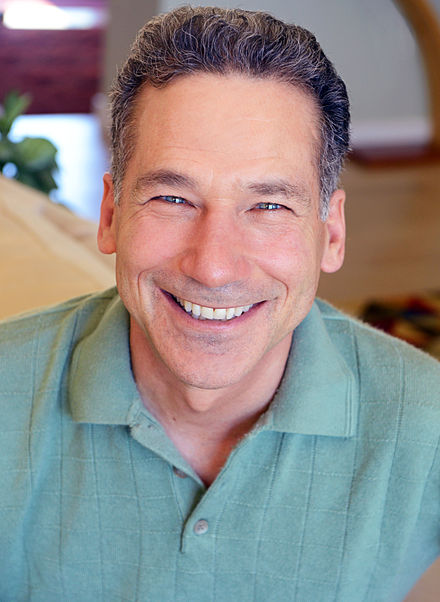
William Ury, cofounder of Harvard’s Program on Negotiation, is one of the world’s best-known and most influential experts on negotiation. He has served as a mediator in boardroom battles, labor conflicts, and civil wars around the world. Ury is the coauthor of Getting to Yes, the bestselling negotiation book in the world, and seven other books, including the New York Times bestsellers Getting Past No and The Power of a Positive No. An avid hiker, he lives with his family in Colorado.
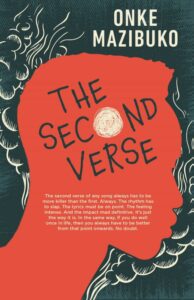 The second verse of any song always has to be more killer than the first. Always. The rhythm has to slap. The lyrics must be on point. The feeling intense. And the impact mad definitive. It’s just the way it is. In the same way, if you do well once in life, then you always have to be better from that point onwards. No doubt.
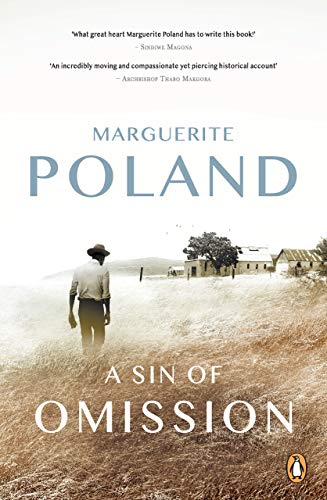 Torn from his parents as a small child in the 1870s, Stephen Mzamane is picked by the Anglican church to train at the Missionary College in Canterbury and then returned to southern Africa’s Cape Colony to be a preacher. He is a brilliant success, but troubles stalk him: his unresolved relationship with his family and people, the condescension of church leaders towards their own native pastors, and That Woman-seen once in a photograph and never forgotten. And now he has to find his mother and take her a message that will break her heart. Stephen’s journey to his mother’s home proves decisive in resolving the contradictions that tear at his heart.
 In the small rural town of Qonda, South Africa, the power and water supplies are unreliable, property prices are down, and citizens are slowly suffocating in the acrid smoke from the municipal dump. Recently retired English teacher Megan Merton has lived here all her life, most of it at No. 8 Serpent Crescent. So who better than this self-styled pillar of society to shine a spotlight on the decline and dysfunction, not to mention the dubious activities, past and present, of many of her neighbours. Nefarious deeds and bad behaviour deserve harsh treatment and appropriate retribution, if not consignment to one of Dante’s fiendish nine circles of hell. At least that’s what Megan believes – in fact she’s been taking matters into her own hands, unnoticed, for years. And now she has decided to write it all down, to shake all of the skeletons loose, and rejoice in the inventive punishments she devised and personally delivered to the wicked.
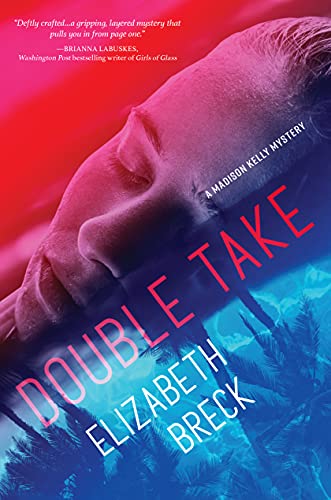
 Madison Kelly, a San Diego private investigator, arrives home to a note stabbed to her front door: “Stop investigating me, or I will hunt you down and kill you”. The only problem? Madison hasn’t been investigating anyone—she’s been taking time off to figure out what to do with her life. But how does she prove a negative? The only way to remove the threat is to do exactly what « Anonymous », the note writer, is telling her not to do: investigate to see who left it. Could this have something to do with the true crime podcast she’s been tweeting about, and the missing girls?
 Also available: