
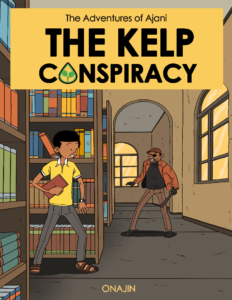
 L’artiste et auteur nigérian Àlàbá Ònájìn prépare une nouvelle série de BD, « The Adventures of Ajani », qui s’adresse autant aux adultes qu’aux enfants. Dans un style influencé par la « ligne claire » d’Hergé, Àlàbá Ònájìn présente le point de vue nigérian sur la fin de la domination britannique dans les années 1960 à travers son héros Ajani, journaliste yoruba malin et curieux et fervent partisan de l’indépendance.
Dans le premier tome de la série intitulé THE KELP CONSPIRACY, alors que le Nigéria tente de gagner son indépendance, les puissances étrangères pèsent encore fortement sur la gouvernance du pays et la corruption s’installe. La société britannique Kelp Oil and Gas cherche à faire échouer le projet d’indépendance et garder ainsi la mainmise sur l’exploitation pétrolière de la région. A travers des personnages emblématiques, l’histoire véhicule les valeurs de l’amitié, la loyauté et la victoire du bien sur le mal.
 Biographie de l’auteur : Àlàbá Ònájìn is a Freelance Cartoonist and Illustrator. He was born in Lagos state, Nigeria and has a Diploma in Freelance Cartooning and Illustration from The Morris College of Journalism, Surrey, Kent, UK. He is currently living in Lagos, Nigeria. He has always had a passion for telling stories through his drawings ever since he was introduced to Hergé’s Tintin books at a very young age; these books sparked an energy to bring his stories to young readers around the world. Ònájìn’s work includes Anike Eleko, a children’s comic book on girls’ education by Farafina Books, On Ajayi Crowther Street, a graphic novel published by Cassava Republic in collaboration with the German cultural organization Goethe Institut, and other art collaborations with UNESCO on the Role of Women in African History Project, illustrating the lives of three great African women: Funmilayo Ransome Kuti, Empress Taytu Betul of Ethiopia, and Miriam Makeba.
“I found in the words and pictures of this Nigerian artist, the page-turning sense of adventure I so admired in Tintin, without the impetuous colonialist language and bigoted depictions that had made me shelf Hergé’s iconic work. . . Rather than present simple and dichotomized plots, we learn of Nigeria’s past and are drawn to understand the historical implications of colonization, as well as politics, environmental issues, and ultimately, evergreen and universal human relations. Giving us a lens into a vibrant Western Africa, while making the subjects presented deeply personal and relatable.” – Juana Medina, author/illustrator of the award-winning Juana and Lucas series
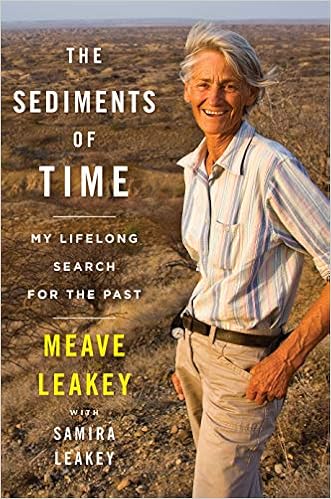 In THE SEDIMENTS OF TIME, preeminent paleoanthropologist Meave Leakey brings us along on her remarkable journey to reveal the diversity of our early pre-human ancestors and how past climate change drove their evolution. She offers a fresh account of our past, as recent breakthroughs have allowed new analysis of her team’s fossil findings and vastly expanded our understanding of our ancestors. Meave’s own personal story is replete with drama, from thrilling discoveries on the shores of Lake Turkana to run-ins with armed herders and every manner of wildlife, to raising her children and supporting her renowned paleoanthropologist husband Richard Leakey’s ambitions amidst social and political strife in Kenya. When Richard needs a kidney, Meave provides him with hers, and when he asks her to assume the reins of their field expeditions after he loses both legs in a plane crash, the result of likely sabotage, Meave steps in. THE SEDIMENTS OF TIME is the summation of a lifetime of Meave Leakey’s efforts; it is a compelling picture of our human origins and climate change, as well as a high-stakes story of ambition, struggle, and hope.
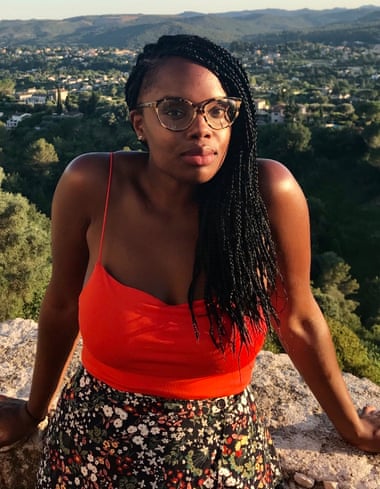 When Sutanya Dacres married her French boyfriend and moved to Paris in 2013, she felt like she was living out her very own fairy tale. Jamaican-born and New York-raised, she had never entertained fantasies of living abroad, until her grad school days when she discovered the blogs of expat women living in Paris and began to dream of a different life in a different land. Then she met a French man in a bar, fell in love, and voilà, almost as if she willed it, she was living her Parisian fantasy, embarking on her own “happily ever after” … until her marriage fell apart. Sutanya looked back to her beloved bloggers for guidance, but realized their rosé-tinted reality didn’t match up to her own. For one thing, they weren’t writing about divorce. For another, they weren’t Black. While her marriage had ended and the façade of picture-perfect Paris had cracked, Sutanya wasn’t giving up on the City of Light. Instead, she decided to figure out for herself what happens after the Paris fairy tale ends, and to find a way to mend her broken heart and create a home for herself, beginning in her kitchen. Determined to share her genuine, candid perspective and offer a counter-narrative to the typical idealized expat story, Sutanya launched her podcast, Dinner for One, in February 2018. In each episode, she invites listeners into her Paris kitchen as she shares her experiences as a 30-something hopeless romantic embracing her post-divorce life and celebrating the joy of learning to love cooking for herself. This book grew out of the podcast.
 Taking us from the slave era, when white women fought in court to keep “ownership” of their slaves, through the centuries of colonialism, when they offered a soft face for brutal tactics, to the modern workplace, White Tears/Brown Scars tells a charged story of white women’s active participation in campaigns of oppression. It offers a long overdue validation of the experiences of women of color. Discussing subjects as varied as The Hunger Games, Alexandria Ocasio-Cortez, the viral BBQ Becky video, and 19th century lynchings of Mexicans in the American Southwest, Ruby Hamad undertakes a new investigation of gender and race. She shows how the division between innocent white women and racialized, sexualized women of color was created, and why this division is crucial to confront. Along the way, there are revelatory responses to questions like: Why are white men not troubled by sexual assault on women? (See Christine Blasey Ford.) With rigor and precision, Hamad builds a powerful argument about the legacy of white superiority that we are socialized within, a reality that we must apprehend in order to fight.