
In the vein of Naomi Novik’s New York Times bestseller Spinning Silver and Katherine Arden’s The Bear and the Nightingale, this unforgettable debut—inspired by Hungarian history and Jewish mythology—follows a young woman with hidden powers and a captain of the Woodsmen as they form an unlikely alliance to thwart a tyrant.
THE WOLF AND THE WOODSMAN
by Ava Reid
Harper Voyager, June 2021
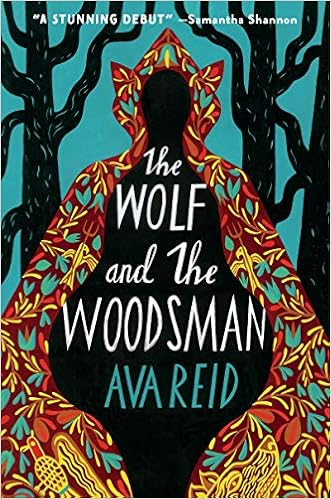 In her forest-veiled pagan village, Évike is the only woman without power, making her an outcast clearly abandoned by the gods. The villagers blame her corrupted bloodline—her father was a Yehuli man, one of the much-loathed servants of the fanatical king. When soldiers arrive from the Holy Order of Woodsmen to claim a pagan girl for the king’s blood sacrifice, Évike is betrayed by her fellow villagers and surrendered. But when monsters attack the Woodsmen and their captive en route, slaughtering everyone but Évike and the cold, one-eyed captain, they have no choice but to rely on each other. Except he’s no ordinary Woodsman—he’s the disgraced prince, Gáspár Bárány, whose father needs pagan magic to consolidate his power. Gáspár fears that his cruelly zealous brother plans to seize the throne and instigate a violent reign that would damn the pagans and the Yehuli alike. As the son of a reviled foreign queen, Gáspár understands what it’s like to be an outcast, and he and Évike make a tenuous pact to stop his brother. As their mission takes them from the bitter northern tundra to the smog-choked capital, their mutual loathing slowly turns to affection, bound by a shared history of alienation and oppression. However, trust can easily turn to betrayal, and as Évike reconnects with her estranged father and discovers her own hidden magic, she and Gáspár need to decide whose side they’re on, and what they’re willing to give up for a nation that never cared for them at all.
“The convincing enemies-to-lovers romance, fascinating religion-based magic system, and thoughtful examination of zealotry make this a notable debut.” —Publishers Weekly
Ava Reid was born in Manhattan and raised right across the Hudson River in Hoboken, but currently lives in Palo Alto, where the weather is too sunny and the people are too friendly. She has a degree in political science from Barnard College, focusing on religion and ethnonationalism. THE WOLF AND THE WOODSMAN is her debut novel.
 For an entire generation, at home and abroad, the United States has waged an endless conflict known as the War on Terror. In addition to multiple ground wars, it has pioneered drone strikes and industrial-scale digital surveillance, as well as detaining people indefinitely and torturing them. These conflicts have yielded neither peace nor victory, but they have transformed America. What began as the persecution of Muslims and immigrants has become a normalized, paranoid feature of American politics and security, expanding the possibilities for applying similar or worse measures against other targets at home. A politically divided country turned the War on Terror into a cultural and then tribal struggle, first on the ideological fringes and ultimately expanding to conquer the Republican Party, often with the timid acquiescence of the Democratic Party. Today’s nativist resurgence walked through a door opened by the 9/11 era.
 These new and collected essays from the acclaimed naturalist Barry Lopez—his final undertaking—represent the culmination of a lifetime’s thought in service of our relationship with wilderness, and with each other. Here, his collected essays offer a unifying vision; his drive to reconnect the cultural and the natural is unflinching, and major, never-published pieces offer profound commentary on topics that veer from the autobiographical—his abuse as a child—to the evolution of his views on the untamed. His classic prose, like the arctic landscape he elegized, remains as ever: “spare, balanced, extended…” It has been said that Barry Lopez understood what we gain when we accept the enormity of what we don’t know; these essays hinge on that tantalizing concept.
 Raquel Willis is a powerful woman. But growing up as a young boy in the South made being herself almost impossible. In this moving and provocative memoir, Raquel relives the many risks she faced in her struggle to become a fierce advocate for her community—and the powerful woman—that she is today. Today, she is known as a transgender trailblazer, both for work with the Transgender Law Center and speaker at the National Women’s March. She offers intimate reflections on masculinity and blackness, informed by a tumultuous relationship with her father. From a childhood built in opposition to expectations, all the way through her transition at a flagship Southern university, Raquel demonstrates that her story is but one thread in the larger tapestry of Black trans American life; a tapestry that has never truly been chronicled from this millennial, Southern perspective.
 There are three important laws in Ezomo’s village: Don’t go to The Valley, don’t go out at night, and never, ever, ever open the door that protects them all. But when Ezomo encounters the leopard believed to have killed his father, he and his two friends embark on a journey that leads them past the boundaries set by their elders. Ezomo’s mother immediately falls deathly ill, and Ezomo doesn’t believe that it’s a coincidence. Eventhough he wasn’t able to save his father, Ezomo hopes he can save her. He receives a hint that the cure can be found behind the village door, in the Valley. With his friends by his side, Ezomo discovers the true history of his village, and that cautionary tales exist for a reason.