
In a sweeping intellectual narrative, award-winning neuroscientist and author Erik Hoel argues there are two fundamental perspectives on reality: the intrinsic and the extrinsic. The intrinsic perspective is that of consciousness and experience, the feelings and sensations that make up your waking world. The extrinsic perspective is that of science, which views the universe as a set of mechanisms and relations.
THE WORLD BEHIND THE WORLD:
Consciousness, Free Will, and the Limits of Science
by Erik Hoel
Avid Reader, Fall 2023
(via Writers House)
 The two perspectives have had an uneasy, sometimes troubled relationship. Throughout history some cultures have emphasized one perspective more than the other, which has radically changed how humans think about and conceptualize our own selves. Technologies and media often implicitly enforce one perspective: for instance, television and movies take the extrinsic perspective, exploring the world of relations and images, while literature and novels take the intrinsic perspective, exploring the world of consciousness.
Hoel offers a whirlwind tour of the two perspectives across the ages, like how the intrinsic perspective is absent from Homeric epics and earlier eras, its historical development and ultimate culmination in the invention of the novel, the separation of the two perspectives by Galileo Galilei when he recommended science remove the observer to focus solely on the extrinsic, and the reintroduction of the intrinsic perspective to science by Francis Crick, the discoverer of DNA, who proposed a search for the neural correlates of consciousness that continues to this day.
Hoel shows how our picture of reality is incomplete following Galileo’s separation and emphasis on the extrinsic. The ignored intrinsic perspective sheds light on fundamental scientific questions like causation, emergence, how the brain functions, the biological purpose of dreaming, artificial intelligence, and even why humans create art. He reveals how our own culture is becoming more based in the extrinsic perspective over time, neglecting the intrinsic and forgetting the importance of human consciousness, all to its cultural, scientific, and artistic detriment.
Ultimately, the two perspectives have stood apart for too long and must be reunited. To this end Hoel proposes a way to merge the intrinsic and the extrinsic in a radical new theory of consciousness.
Erik Hoel received his PhD in neuroscience from the University of Madison-Wisconsin. He is a research assistant professor at Tufts University and was previously a postdoctoral researcher at Columbia University in the NeuroTechnology Lab, and a visiting scholar at the Institute for Advanced Study in Princeton. Hoel is a 2018 Forbes “30 under 30” for his neuroscientific research on consciousness. His first novel, The Revelations, was published in April 2021 by The Overlook Press. He lives in Massachusetts.
 Even after a decades-long opioid overdose crisis, intense controversy still rages over the fundamental nature of addiction and the best way to treat it. With uncommon empathy and erudition, Carl Erik Fisher draws on his own experience as a clinician, researcher, and alcoholic in recovery as he traces the history of a phenomenon that, centuries on, we hardly appear closer to understanding—let alone addressing effectively.
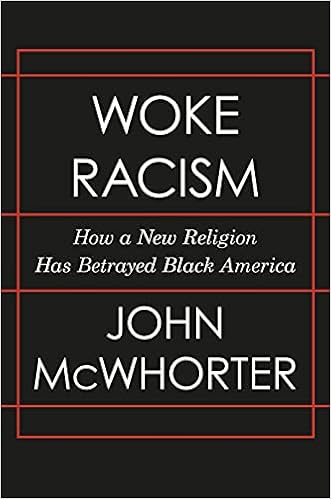 Americans of good will on both the left and the right are secretly asking themselves the same question: how has the conversation on race in America gone so crazy? We’re told to read books and listen to music by people of color but that wearing certain clothes is “appropriation.” We hear that being white automatically gives you privilege and that being Black makes you a victim. We want to speak up but fear we’ll be seen as unwoke, or worse, labeled a racist. According to John McWhorter, the problem is that a well-meaning but pernicious form of antiracism has become, not a progressive ideology, but a religion—and one that’s illogical, unreachable, and unintentionally neoracist.
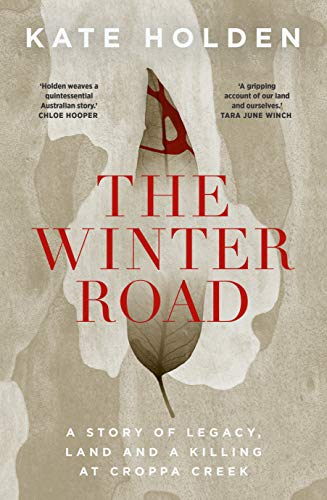 July 2014, a lonely road at twilight outside Croppa Creek, New South Wales: 80-year-old farmer Ian Turnbull takes out a .22 and shoots environmental officer Glen Turner in the back. On one side, a farmer hoping to secure his family’s wealth on the richest agricultural soil in the country. On the other, his obsession: the government man trying to apply environmental laws. The brutal killing of Glen Turner splits open the story of our place on this land. Is our time on this soil a tale of tragedy or triumph – are we reaping what we’ve sown? Do we owe protection to the land, or does it owe us a living? And what happens when, in pursuit of a legacy, a man creates terrible consequences? Kate Holden brings her discerning eye to a gripping tale of law, land and inheritance. It is the story of Australia.
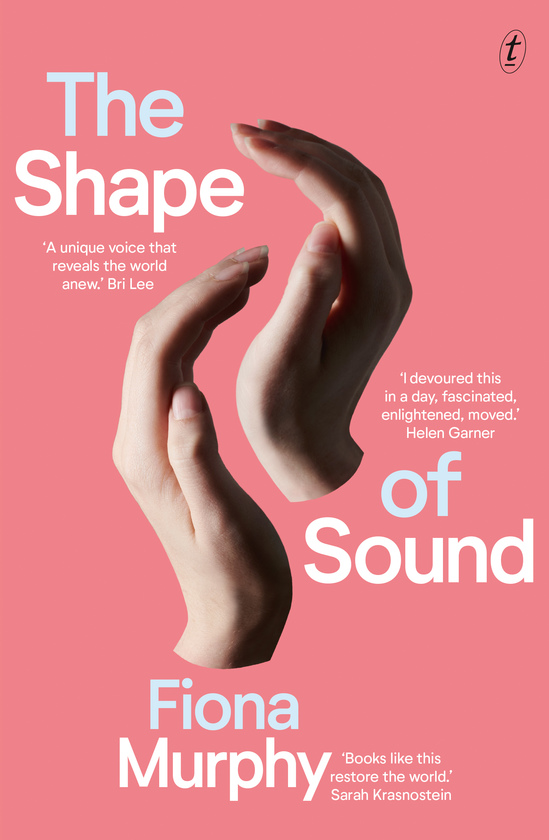 I am still unlearning the habit of secrecy. And yet, whenever somebody discovers that I am deaf, my body still reacts with churning terror. How do you build up a sense of robust pride when your body has taught itself to be fearful?