
From internationally bestselling crime writer Katia Lief, INVISIBLE WOMAN is the story of a dangerous secret held for too long between estranged best friends and a long marriage that comes apart with devastating consequences.
INVISIBLE WOMAN
by Katia Lief
Atlantic Monthly Press/Grove Atlantic, January 2024
 Joni Ackerman’s decision to raise children came with a steep cost. Twenty-five years ago, she was a pioneering filmmaker, one of the few women to break into the all-male club of Hollywood feature film directors. But she and her husband Paul had always wanted a family, and his ascending career at a premier television network provided a safety net. They have recently transplanted to Brooklyn, so that Paul can launch a major East Coast production studio, when a scandal rocks the film industry and forces Joni to revisit a secret from long ago involving a powerful man who abused women, including the friend of her youth, Val.
Joni is adamant that the time has come to tell the story, but Val and Paul are reluctant, for different reasons. As the marriage frays and the friends spar about whether to speak up, Joni’s struggles with isolation in a new city and old resentments about the sacrifices she made start to boil over. She takes solace in the novels of Patricia Highsmith—particularly the masterpiece Strangers on a Train, with its duplicitous characters and their murderous impulses—until the lines between reality and fantasy become blurred.
INVISIBLE WOMAN is at once a literary thriller about the lies we tell each other (and ourselves), and a powerful psychological examination of friendship, marriage, and motherhood.
Katia Lief is the author, most recently, of the novels A Map of the Dark and Last Night published by Mulholland Books/Little, Brown under the pseudonym Karen Ellis. Earlier work includes USA Today and internationally bestselling novels Five Days in Summer (a #1 bestseller in Germany), One Cold Night (#1 on Kobo’s UK bestseller list), and The Money Kill, the fourth installment of her Karin Schaeffer series published by HarperCollins and nominated for the Mary Higgins Clark Award. She teaches fiction writing at The New School in Manhattan and lives with her family in Brooklyn.

 Fifteen year old Natalie has had a horror of blood and meat since the day her bother, Flynn now 17, raped her at age 9. Yet sheand her family (mother, Viv, former trophy wife, now hapless housewife; father, Ray, former accountant, now handyman; andgrandmother, Eleanor) are trapped on an enormous factory farm in a world where climate change has left plant cropsdevastatingly rare, and the Corporation ensures meat is virtually all there is to eat. With grains grown exclusively for raisingcattle, pigs and chicken for slaughter, and greens a black-market luxury, Natalie is emaciated, bitter and angry. She is desperateto escape, but electric fences and the draconian punishments of the Corporation stand in her way.
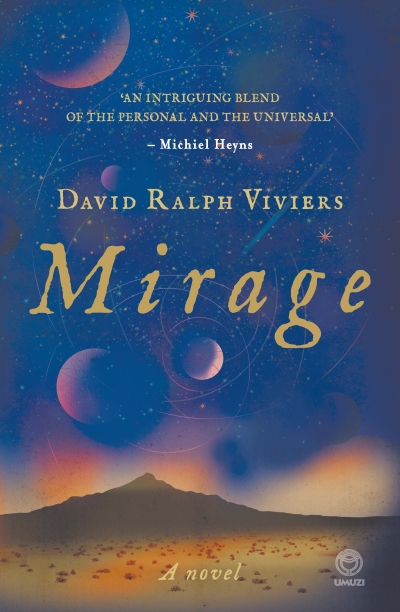 A century-old trunk has been dug up near the railway village of Sterfontein. Inside is the lost journal of Victorian author ElizabethTenant – and what appear to be the remains of a child. Michael, a university student recovering from a broken heart, is intriguedby what the journal describes: a scarlet curtain billowing above the desert, covering the entrance to another world. But thingsbecome even stranger when a line in the journal seems to be connected to Michael and his cosmologist mother, written ahundred years before their time. Without much to go on, Michael travels to the old Karoo hotel where Elizabeth wrote her novelMIRAGE. Amid talk of omens in the sky, ancient prophecies and the end of the world, he tries to decipher the journal’s secrets. Asone mystery leads to the next, constellation-like patterns between his own life and Elizabeth’s appear, helped along by Renata, aself-proclaimed medium, and Oom Sarel, the local museum curator. But as time starts to dissolve in the mirages of the Karoo, itbecomes more and more difficult to know what is real and what is not. And why can’t he shake the feeling that he’s been to thevillage before?