
A tender heart will save us countless times.
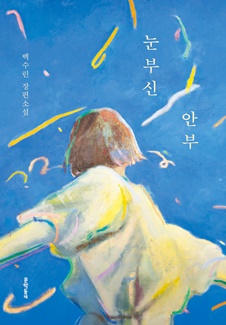
A DAZZLING GREETING
by Baik Sou-linne
Munhakdogne, May 2023
(via Randle Editorial & Literary Consultancy)
 Haeni’s family falls apart after her older sister dies in a gas explosion accident in 1994. Unable to salvage the marriage, Haeni’s mother decides to separate from her father, and immigrates to Germany with Haeni and her younger sister.
In Germany, she meets new people who make her feel at home. Her aunt, Haengja, is a nurse who was dispatched to Germany in the 1960s. She is part of a community of dispatch nurses that include Aunt Maria and Aunt Seonja.
Haeni befriends Aunt Maria’s daughter, Lena, and Aunt Seonja’s son, Hansu. The three grow close and Hansu eventually asks for a favour: he wants his friends to help him find his mother’s first love. They start by reading Seonja’s diary and finds out that her first love’s initials are K.H.
Time flies by, and Haeni finds herself having to return to South Korea due to the IMF Crisis in 1997. Uprooted from a place she’s just started to call home, Haeni is once again seized by the fear of losing those she cares about. As such, she spends her adult life setting distances between her and whoever she meets.
One day, she bumps into Woojae, a friend from university. He starts pursuing her, and touched by his earnestness, Haeni finds herself willing to open her heart to others again. Her newfound love inspires her to try to solve the mystery of Aunt Seonja’s first love again. On her second attempt, she realizes that she’s seeing things from a new perspective, and picks up on clues she’d missed before.
As she embarks on this new mission as a new person, the people around her are just as eager to reach out to help her. This novel is proof that the smallest gestures of kindness can change lives.
Baik Sou-linne is one of South Korea’s most prolific and popular authors. She was named one of five Best Young Writers in 2021. Given her unique background as a French Literature major, Baik writes heartwarming stories about young women that are often set in unfamiliar countries, taking readers romantic adventures across the globe.
She debuted as a writer after her short story ‘Lying Practice’ was awarded the Spring Literary Contest in 2011. Since then, she has released multiple short story collections including Falling in Paul and Summer Villa. A DAZZLING GREETING is her first novel. Upon its release, it immediately claimed its spot on bestsellers lists across online bookstores in South Korea.
 There is bad luck in New Felicity. The people of the small coastal village have taken in Milagros, an 11–year–old Venezuelan refugee, just as Trinidad’s government has begun cracking down on undocumented migrants—and now an American journalist has come to town asking questions. New Felicity’s superstitious fishermen fear the worst, certain they’ve brought bad luck on the village by killing a local witch who had herself murdered two villagers the year before. The town has been plagued since her death by alarming visits from her supernatural mother, as well as by a mysterious profusion of scarlet ibis birds. Now, skittish that the reporter’s story will bring down the wrath of the ministry of national security, the fishermen take things into their own hands. From there, we go backward and forward in time—from the town’s early days, when it was the site of a sugar plantation, to Milagros’s adulthood as she searches for her mother across the Americas. In between, through the voices of a chorus of narrators, we glimpse moments from various villagers’ lives, each one setting into motion events that will reverberate outwards across the novel and shape Milagros’s fate.
 There is no land without blood, and i water this land with the blood of my men.
 It is an unseasonably warm Sunday in November 1957. Katheen, a college tennis champion turned Delaware housewife, decides not to join her flagrantly handsome life insurance salesman husband, Virgil, or their two young boys, at church. Instead, she takes a dip in the kidney-shaped swimming pool of their apartment complex. And then she won’t come out.