
The brilliant new panorama of a historical year, by bestselling author Oliver Hilmes.
SCHATTENZEIT:
Deutschland 1943: Alltag und Abgründe
(Days of Darkness: Germany, 1943)
by Oliver Hilmes
Siedler/PRH Germany, January 2023
 The catastrophe happens over coffee and cake: on a visit to his mother’s childhood friend in March 1943, Karlrobert Kreiten, a consummate 26-year-old pianist with a promising future ahead of him, claims that Germany has lost the war, and the Führer his mind. Six months after making these unguarded comments, he dies on the gallows.
Kreiten’s tragic fate is at the centre of « Days of Darkness », Oliver Hilmes’s superb account of life in Germany in 1943. That year, an entire army is wiped out at Stalingrad, and Goebbels calls for a ‘total war’; children are moved to the countryside for their safety, while millions of Germans crowd into cinemas to see the movie star Hans Albers as Baron Munchausen; the cities are already lying in ruins, yet people keep dancing; and while the Nazis’ ‘machinery of destruction’ is firing on all cylinders, some fantasise about the ‘final victory’ even as others try to stand up to the dictatorship.
In this brilliantly devised and meticulously researched kaleidoscope of stories and character portraits, Hilmes brings the dramatic events of 1943 back to life.
Oliver Hilmes, born in 1971, has a PhD in modern history and is curator at the Berlin Philharmonic foundation. He is the author of bestselling biographies of Alma Mahler-Werfel, Cosima Wagner, Franz Liszt and Ludwig II. His award-winning bestseller Berlin 1936: Sixteen Days in August was translated into numerous languages.
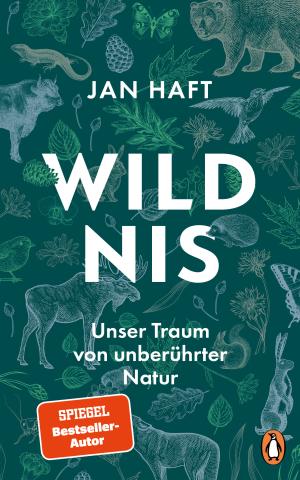 When we think of wilderness, we think of places like forests filled with an abundance of wild plants – landscapes that show no trace of human civilisation. After all, man and primordial nature are mutually exclusive. In fact, though, wilderness always implies a certain tug of war between different forces: wherever we disturb the balance, nature cannot take its course, and what remains isn’t wilderness, but an impoverished landscape – even if we leave nature to its own devices. Even now, the forests we once exploited contain just a fraction of the animals, plants and fungi that once existed there. Why is that? Biologist and filmmaker Haft examines flawed ideas, proposes a new way of conceiving of wilderness, and explains how – if we wanted to – we could easily and cheaply create new animal-friendly, sustainable and diverse landscapes.
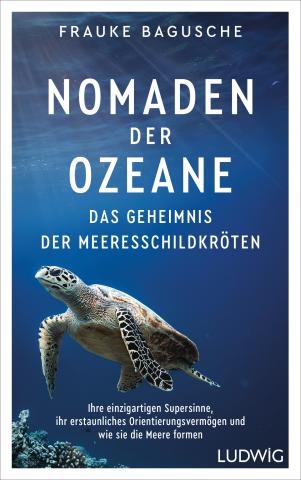 Turtles can do amazing things: some can dive to more than 1,000 metres, others transport organisms across the seas (and thus contribute to their distribution), others act as « architects of the oceans » by helping to spread coral reefs along the sea bed. All have impressive « super-senses », which mean they’re able to return to the beaches where they were born – often decades later, and from thousands of kilometres away. They orient themselves by the earth’s magnetic field, as well as their sense of smell, which allows them to recognise the scent of their first beach.
 WHAT’S WRONG? is author, illustrator, and scientific researcher Erin Williams’s graphic exploration of how the American healthcare system has failed both her and the rest of us. Focusing on poignant, raw, and complex firsthand accounts from four patients, plus Williams’ own personal story, this book addresses identifiable illnesses such as bladder cancer, alcoholism, postpartum depression, abuse, and endometriosis. More broadly, it peels back the layers on the invisible illnesses that come from trauma, often perpetuated by the broken healthcare system.
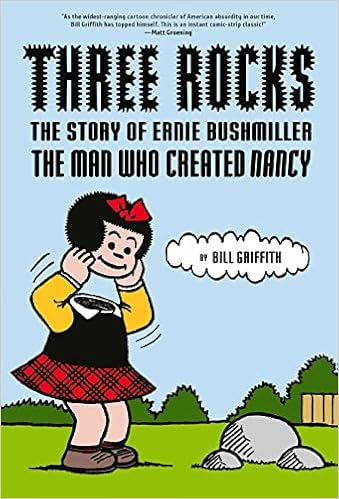 From Bill Griffith, creator of