
Told fearlessly and poetically, Rabbit Heart weaves together themes of power, gender, and justice into a manifesto of grief and reclamation: our stories do not need to be simple to be true, and there is power in the telling.
RABBIT HEART
A Mother’s Murder, A Daughter’s Story
by Kristine S. Ervin
Counterpoint Press, Spring 2024
(via Sterling Lord Literistic)
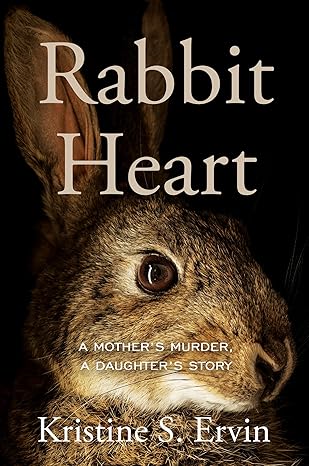 Kristine Ervin was just eight years old when her mother, Kathy Sue Engle, was abducted from an Oklahoma mall parking lot and violently murdered in a nearby oil field. In the shadow of that incomprehensible act, first there was grief. Then, the desire to know: what happened to her, what she felt in her last, terrible moments, and all she was before these acts of violence defined her life. As more information about her mother’s death comes to light, Kristine’s drive to know her mother only intensifies and winds its way into her own fraught adolescence. In the process of both, Kristine butts up against contradictions of what a woman is allowed to be—a self outside of the roles of wife, mother, daughter, victim—what a “true” victim is supposed to look like, how complicated and elusive justice really is, and how we are meant to accept what cannot/should not be accepted.
“Kristine S. Ervin writes, in her deeply moving memoir, RABBIT HEART, ‘I don’t want to choose the lazy form of grief.’ And throughout each nuanced essay-chapter, the reader bears witness as she doesn’t. We watch our speaker encounter grief, examine grief, and ultimately transform abiding grief into abiding art. RABBIT HEART is an elegy to a lost mother, yes. It is also a profound meditation on patience, on healing, and a bildungsroman that carries us unforgettably into the speaker’s—and her family’s— bittersweet beyond. When Ervin states, ‘Some stories are unsayable,’ she is right. So, she doesn’t say; instead, she lyrically documents and viscerally embodies her survival.” —Julie Marie Wade, author of Just an Ordinary Woman Breathing and Otherwise: Essays
Kristine S. Ervin grew up in a small suburb of Oklahoma City and now teaches creative writing at West Chester University, outside of Philadelphia. She holds an MFA in Poetry from New York University and a Ph.D. in Creative Writing and Literature, with a focus in nonfiction, from the University of Houston. Her work has appeared or is forthcoming in Crab Orchard Review, Brevity, and Passages North, and her essay “Cleaving To” was named a notable essay in the 2013 edition of Best American Essays. An excerpt from RABBIT HEART appeared in CrimeReads.
 When Courtney Gustafson moved into a new rental in the Poets Square neighborhood in Tuscon, Arizona, she would never have guessed that a colony of feral cats living in her driveway would change her life forever. Settling into a secure romantic relationship while it felt like the world around her was burning down, she couldn’t know how reluctantly, then profoundly, she would come to care about the health and safety of those thirty-some-odd neglected cats: Beebs, Lola, Sadboy, Goldie, Dr. Big Butt, Reverse Monkey, Rihanna, and so many more.
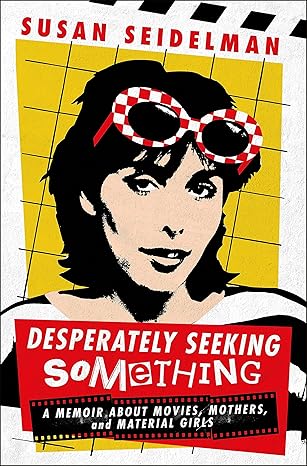 In the early 1970s, Susan Seidelman left the ordinary suburb in which she was raised and moved to New York City to become someone different. The city was bankrupt, crumbling, cheap… and the Lower East Side was evolving into a creative playground for artists and misfits looking to reinvent themselves. There, Seidelman would break boundaries: first as an award winning independent film director of Smithereens (the first independent film nominated at the Cannes Film Festival), then as a much sought after studio director when Hollywood was still run as an all-boys club. Her work would become an important part of the zeitgeist that influenced the music, fashion, and pop culture of America in the 1980s and 90s as she unapologetically challenged the male gaze that permeated most movies of that time.
 The Ocean Race is the toughest team race in the sailing calendar. It consists of seven legs that take around six months to complete, the longest of which covers an unbelievable 23,000 km, from Cape Town via Cape Horn to Itajaí in Brazil. German champion yachtsman Boris Herrmann and Team Malizia are competing against four other teams on Seaexplorer, and with five crew squeezed into such a small space you need to be able to rely on each other. In storms and lulls, everything you do has to be exactly right. Unforeseen problems like a crack on a mast 26 m up could spell the end of the race for the Seaexplorer, but the team tackles them with total professionalism. These four men and one woman are pushing their bodies and minds to the very limit, as they experience both failures and triumphs. In their new book, Herrmann and Wolfers give us a fascinating insight into the Ocean Race, and what it’s like for five people to live and work together in such exciting and unique circumstances.
 At night, as I stargazed from my tiny tent, I’d hear the primal whalesong roll up along the ocean floor and onto the beach where I lay. The ethereal melodies seeped through my shivering skin, like a relic of an ancient time. I felt as if I was eavesdropping across millennia, the sound stirring some faint genetic memory deep inside me.