
Show yourself who’s in charge using the original art of persuasion, backed by contemporary pop culture examples that make transforming your habits and achieving goals easy, even fun—from the New York Times bestselling author of Thank You for Arguing
ARISTOTLE’S GUIDE TO SELF-PERSUASION:
How Ancient Rhetoric, Taylor Swift, and Your Own Soul Can Help You Change Your Life
by Jay Heinrichs
Crown, April 2025
(via DeFiore and Company)
 Rhetoric once sat at the center of elite education. Alexander the Great, Shakespeare, and Martin Luther King, Jr., used it to build empires, write deathless literature, and inspire democracies. Now it will help you to take leadership over yourself; not through pop psychology or empty inspiration, but with persuasive tools that have been tested for more than three thousand years. In Aristotle’s Guide to Self-Persuasion, Heinrichs helps readers persuade their most difficult audiences—themselves—by using techniques invented by the likes of Aristotle and Cicero and deployed by our culture’s most persuasive characters. With their help, rhetoric can convert the most negative situations into positive ones.
Heinrichs brings in examples from history and pop culture—Winston Churchill, Iron Man, Dolly Parton, and the woman who serendipitously invented the chocolate chip cookie—to illustrate the concepts. But the core of the book tests the tools of self-persuasion and asks: Can the same techniques that seduce lovers, sell diet books, and overturn governments help us achieve our most desired goals?
Filled with entertaining and scientific studies that showcase the power of what language can do for you, Aristotle’s Guide to Self-Persuasion will teach you how to be the most successful person you can be, just by talking to yourself.
Jay Heinrichs is the New York Times bestselling author of Thank You for Arguing. He spent twenty-six years as a writer, editor, and magazine publishing executive before becoming a full-time advocate for the lost art of rhetoric. He now lectures widely on the subject, to audiences ranging from Ivy League students and NASA scientists to Southwest Airlines executives, and runs the language blog figarospeech. He lives with his wife in New Hampshire.
 ALL ALONE works against the myth that being alone is necessarily equivalent to being lonely or being antisocial, instead it argues for an understanding of solitude as a natural, necessary, and beneficial part of a healthy human life. It is a guidebook on how to approach solitude in a healthy way and how to best strike a balance between solitude and socialization at home, in the workplace, in our romantic relationships, as parents, and at different life stages.
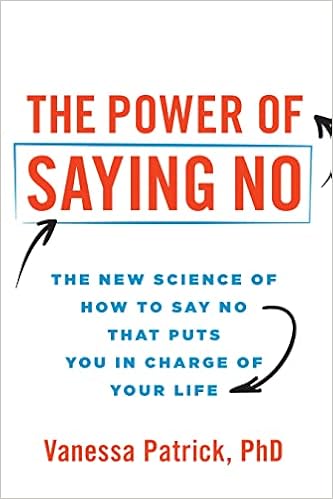 You have probably said « yes » to bosses, partners, family, friends, and even strangers, when you actually want to say « no. » Maybe you wish you could say no more often, but you’re not sure how or if it’s even possible to do so. You’re not alone! We’re taught to say yes as often as we can. After all, if you say no, aren’t you likely to miss out on opportunities and sever important relationships? Isn’t saying no a harmony-buster?
 As the speed of change in our increasingly complex world accelerates daily, leaders are tasked with performing outside of their familiar zones both in their personal and professional lives. This requires us to adapt. Yet, the same conditions that make adapting so important can also trigger fear, leading us to resist change and default to reactive behavior. The authors call this the “adaptability paradox”: when we most need to learn and change, we stick with what we know, often in ways that stifle learning and innovation. To avoid this trap, leaders must become proactive so they can lead ahead of the curve.
 Dr. Nicholas Kardaras is at the forefront of researchers sounding the alarm about the impact of excessive technology on younger brains. In Glow Kids, he described what screen time does to children, calling it “digital heroin”. Now, in DIGITAL MADNESS, Dr. Kardaras turns his attention to our teens and young adults.